Reset Windows 10 Without Losing Files on D: and E:
Reset this PC can affect different drives depending on the choices shown on your computer. Do not assume the letters D: and E: guarantee those files are outside the reset scope.
Identify the physical disks first
- Open Disk Management and note which physical disk contains C:, D:, and E:. Drive letters can represent partitions on one disk or entirely separate disks.
- Check whether D: or E: contains irreplaceable data, BitLocker encryption, recovery files, or a second Windows installation.
- Copy important folders to a separate external disk and open a few files from that copy. Save the BitLocker recovery key if encryption is enabled.
Back Up Selected Files with Qiling Disk Master
Back up folders on D: and E: to a separate physical drive before reset. Select the actual folders in the tree, then check the destination copy.
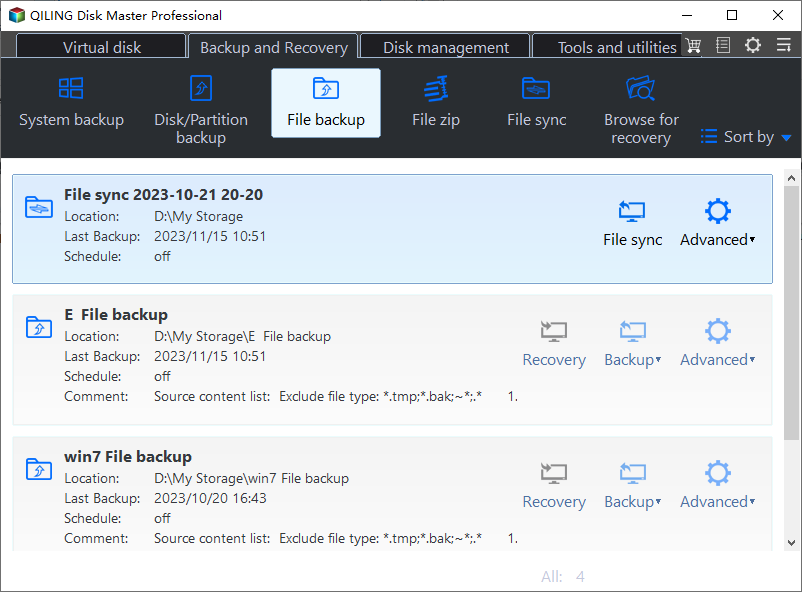
Step 1. Connect a separate external drive. Open Backup and Recovery and choose File backup.
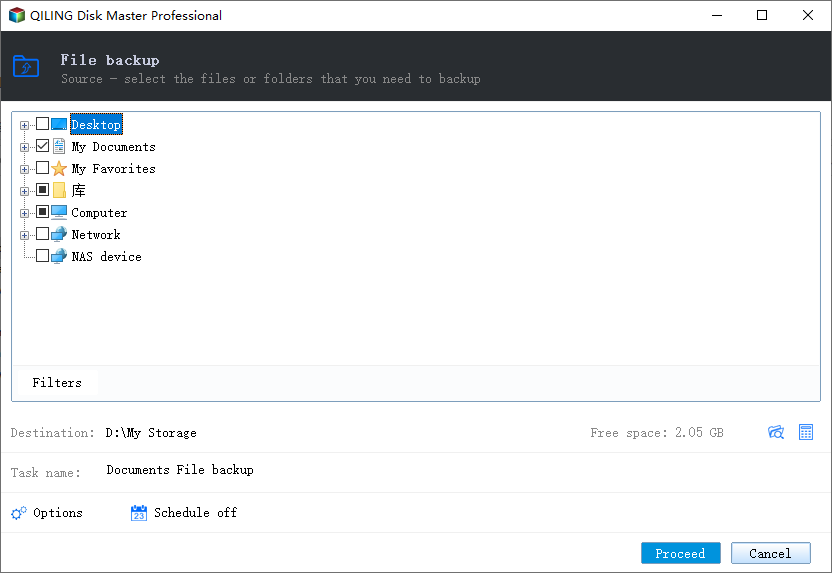
Step 2. In the folder tree, expand the source disk and select the folders you need to preserve. Include files on each relevant partition; check hidden application-specific locations separately if needed.
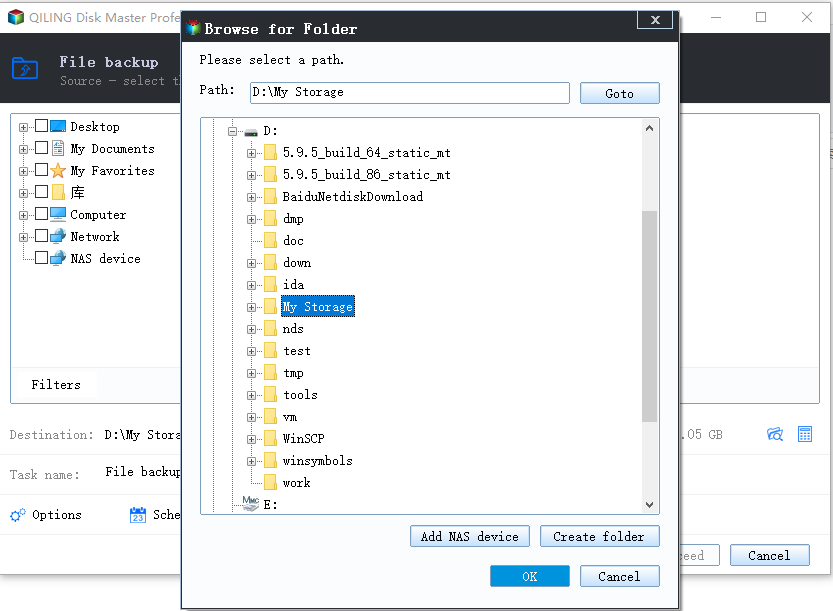
Step 3. Choose a backup destination on a different physical drive. Check free space and name the task so you can identify it after the reset.
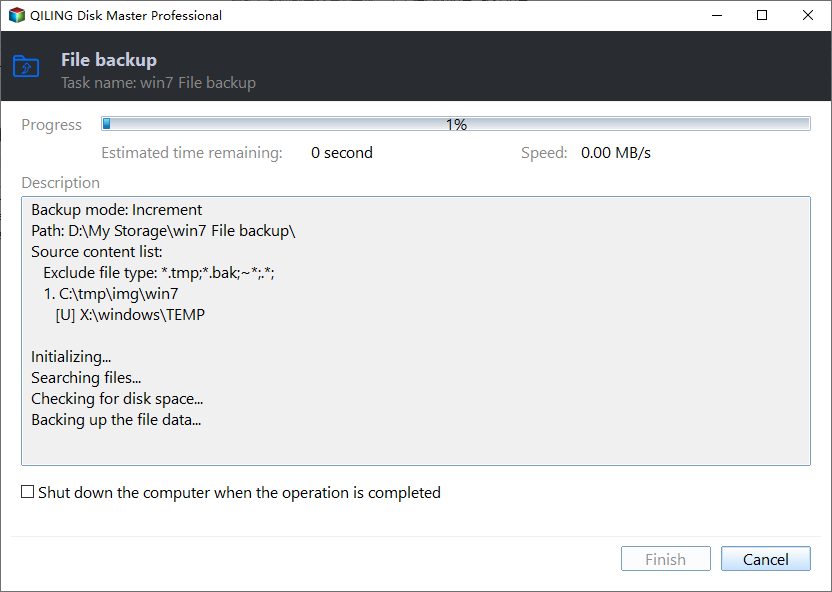
Step 4. Click Proceed and wait for the progress screen to finish. Confirm the backup is listed and keep the destination drive separate during the reset.
Read the Reset this PC choices
- Go to Settings > Update & Security > Recovery > Reset this PC > Get started.
- Choose Keep my files or Remove everything based on the Windows installation you want to keep. Keep my files still removes installed apps.
- If you choose Remove everything, inspect Change settings and the final confirmation for an option covering all drives versus only the Windows drive.
- Disconnect unrelated external disks and proceed only when the selected scope matches your plan. Do not interrupt a normal restart or dark screen.
After Windows starts again
Open Disk Management and File Explorer to check that D: and E: still appear with the expected capacity and files. Restore from the independent backup if anything is missing. Do not initialize or format a volume that unexpectedly appears unreadable.
Why a backup is still necessary
A reset can fail, the wrong drive can be selected, and hidden recovery or OEM layouts vary. Copying only a few visible folders may also miss application data stored outside Documents.
Frequently Asked Questions
Will Keep my files preserve D: and E:? Usually it targets Windows, but confirm the options shown on your PC and maintain a separate backup.
Is E: always a separate drive? No. Disk Management shows whether it is another partition on the same disk.
Conclusion
Back up D: and E: independently and read the final reset scope. After Windows restarts, check both volumes before assuming their data is safe.
Related Articles
- Windows File Backup and Restore Tutorials
Compare practical ways to protect and restore personal files. - Windows System Backup and Restore Tutorials
Explore system image, recovery, and restore guides for Windows. - Windows Disk Backup and Restore Tutorials
Find disk image backup and recovery workflows for Windows drives.
Products
Articles & Tutorials
- Data Recovery
- Data Backup
- File Recovery
- File Backup
- System Backup and Restore
- Disk and Partition Clone
- Technical articles
- Mobile articles
- Disk Master Help
- Windows Data Recovery Tutorials
- Windows Secure Delete Tutorials
- Windows Partition Management Tutorials
- Windows File Backup and Restore Tutorials
- Windows System Backup and Restore Tutorials
- Windows Disk Backup and Restore Tutorials
- Windows Clone Tutorials