Can You Install a New OS on an Old Hard Drive?
You can install an operating system on an older drive if the drive is healthy, large enough, and supported by the PC. Age alone does not prove reliability.
Evaluate the drive before installing
- Check the drive model, interface, and firmware detection. An old SATA HDD may work in a modern PC, but a physically failing disk is a poor system drive.
- Review SMART health indicators and run the manufacturer's diagnostics when available. Unusual noises, read errors, and repeated disconnects are warning signs.
- Copy valuable files to another physical drive. A new OS installation can remove partitions and overwrite data.
- Check capacity and whether you need space for the OS, updates, applications, and personal files.
Back Up Files with Qiling Before Reinstalling
If the old drive is healthy and Windows can still read it, make a file backup before changing its partitions. If it clicks, disconnects, or repeatedly fails to read, stop using it and consider professional recovery instead of running a normal backup.
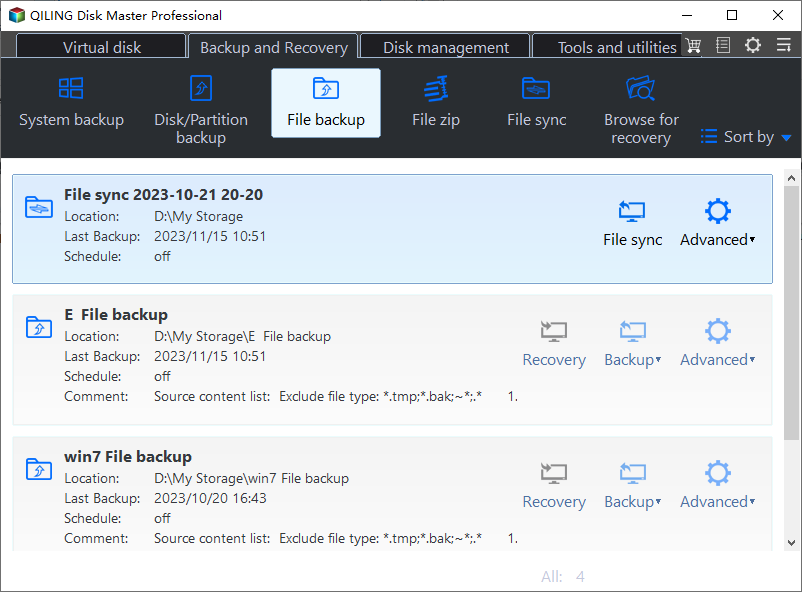
- Step 1. Connect an external drive with enough free space. Open Qiling Disk Master and choose File backup under Backup and Recovery.
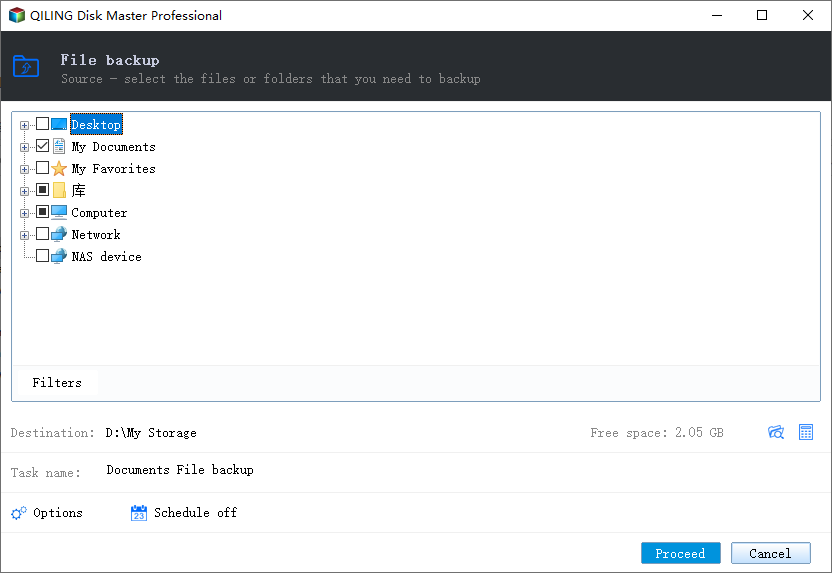
- Step 2. In the folder tree, select the documents, photos, and other folders you need to keep. Expand the tree to check each location; do not assume all personal files are under Documents.
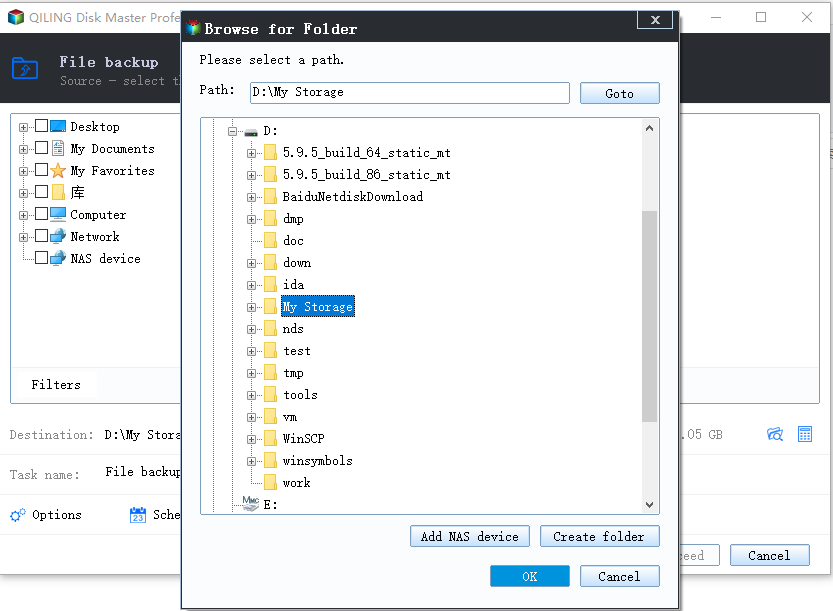
- Step 3. Open the destination chooser, select a folder on the external drive, and click OK. Verify that the destination is not on the old drive you plan to reinstall.
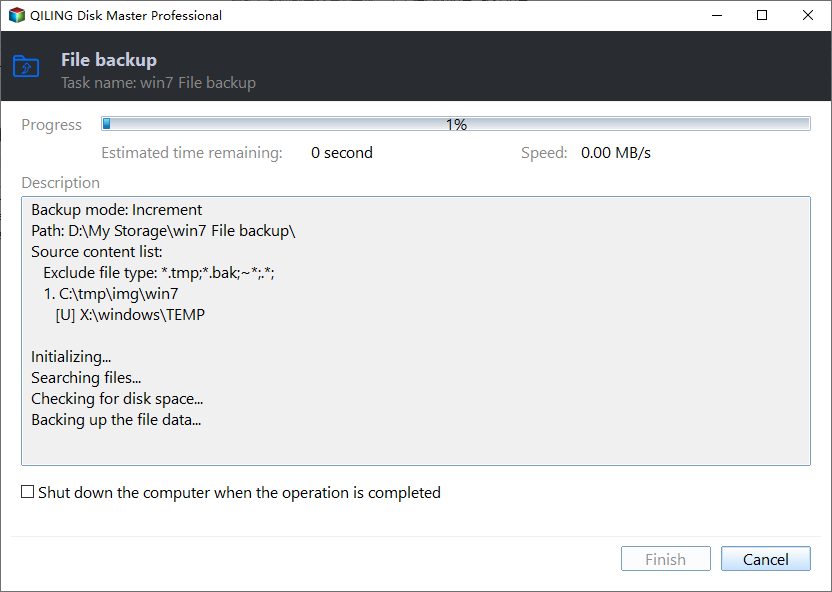
- Step 4. Click Proceed and wait for the task to finish. Open the backup location and verify that the image is present before starting Windows Setup.
Clean installation route
- Create official Windows installation media on a blank USB drive using a working PC.
- Boot the target PC from that media in the intended UEFI mode.
- Choose Custom installation and identify the old hard drive by size and model. Never delete partitions on a different disk.
- If the disk is backed up and you want a clean layout, select the intended unallocated space or remove only the confirmed old partitions. Let Setup create required partitions.
- Complete Windows setup, install drivers, and check disk health again after installation.
When replacement is wiser
If the drive has bad sectors, hangs during reads, or is the only place holding needed data, prioritize recovery and replacement. An inexpensive compatible SSD may offer much better responsiveness.
Keep a recovery path
Create a new backup once the OS and applications are configured. Installation media is not a backup of your files.
Frequently Asked Questions
Will installing Windows erase old files? It can. Back up first and read the target partition choices.
Can a bad drive be made reliable by formatting? No. Formatting does not repair physical damage.
Conclusion
An old HDD can run a new OS if it is healthy and compatible. Save its existing files before installation and replace it if diagnostics show physical trouble.
For installing Windows 8 on a PC with no operating system, read Can You Install Windows 8 on a PC with No Operating System?
Related Articles
- Windows System Backup and Restore Tutorials
Explore system image, recovery, and restore guides for Windows. - Windows Disk Backup and Restore Tutorials
Find disk image backup and recovery workflows for Windows drives. - Windows File Backup and Restore Tutorials
Compare practical ways to protect and restore personal files.
Products
Articles & Tutorials
- Data Recovery
- Data Backup
- File Recovery
- File Backup
- System Backup and Restore
- Disk and Partition Clone
- Technical articles
- Mobile articles
- Disk Master Help
- Windows Data Recovery Tutorials
- Windows Secure Delete Tutorials
- Windows Partition Management Tutorials
- Windows File Backup and Restore Tutorials
- Windows System Backup and Restore Tutorials
- Windows Disk Backup and Restore Tutorials
- Windows Clone Tutorials