Does Removing a Hard Drive Delete Its Data?
Unplugging or removing an HDD does not wipe it. The files remain on the drive until overwritten or securely erased, but the computer may no longer find Windows or applications stored there.
What happens to Windows and files
If the removed drive was the boot disk, the computer may show a no-boot-device message because Windows and its boot partitions were on that disk. If it was only a data disk, Windows can still start from another drive, while the removed drive's files and any apps installed there become unavailable until it is reconnected.
Removing the drive also does not remove those files from the drive itself. Handle it as sensitive media, particularly if it contains passwords, personal documents, or business records.
Before opening the computer
- Check Disk Management and the firmware boot order to identify the actual system disk.
- Make a separate backup of files you need and test opening a few items from it.
- Shut down, disconnect power, and follow the device maker's service instructions for battery and drive removal.
- Label the removed disk and keep it safely stored until the replacement is verified.
If the drive is being sold or discarded
Physical removal is not data destruction. If the disk is healthy and you own it, use a suitable secure erase or wipe procedure after a verified backup. SSDs and HDDs may require different manufacturer-supported erasure methods; do not rely on ordinary formatting to make confidential data unrecoverable. If the drive is damaged and cannot be wiped, use a trusted destruction service.
Back Up Files Before Removing an HDD
Use this when the HDD is still readable and you need its personal files on another drive. This backup does not erase the original disk.
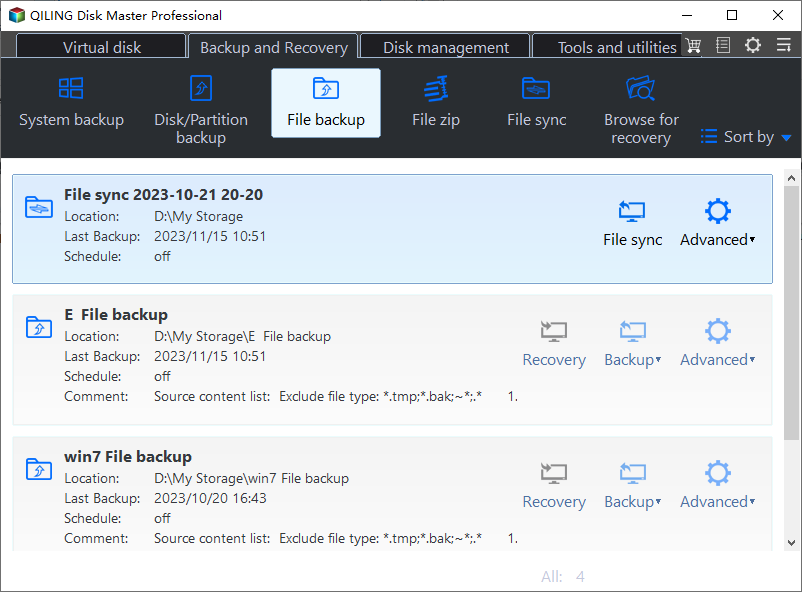
Step 1. Connect a healthy external drive and open Qiling Disk Master. Under Backup and Recovery, choose File backup.
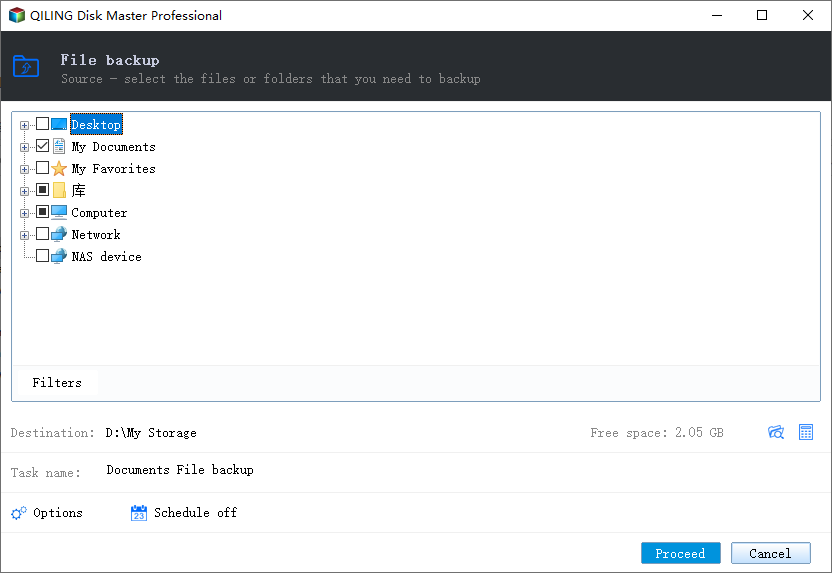
Step 2. In the folder tree, select the folders you want to keep from the HDD. Expand folders and check the selected paths; there is no separate Add Folder button in this screen.
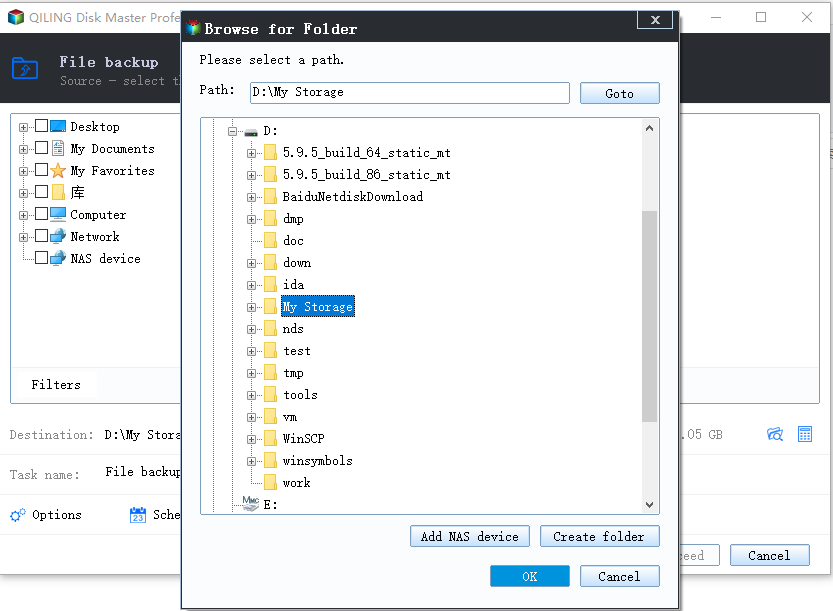
Step 3. Open the destination chooser, select a folder on a separate healthy external drive, and click OK. Verify that the destination is not the same disk as the files being protected and has enough free space.
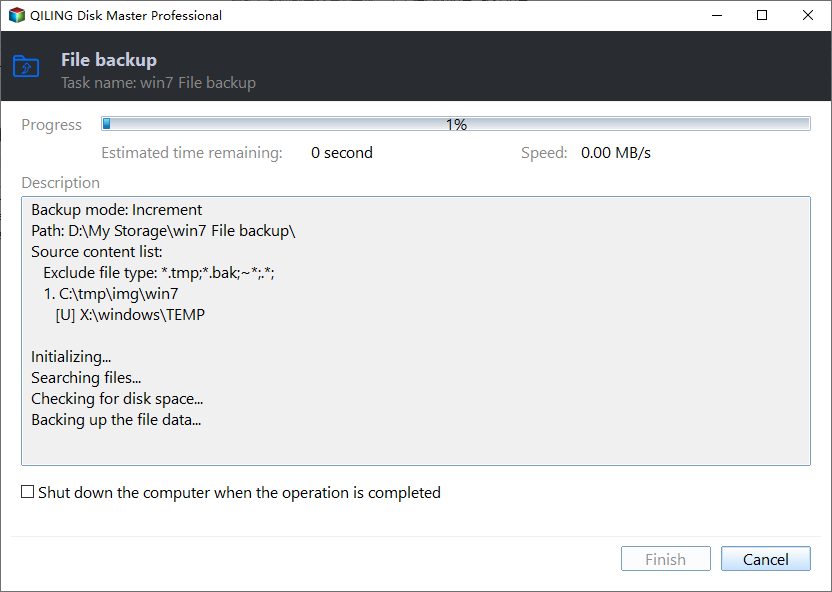
Step 4. Review the task name and selected folders, then click Proceed. Wait for the backup to finish. Open the backup location and confirm the image exists before physically removing the HDD.
Frequently Asked Questions
Does taking out the drive make its data unrecoverable? No. Reconnecting the drive to a compatible PC can make the data accessible again.
Can I remove a disk while the PC is running? Do not remove an ordinary internal system or data drive while it is active; shut down first and follow the hardware manual.
Conclusion
Removal changes what the PC can access, not what is stored on the drive. Back up needed data and securely erase or destroy sensitive media only after verification.
Related Articles
- Windows System Backup and Restore Tutorials
Compare system images and recovery choices in Windows. - Windows File Backup and Restore Tutorials
Protect personal files before resets or disk changes. - Windows Cloning Tutorials
Find boot-drive and SSD migration guides.
Products
Articles & Tutorials
- Data Recovery
- Data Backup
- File Recovery
- File Backup
- System Backup and Restore
- Disk and Partition Clone
- Technical articles
- Mobile articles
- Disk Master Help
- Windows Data Recovery Tutorials
- Windows Secure Delete Tutorials
- Windows Partition Management Tutorials
- Windows File Backup and Restore Tutorials
- Windows System Backup and Restore Tutorials
- Windows Disk Backup and Restore Tutorials
- Windows Clone Tutorials