Can DriveImage XML Clone a Windows Boot Drive?
DriveImage XML offers imaging, restore, and Drive-to-Drive features. A bootable Windows migration still requires the right partitions and boot configuration, so copying C: alone is not enough.
What DriveImage XML does
DriveImage XML can back up a drive to image files and restore an image to a partition. It also offers a Drive-to-Drive operation. Its image files are a backup format, not a bootable disk by themselves. If you use it for a Windows boot drive, verify its current documentation, supported Windows version, destination size, and whether every required boot partition is included.
DriveImage XML's restore path expects an existing destination partition. That is different from replacing a whole system disk. Avoid assuming a restored C: partition will boot when the EFI or System Reserved partition was left behind.
Prepare both drives
- Identify the source in Disk Management by model, capacity, and the Windows, EFI, and recovery partitions.
- Connect the destination with a reliable adapter and confirm that its useful contents are backed up. If the source has read errors, protect files first rather than repeatedly cloning.
- Record the BitLocker key and check whether the computer starts in UEFI/GPT or Legacy/MBR mode. Keep the same boot mode after replacement.
If the cloned drive will not start
Disconnect the old disk and confirm the new drive is detected in firmware. Check that the correct Windows Boot Manager entry is selected, not a stale entry from the original disk. If only a Windows partition was copied, revisit the imaging plan so the required boot partitions are present. Keep the old disk unchanged until the replacement starts and your files are checked.
Clone the Entire Boot Disk with Qiling Disk Master
For a direct boot-drive replacement, a whole-disk clone makes the required partition selection clearer than a partition-only restore.
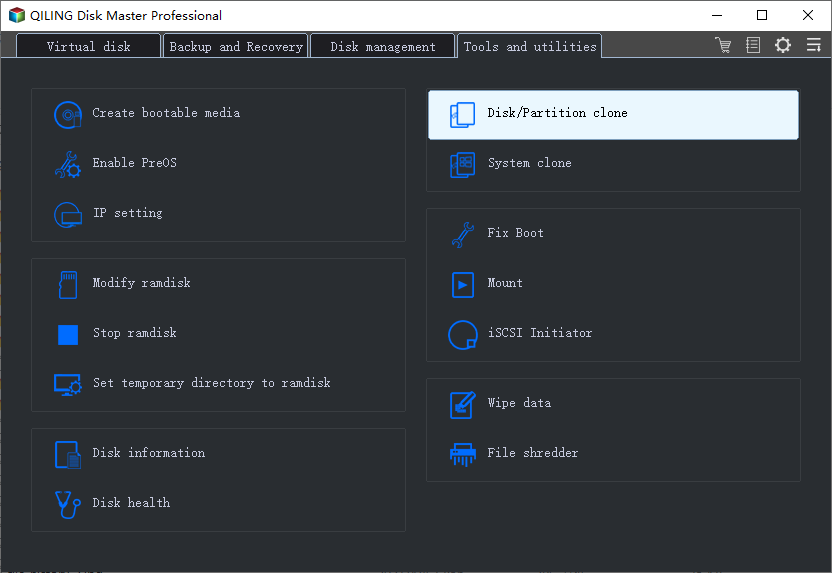
Step 1. Connect the new drive and open Qiling Disk Master. Under Tools and utilities, choose Disk/Partition clone and select the whole source disk, not just C:.
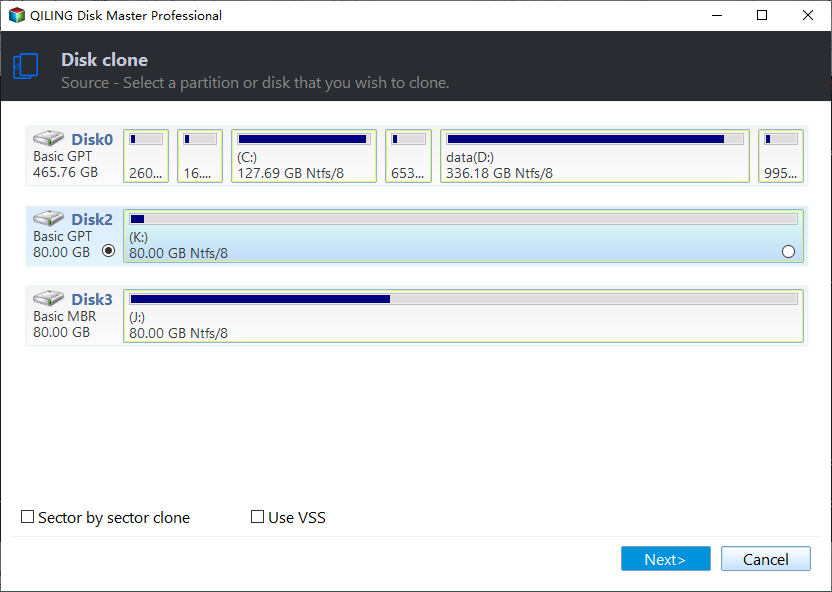
Step 2. Select the existing Windows boot disk as the source. Compare its capacity and partition map, including EFI/System Reserved and recovery partitions, then click Next.
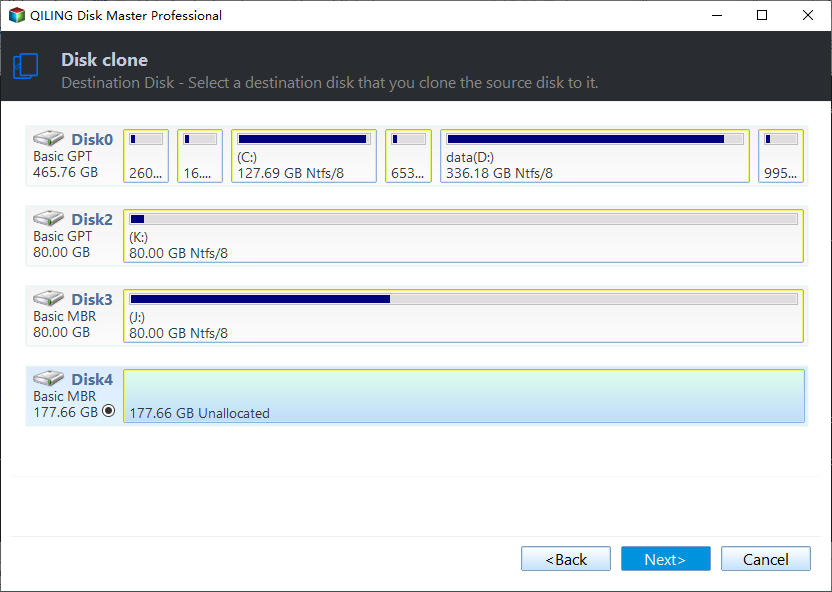
Step 3. Select the replacement disk as the destination and click Next. Check the disk number and capacity: every existing file on this destination may be overwritten.
Step 4. Review the source-to-destination layout. Confirm that all required partitions fit; enable Optimize for SSD for an SSD target and adjust the layout only if you understand the resulting space. The preview shown is an example; check your own disk map.
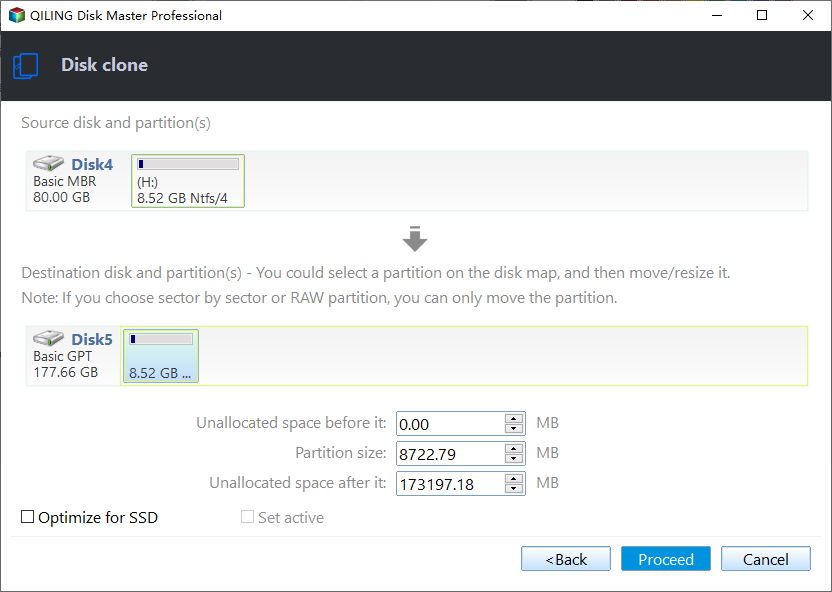
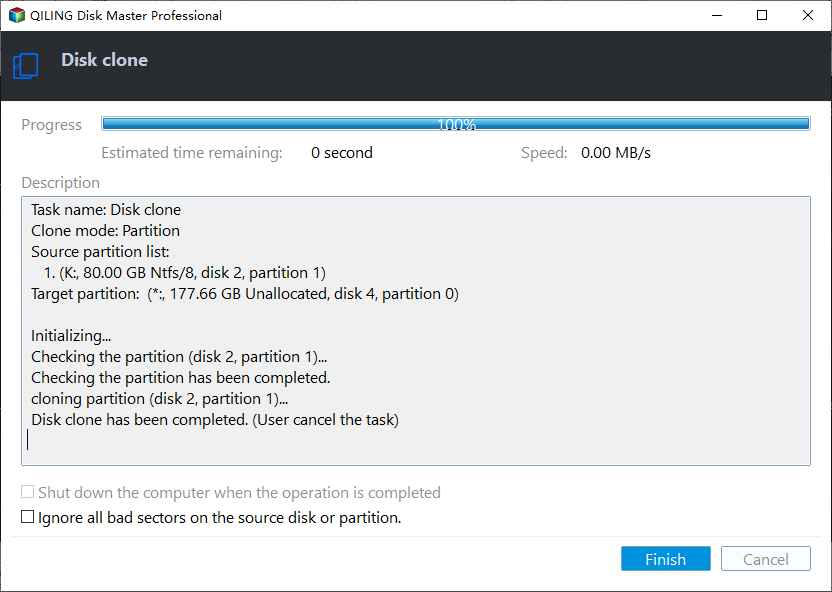
Step 5. Click Proceed, read and confirm the overwrite warning, and keep both drives connected until completion. Install the replacement, select it in firmware, and boot-test it before erasing the source.
Frequently Asked Questions
Is a DriveImage XML image immediately bootable? No. An image file must be restored to an appropriate disk or partition, with the boot layout handled correctly.
Can I copy only C:? Not for a reliable system migration if EFI or other boot partitions are on the source disk.
Conclusion
DriveImage XML can help with imaging and drive copying, but a Windows boot-drive replacement should preserve the full boot layout and be tested before the old disk is reused.
Related Articles
- Windows Cloning Tutorials
Browse Windows disk clone, system migration, and SSD upgrade guides. - Windows Disk Backup and Restore Tutorials
Plan a separate disk image before changing a boot drive. - Windows System Backup and Restore Tutorials
Find system image and recovery options for Windows PCs.
Products
Articles & Tutorials
- Data Recovery
- Data Backup
- File Recovery
- File Backup
- System Backup and Restore
- Disk and Partition Clone
- Technical articles
- Mobile articles
- Disk Master Help
- Windows Data Recovery Tutorials
- Windows Secure Delete Tutorials
- Windows Partition Management Tutorials
- Windows File Backup and Restore Tutorials
- Windows System Backup and Restore Tutorials
- Windows Disk Backup and Restore Tutorials
- Windows Clone Tutorials