Can I Save a Windows System Image on a Drive That Already Has Data?
Yes, an existing external drive can usually hold a new image alongside other files, provided the file system, permissions, and free space are suitable. You do not have to format a healthy destination merely because it contains data. However, a backup written to the same physical disk as Windows will not protect against disk failure.
Check the destination first
Step 1. In File Explorer, note the destination drive letter, file system, free space, and existing folders. Estimate space using the source system's used capacity; leave additional room for image metadata and future versions.
Step 2. Open a few existing files on the destination and copy a small test file there, then delete only that test copy. If the drive disconnects or reports errors, use a different destination. Do not delete old backups until the new one is verified.
Step 3. If the destination is a shared/network drive, confirm credentials and that the share remains available while the PC sleeps. Avoid saving the only backup to a second partition of the same internal disk.
Windows' built-in image option
On Windows versions that still provide Backup and Restore (Windows 7), open Control Panel, choose Create a system image, select a supported external or network destination, review the disks to be included, and start the image. The legacy interface may reject some destination types or file systems; do not reformat a drive containing valuable data to satisfy a wizard without first protecting that data elsewhere. Windows Backup/OneDrive file sync is not the same as a bare-metal system image.
Create the Image with Qiling Disk Master
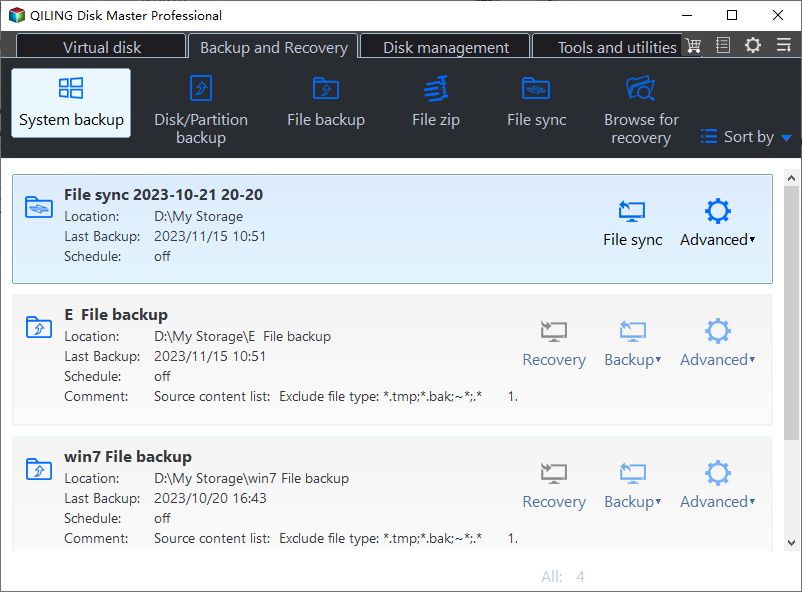
Step 1. Open Backup and Recovery > System Backup. Verify that the Windows system and boot partitions are selected automatically; do not substitute a file backup if you need a restorable system image.
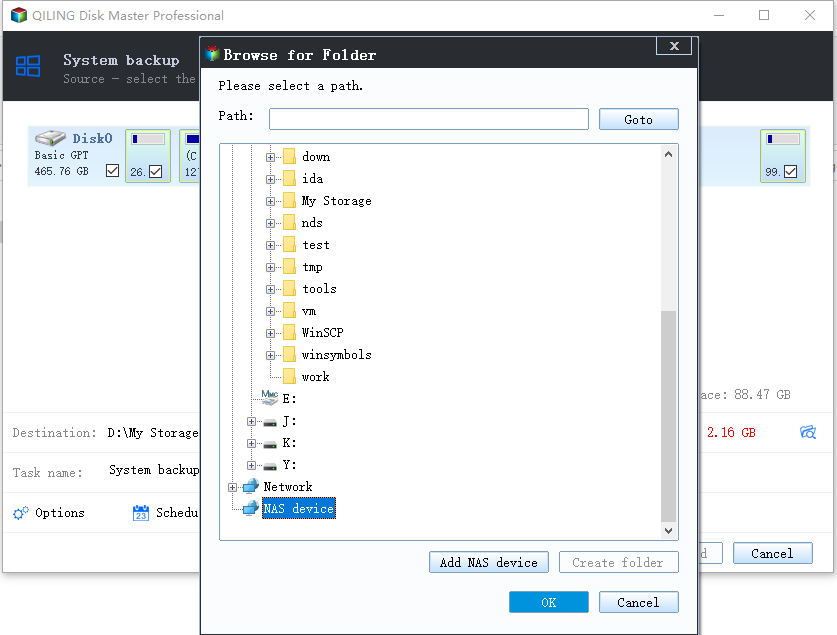
Step 2. Select a folder on the existing external drive as the destination. Recheck its letter and available space. Existing unrelated files should remain in place; the new image is written as a separate backup task.
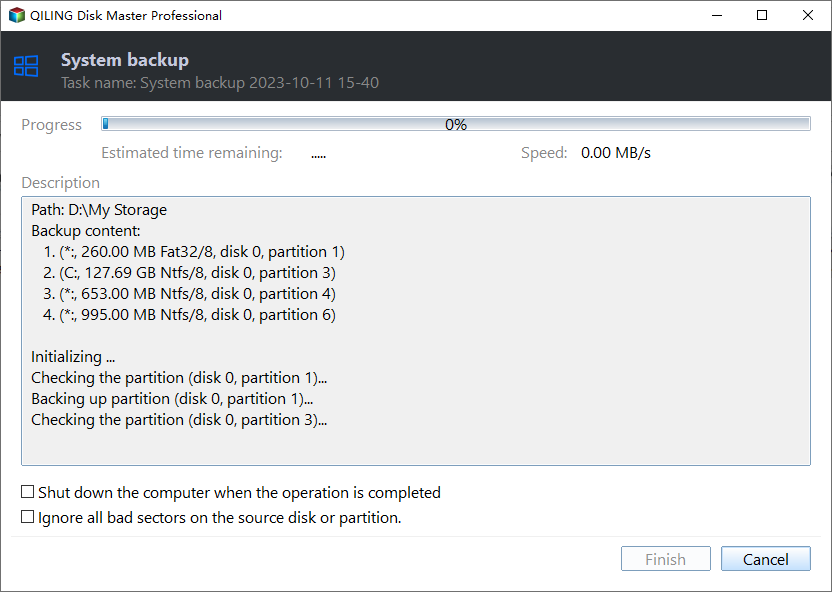
Step 3. Review the source and destination, click Proceed, and wait until completion. In the destination folder or Qiling task list, confirm that the new image exists. Open the restore workflow far enough to see that the image is recognized, but do not start a restore merely to test it.
Conclusion
Use an existing drive if it is healthy and has enough free space; no format is needed. Keep the image on separate physical storage and verify that it is recognized before relying on it.
Related Articles
- Windows System Backup and Restore Tutorials
Compare restore points, images, and recovery methods. - Windows File Backup and Restore Tutorials
Protect changing documents separately from the operating system.
Products
Articles & Tutorials
- Data Recovery
- Data Backup
- File Recovery
- File Backup
- System Backup and Restore
- Disk and Partition Clone
- Technical articles
- Mobile articles
- Disk Master Help
- Windows Data Recovery Tutorials
- Windows Secure Delete Tutorials
- Windows Partition Management Tutorials
- Windows File Backup and Restore Tutorials
- Windows System Backup and Restore Tutorials
- Windows Disk Backup and Restore Tutorials
- Windows Clone Tutorials