How to Back Up All Important Files in Windows 10
No single Windows folder necessarily contains all your work. Documents, Desktop, Pictures, email archives, browser exports, application data, and files on other drives may need separate attention.
Make a file inventory
Check every Windows user profile and data drive. Include project folders, downloads you still need, locally stored email archives, and game saves if they are not in the cloud. Some program settings live under AppData, but copying that folder does not guarantee an application can be restored without reinstalling it.
Decide whether you need files only or a complete system image. A file backup makes selected folders easier to restore; a system image also captures Windows and installed programs, subject to a full restore procedure.
Use Windows built-in options where appropriate
File History can protect selected libraries and folders on a separate drive, while Windows Backup can synchronize supported folders and settings through a Microsoft account. Check exactly which locations each feature includes. An external disk provides an independent copy if cloud access is unavailable.
Verify and maintain the backup
- Choose an external drive with enough free capacity and disconnect it after a completed backup.
- Check the task's selected source paths; a missed folder will not appear in the result merely because the job says completed.
- Open or restore a few representative files to a temporary folder. Repeat the backup after major changes and keep more than one copy of irreplaceable work.
Back Up Selected Windows 10 Files with Qiling
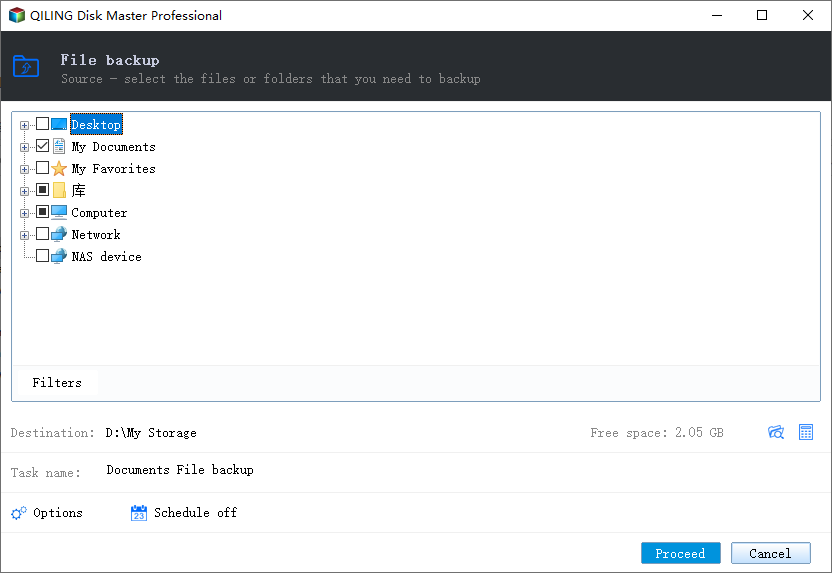
Use the folder tree to build an intentional set of files. Qiling does not automatically know every location that matters to you.
Step 1. Connect a healthy external drive and open Qiling Disk Master. Under Backup and Recovery, choose File backup.
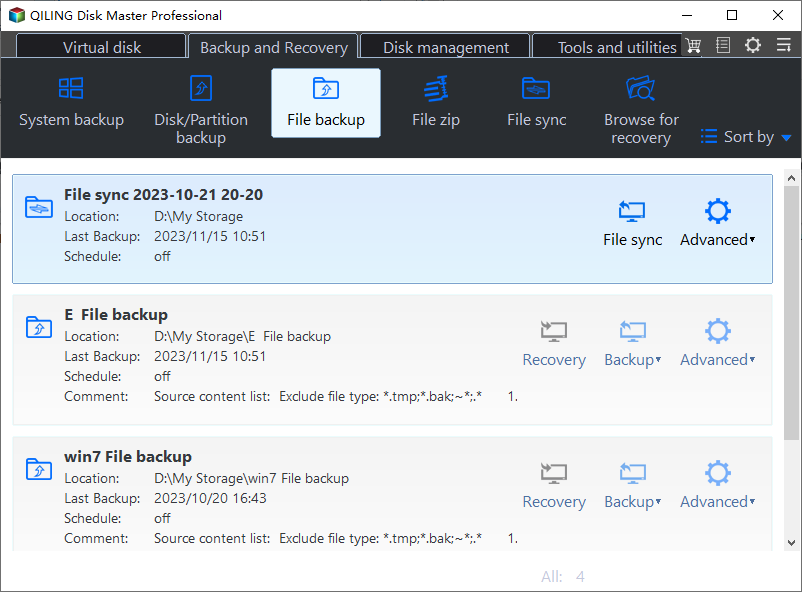
Step 2. In the folder tree, select your user folders and any additional data folders on other drives. Expand folders and check the selected paths; there is no separate Add Folder button in this screen.
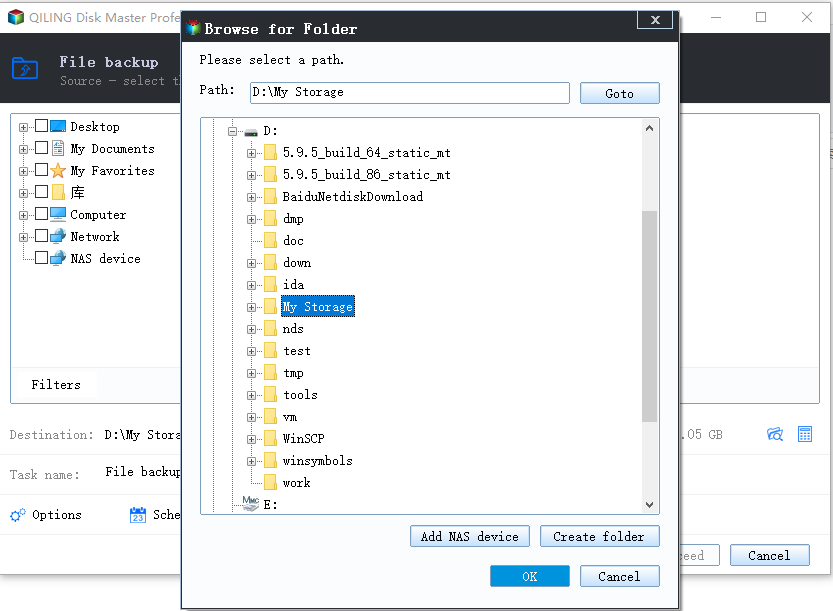
Step 3. Open the destination chooser, select a folder on a separate external disk, and click OK. Verify that the destination is not the same disk as the files being protected and has enough free space.
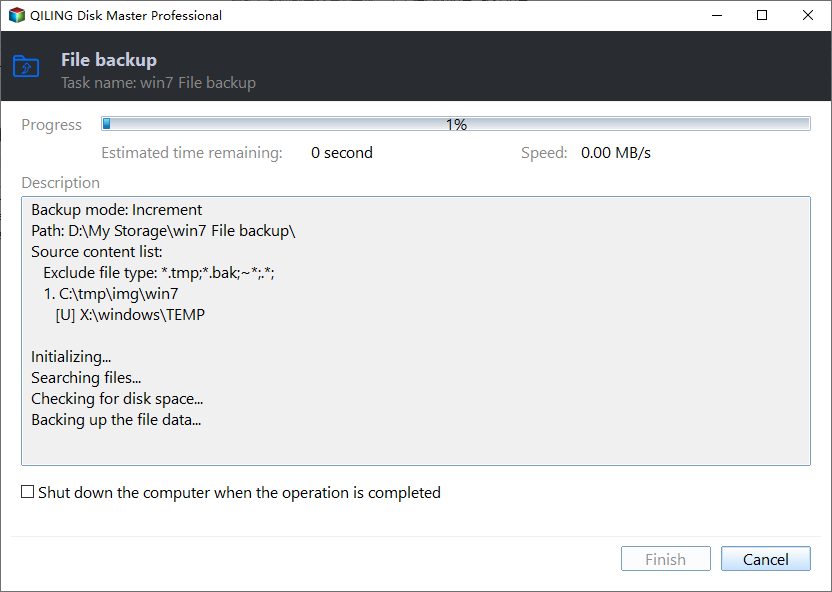
Step 4. Review the task name and selected folders, then click Proceed. Wait for the backup to finish. Confirm the backup image exists and test restoration of a few files.
Frequently Asked Questions
Does a file backup include Windows and installed apps? No. Use a system or disk image if you need to restore the operating system and applications together.
Should I include Downloads? Include files you still need; exclude large installers that can be downloaded again if space is limited.
Conclusion
Inventory files first, back up the selected folders to a separate drive, and test a small restore instead of relying only on a success message.
Related Articles
- Windows File Backup and Restore Tutorials
Find practical Windows file backup and restore methods. - Windows System Backup and Restore Tutorials
Compare system images, recovery drives, and restore options. - Windows Cloning Tutorials
Explore disk and system migration guides for Windows PCs.
Products
Articles & Tutorials
- Data Recovery
- Data Backup
- File Recovery
- File Backup
- System Backup and Restore
- Disk and Partition Clone
- Technical articles
- Mobile articles
- Disk Master Help
- Windows Data Recovery Tutorials
- Windows Secure Delete Tutorials
- Windows Partition Management Tutorials
- Windows File Backup and Restore Tutorials
- Windows System Backup and Restore Tutorials
- Windows Disk Backup and Restore Tutorials
- Windows Clone Tutorials