How to Transfer Files and Settings to a New Windows Computer
A new PC usually has different hardware and its own Windows license. Transferring personal information is safer than cloning the old operating system onto it. Make an inventory before the old computer is retired.
Inventory what must move
List documents, photos, desktop files, browser bookmarks, passwords stored in an approved manager, email archives, game saves, and application exports. Check folders outside your user profile and any secondary drives. For cloud-backed folders, confirm the files are actually downloaded or sign in on the new PC to sync them.
Choose the transfer route
An external SSD is useful for large offline copies. A trusted network share or cloud account can work when both PCs have reliable access. A Qiling File Backup image gives you a repeatable copy and restore route. Do not clone an old Windows system disk onto a new manufacturer's PC merely to move documents; firmware, drivers, boot configuration, and activation may differ.
Complete the move
Set up the new PC, install current Windows updates and applications from official sources, then restore user data into the intended folders. Sign in to browser and mail accounts, import exported settings, and check application license transfer rules. Open representative photos, documents, and projects before erasing or donating the old machine.
Back Up and Restore Selected Files with Qiling Disk Master
File Backup is appropriate when the goal is documents, photos, and other user data, not an identical Windows installation. Keep the backup on a separate healthy disk.
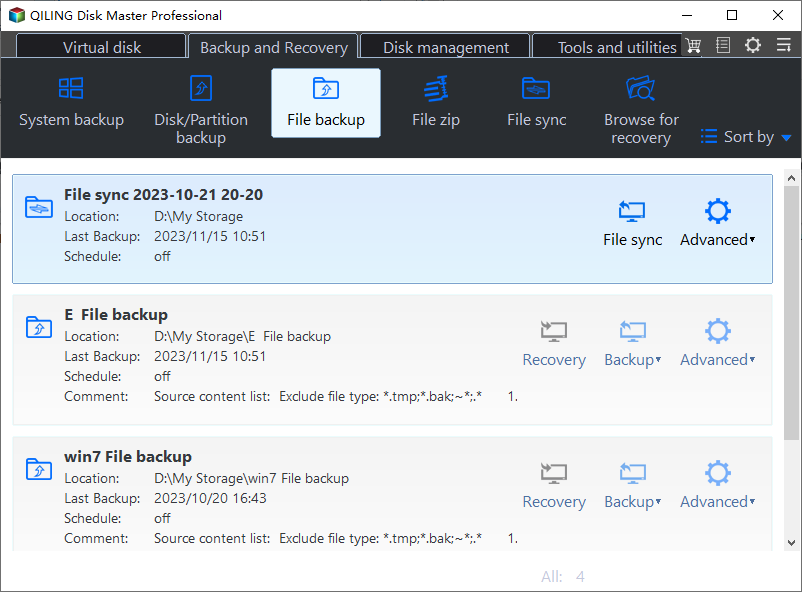
Step 1. On the old PC, connect the backup drive and choose Backup and Recovery > File backup in Qiling Disk Master.
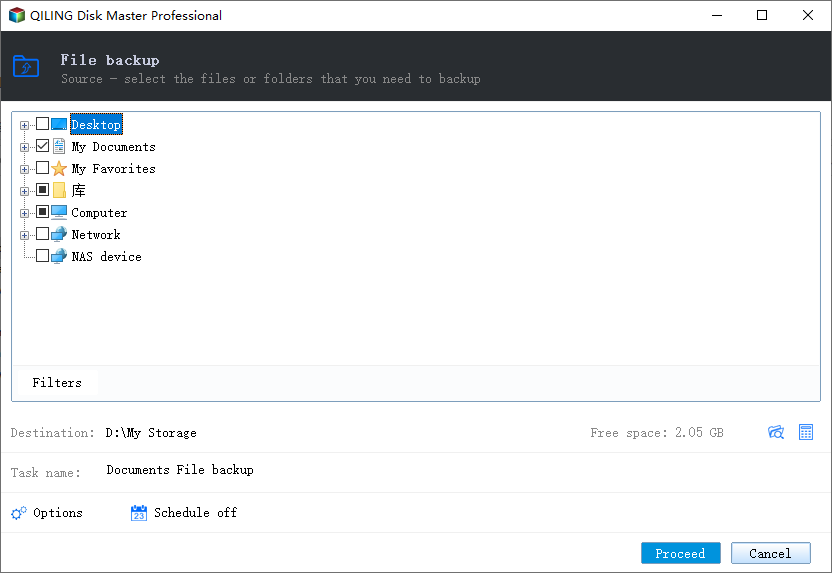
Step 2. Select the source folders directly in the folder tree. Include Desktop, Documents, Pictures, downloads you need, and any application export folders.
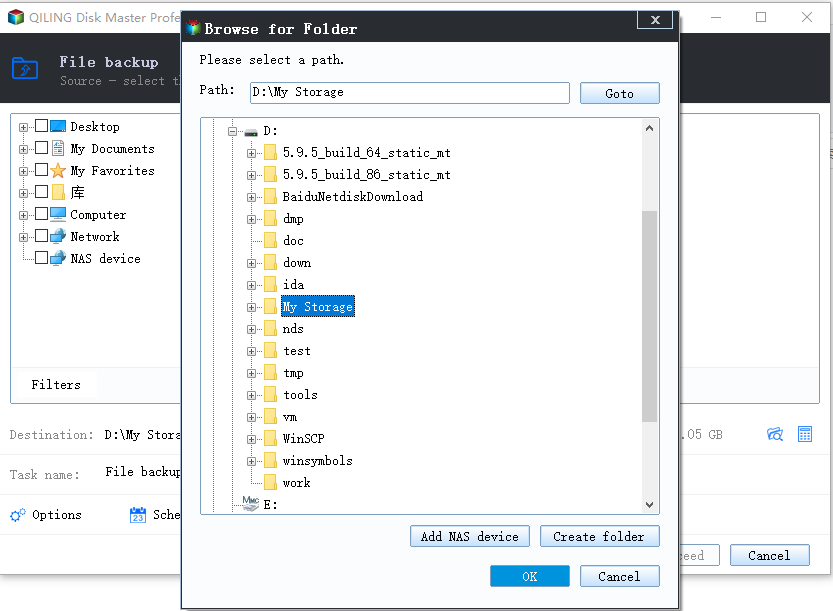
Step 3. Set the external drive as the destination, check its free space, and click Proceed to create the backup.
Step 4. After the job completes, open a few files from the backup and disconnect the drive safely. On the new computer, install Qiling and use the restore option to choose the backup image and the intended destination folder.
Step 5. Verify the restored files, then reinstall applications and sign back in with legitimate licenses. Do not overwrite newer files on the destination without reviewing them.
A file backup does not transfer installed programs or make a different PC boot from the old Windows image. Export browser data, email archives, and application-specific settings separately.
Conclusion
Transfer data deliberately, reinstall apps on the new PC, and verify important files before retiring the source computer.
Related Articles
- Windows System Backup and Restore
Compare system images, cloning, and recovery options. - Windows Disk Backup and Restore
Find disk backup and restore guides for Windows PCs.
Products
Articles & Tutorials
- Data Recovery
- Data Backup
- File Recovery
- File Backup
- System Backup and Restore
- Disk and Partition Clone
- Technical articles
- Mobile articles
- Disk Master Help
- Windows Data Recovery Tutorials
- Windows Secure Delete Tutorials
- Windows Partition Management Tutorials
- Windows File Backup and Restore Tutorials
- Windows System Backup and Restore Tutorials
- Windows Disk Backup and Restore Tutorials
- Windows Clone Tutorials