How Long Does a Full Windows 10 Reset Take?
A full Windows 10 reset can take substantially longer than a normal restart. Drive speed, recovery files, cloud download, and the Remove everything settings all affect the time.
Why the duration varies
An SSD and a healthy local recovery image usually finish faster than a slow or damaged HDD. Cloud download depends on network speed. Cleaning the drive for resale takes longer than simply removing files. There is no reliable single time estimate for every PC.
Prepare for a reset
- Back up files and save the BitLocker recovery key. Check that you can sign in to your accounts afterward.
- Connect stable AC power and, if using Cloud download, a reliable network.
- Disconnect unrelated external drives, choose Keep my files or Remove everything, and read the final settings screen.
- Start the reset and allow the PC to reboot on its own. A dark screen or apparently unchanged percentage can persist for a while.
When to investigate a stalled reset
Do not interrupt the process merely because progress pauses briefly; Microsoft notes that the screen can stay black for an extended period. If there is no activity after a long wait, the machine reboots repeatedly, or the disk shows errors, consult Windows Recovery Environment and prioritize the data backup before attempting another reset.
After completion
- Sign in and allow Windows to finish setup and updates.
- Check Device Manager, network access, and Windows activation.
- Restore only the files you need from the backup, then reinstall applications from trusted sources.
Back Up Selected Files with Qiling Disk Master
A separate Qiling File Backup to an external disk makes it easier to verify personal files before the long reset begins.
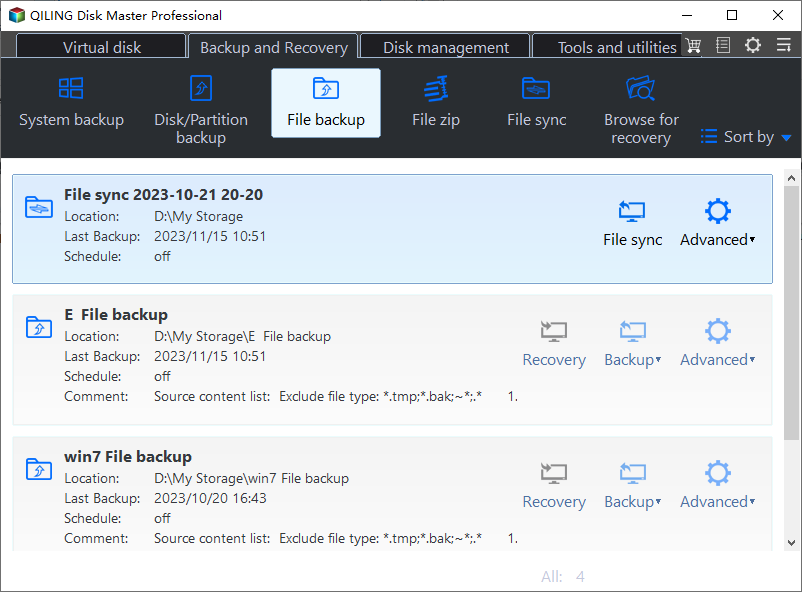
Step 1. Connect a separate backup drive. Open Backup and Recovery and choose File backup.
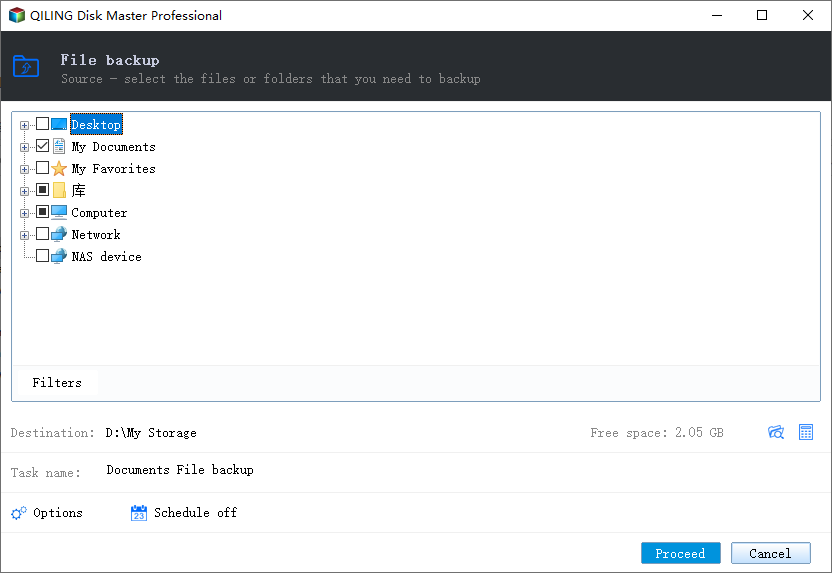
Step 2. In the folder tree, expand the appropriate drive and select the folders you need to protect. Check game saves, Documents, Pictures, or other locations that matter for this task; do not assume every needed file is in one folder.
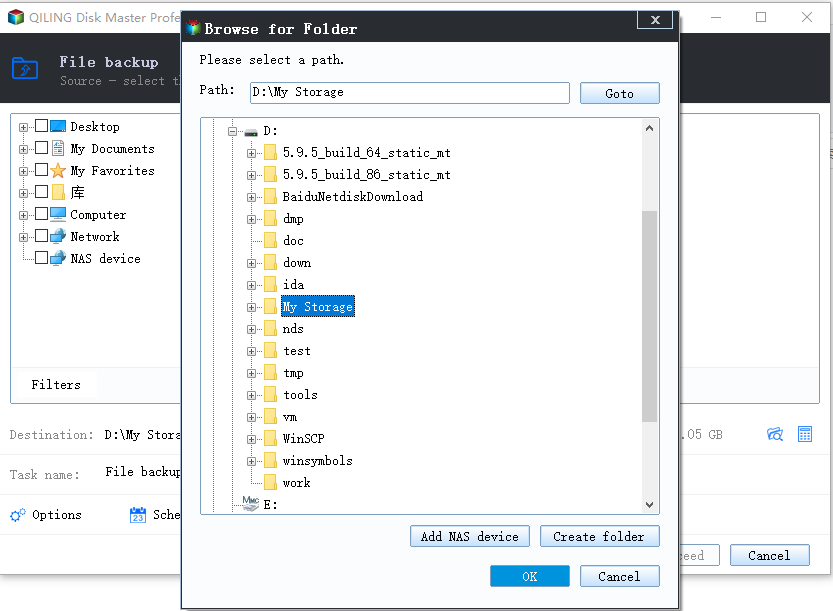
Step 3. Choose a destination on another physical drive or a trusted network location. Check its free space and give the task a recognizable name.
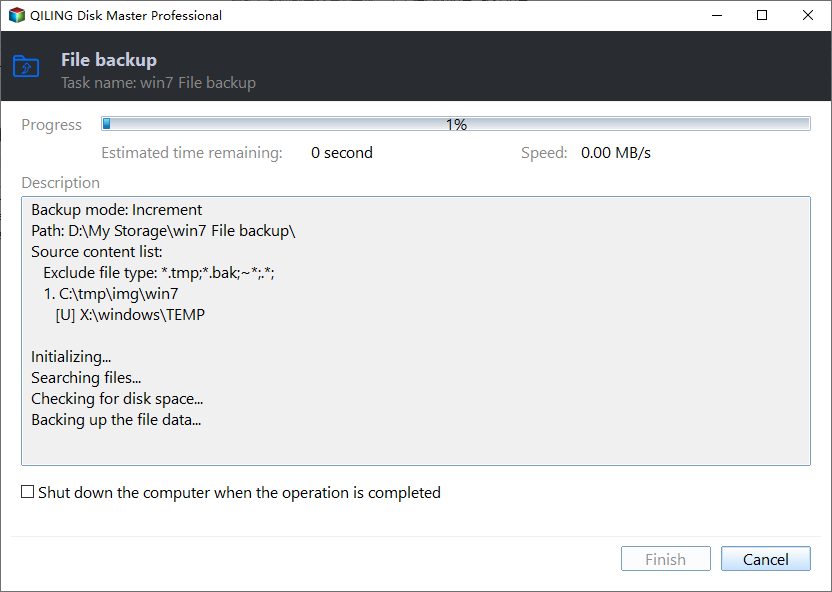
Step 4. Click Proceed and wait for the progress screen to finish. Confirm the backup exists, then keep the backup drive separate from the source PC.
Frequently Asked Questions
Does a black screen mean the reset failed? Not immediately. Allow time for normal recovery and restart activity before diagnosing a failure.
Is cloud download always slower? It depends on connection speed and the condition of local recovery files.
Conclusion
Windows reset time depends on the disk, network, and selected removal options. Prepare a backup and allow normal restart activity before diagnosing a stall.
Related Articles
- Windows File Backup and Restore Tutorials
Compare ways to protect and restore personal files in Windows. - Windows System Backup and Restore Tutorials
Find system image, recovery drive, and restore guides for Windows. - Windows Disk Backup and Restore Tutorials
Explore disk image backup and restoration workflows for Windows drives.
Products
Articles & Tutorials
- Data Recovery
- Data Backup
- File Recovery
- File Backup
- System Backup and Restore
- Disk and Partition Clone
- Technical articles
- Mobile articles
- Disk Master Help
- Windows Data Recovery Tutorials
- Windows Secure Delete Tutorials
- Windows Partition Management Tutorials
- Windows File Backup and Restore Tutorials
- Windows System Backup and Restore Tutorials
- Windows Disk Backup and Restore Tutorials
- Windows Clone Tutorials