How Long Does It Take to Back Up a Windows PC?
A backup can take minutes or many hours. The amount of data to copy, the slowest drive or connection, and whether this is the first full backup matter more than the computer's total disk capacity.
What changes backup time
Check used data, not the advertised size of the disk. Millions of small files may take longer than a few large video files of the same total size. A slow HDD, USB 2.0 port, network share, encryption, compression, antivirus scanning, and source read errors can all reduce throughput.
A full image includes more data than a selected file backup. Later incremental backups may be shorter, but they depend on a valid earlier backup chain. Do not use a single transfer-rate formula as a guaranteed completion time.
Estimate and prepare
- Count the files and data volume you actually need to protect; check available space on the destination.
- Use a healthy external disk and the fastest reliable connection supported by both devices. Avoid hubs and sleep mode during a first full backup.
- Close large applications that are writing to the same files. If the source has clicking noises or repeated read errors, stop normal backup attempts and consider recovery help.
After the progress bar finishes
The backup is not useful merely because a task says complete. Check the destination, inspect the task log for skipped files, and restore a small sample to another folder. If the result is much smaller than expected, review which source folders were selected before relying on it.
Keep the external drive disconnected when not backing up to reduce accidental deletion, ransomware exposure, and power-related damage.
Run a Timed Qiling File Backup
A real first backup gives a better estimate for your own PC than a generic chart. Note the start time and the amount of selected data.
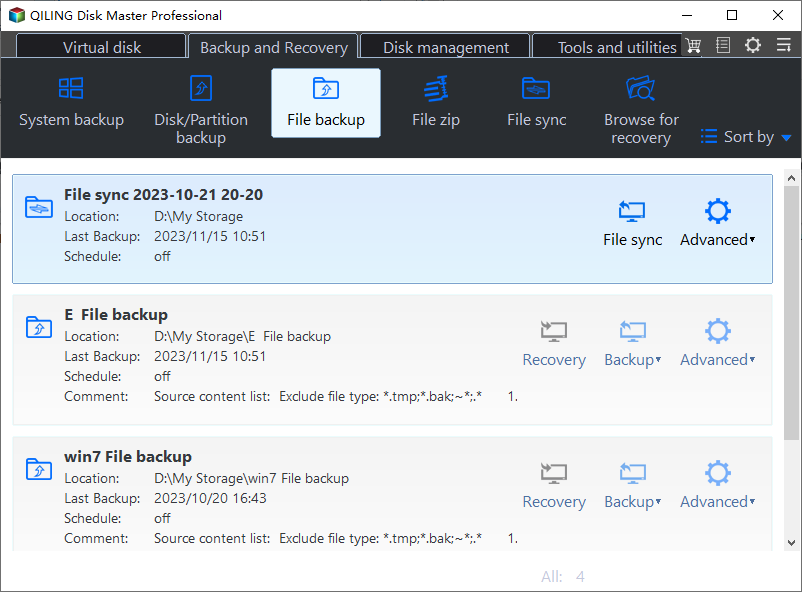
Step 1. Connect a healthy external drive and open Qiling Disk Master. Under Backup and Recovery, choose File backup.
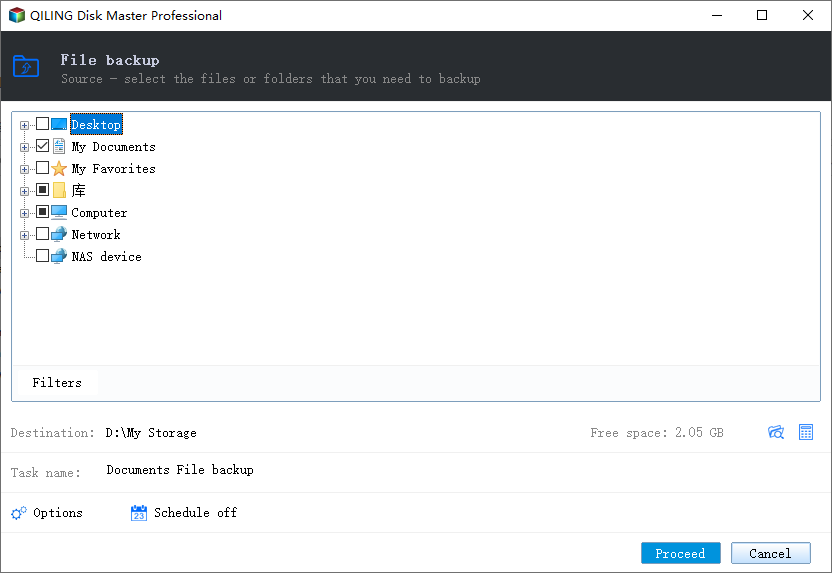
Step 2. In the folder tree, select the personal folders whose backup time you want to measure. Expand folders and check the selected paths; there is no separate Add Folder button in this screen.
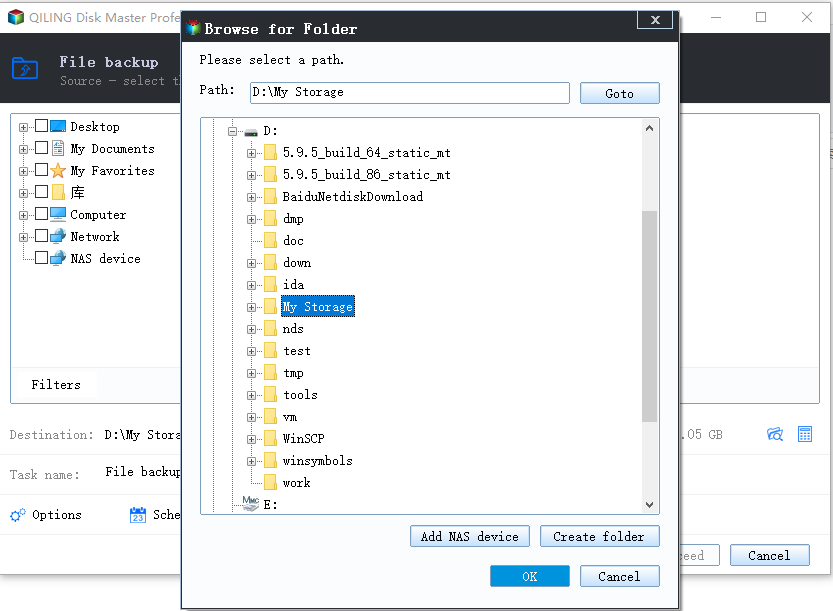
Step 3. Open the destination chooser, select a folder on a separate healthy external drive, and click OK. Verify that the destination is not the same disk as the files being protected and has enough free space.
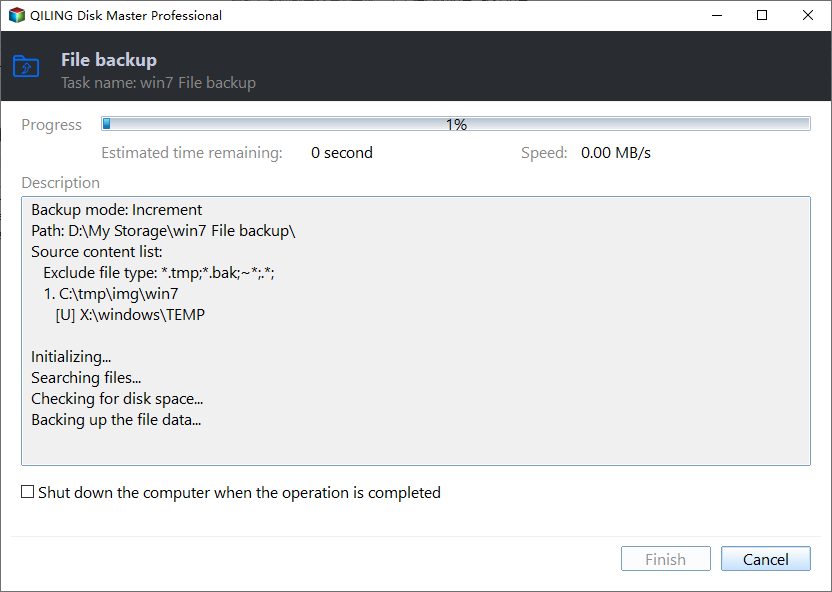
Step 4. Review the task name and selected folders, then click Proceed. Wait for the backup to finish. Record the elapsed time, check the task result, and test a small restore before scheduling future runs.
Frequently Asked Questions
Why is the first backup slower? It must copy all selected data. A later incremental run may copy only changes.
Does a slow backup mean the drive is failing? Not always. Check connection speed, file count, and disk health before drawing that conclusion.
Conclusion
Estimate from the data and the slowest link, then run a verified trial backup. Plan time for checking the result, not only for copying bytes.
Related Articles
- Windows File Backup and Restore Tutorials
Choose a backup route for personal files and folders. - Windows System Backup and Restore Tutorials
Compare system image and recovery methods. - Windows Disk Backup and Restore Tutorials
Plan disk image backup and restore for Windows drives. - How Long Does It Take to Clone a Hard Drive to an SSD?
Estimate HDD-to-SSD cloning time from data volume, transfer speed, interface, and disk health; then run and verify a Windows disk clone.
Products
Articles & Tutorials
- Data Recovery
- Data Backup
- File Recovery
- File Backup
- System Backup and Restore
- Disk and Partition Clone
- Technical articles
- Mobile articles
- Disk Master Help
- Windows Data Recovery Tutorials
- Windows Secure Delete Tutorials
- Windows Partition Management Tutorials
- Windows File Backup and Restore Tutorials
- Windows System Backup and Restore Tutorials
- Windows Disk Backup and Restore Tutorials
- Windows Clone Tutorials