How Many External Backup Drives Do You Need?
One drive is a start, not a complete strategy
One external drive protects against failure of the PC's internal disk, but not theft, fire, accidental deletion propagated to the backup, or ransomware that reaches a connected drive. Two rotating external drives give you an offline copy while the other is updated. For irreplaceable data, add a third copy at another location or a carefully configured cloud/NAS backup. The familiar 3-2-1 idea means three copies, on two kinds of storage, with one off-site; adapt it to your actual risk and budget.
Set a rotation you can maintain
Step 1. Estimate the space used by personal files and any system images. Leave room for multiple versions rather than choosing a drive that only fits today's data.
Step 2. Label the drives A and B. Back up to A, verify a sample restore, and disconnect it. On the next scheduled cycle, use B. Keep the disconnected drive in a different place if possible.
Step 3. Every few months restore a test file from each drive. Replace a drive that disconnects, reports errors, or lacks room for a new backup. Encryption is useful if a portable drive might be lost, but keep its recovery key separately.
Create a System Image with Qiling Disk Master
A system image complements file backups. Store it on a separate physical drive.
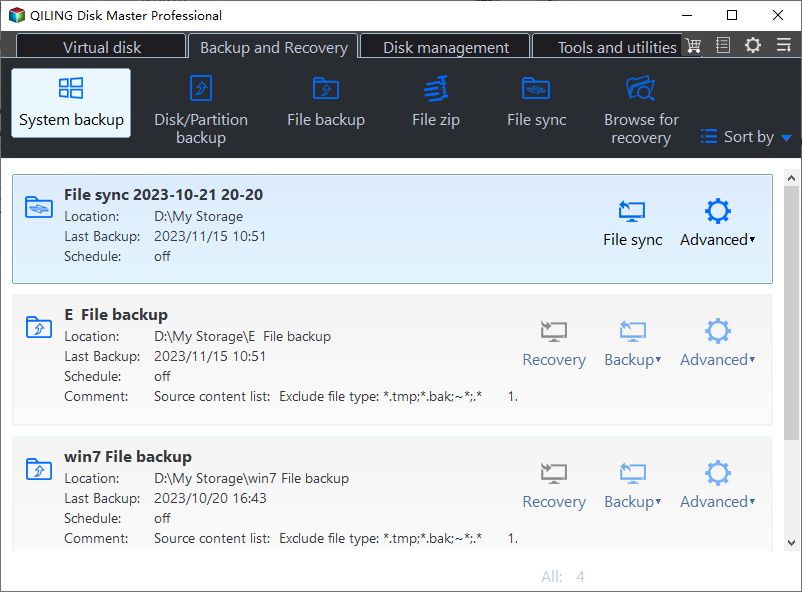
Step 1. Open Backup and Recovery > System Backup and verify the Windows system partitions selected as the source.
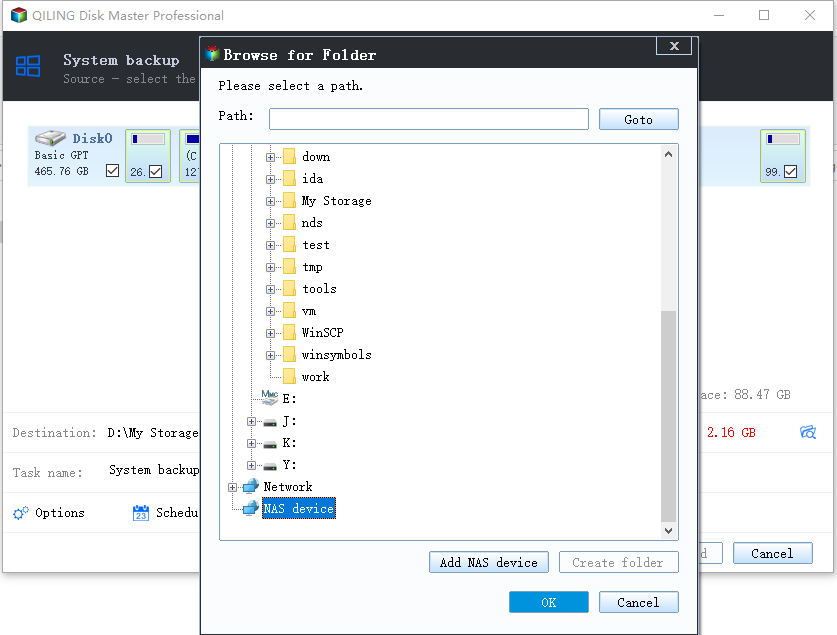
Step 2. Choose a healthy external drive or NAS folder as the destination and check its free space.
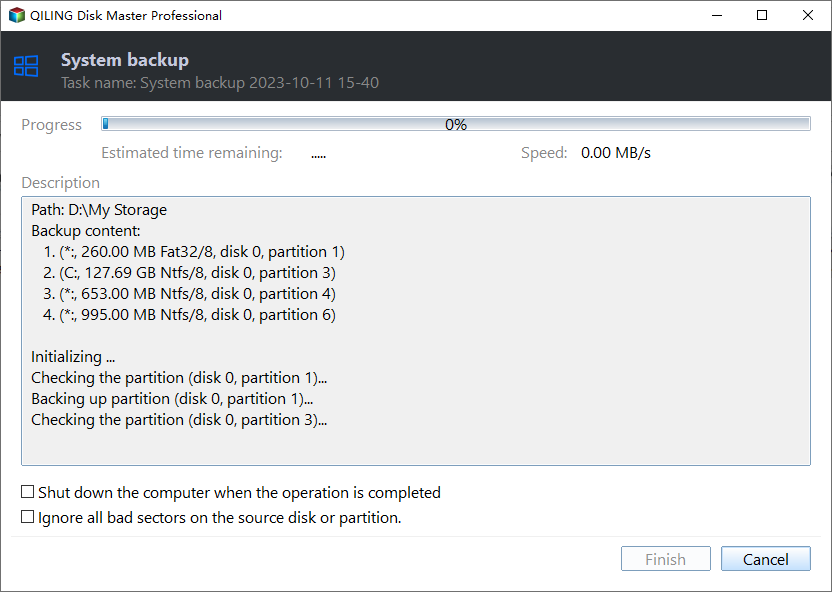
Step 3. Review the task, click Proceed, and wait for completion. Confirm the image appears in the task list and prepare bootable recovery media.
Conclusion
For most home PCs, two alternating external drives plus an off-site or cloud copy is more resilient than one permanently attached drive. Whatever the count, verify restores.
Related Articles
- Windows File Backup and Restore Tutorials
Find file-copy, scheduled-backup, and restore guides. - Windows System Backup and Restore Tutorials
Compare file backups with full system images.
Products
Articles & Tutorials
- Data Recovery
- Data Backup
- File Recovery
- File Backup
- System Backup and Restore
- Disk and Partition Clone
- Technical articles
- Mobile articles
- Disk Master Help
- Windows Data Recovery Tutorials
- Windows Secure Delete Tutorials
- Windows Partition Management Tutorials
- Windows File Backup and Restore Tutorials
- Windows System Backup and Restore Tutorials
- Windows Disk Backup and Restore Tutorials
- Windows Clone Tutorials