How Much Should a Windows SSD Upgrade Cost?
There is no single fair price for an SSD upgrade. The total depends on the SSD that fits your PC, the capacity you need, whether you do the installation yourself, and how you move Windows and files.
What belongs in the estimate
Start with the interface: 2.5-inch SATA, M.2 SATA, and M.2 NVMe are not interchangeable merely because they are all SSDs. Check the exact laptop or motherboard manual for slot support and physical size. Then choose capacity based on used space plus headroom for updates, games, and future files.
Include any adapter, enclosure, cable, mounting bracket, or technician labor. A one-slot laptop may need a USB enclosure during cloning. Prices vary by region and date, so compare current listings rather than relying on a fixed number in an old article.
Migration choices change the work
Cloning a healthy boot drive keeps Windows, installed apps, and settings, but the new SSD must fit the used content and the procedure needs a safe connection. A clean install may take longer because you must install Windows, drivers, apps, and restore personal files. A separate backup remains valuable whichever route you choose.
If the old HDD has bad sectors or disconnects, budget for recovery or professional help; do not assume ordinary cloning software can fix physical damage.
How to judge value
For an older PC, compare the upgrade cost with the machine's remaining life, RAM, CPU limits, and battery condition. An SSD can improve booting and application loading, but it will not solve a weak graphics processor or insufficient memory. Keep the old drive until you confirm the new one boots and contains your files.
Move Windows to the New SSD with Qiling Disk Master
When the old system drive is healthy, a disk clone can reduce the setup work included in the upgrade cost. The destination SSD is erased.
Step 1. Connect the new drive and open Qiling Disk Master. Under Tools and utilities, choose Disk/Partition clone and select the whole source disk, not just C:.
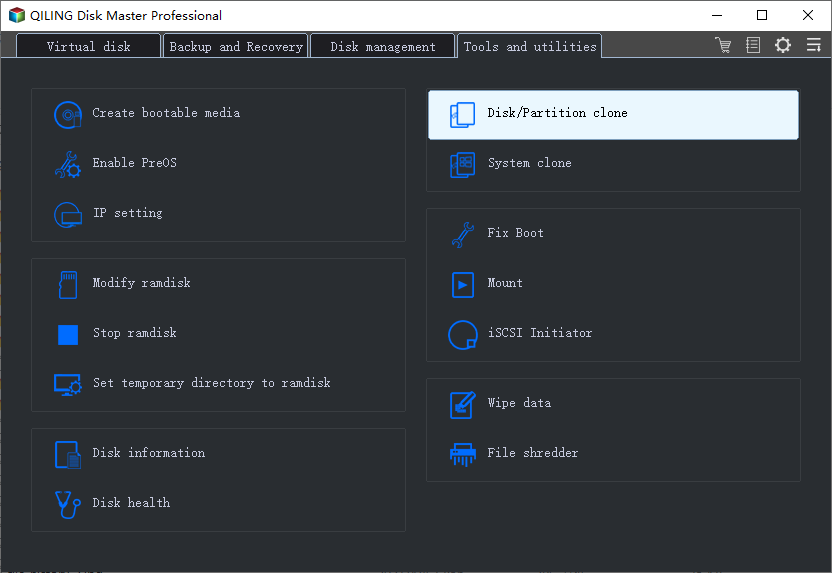
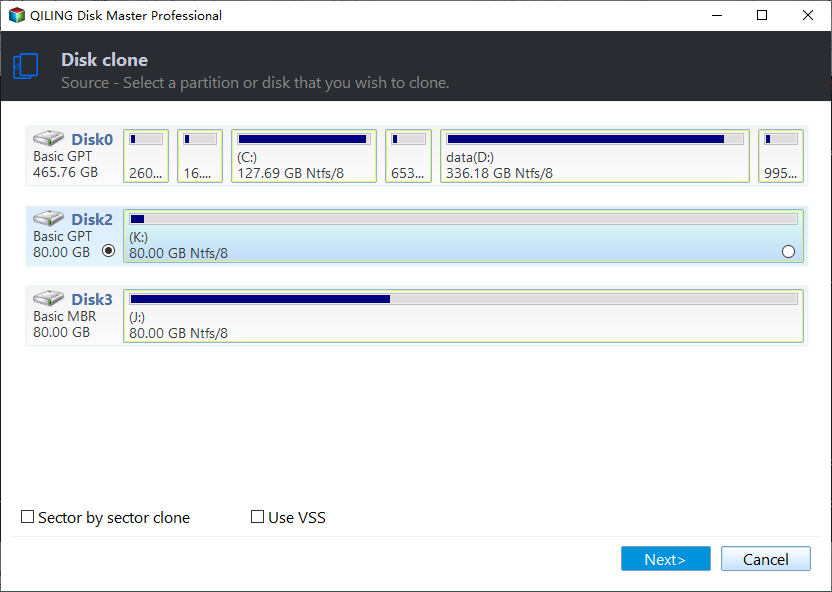
Step 2. Select the existing Windows HDD or SSD as the source. Compare its capacity and partition map, including EFI/System Reserved and recovery partitions, then click Next.
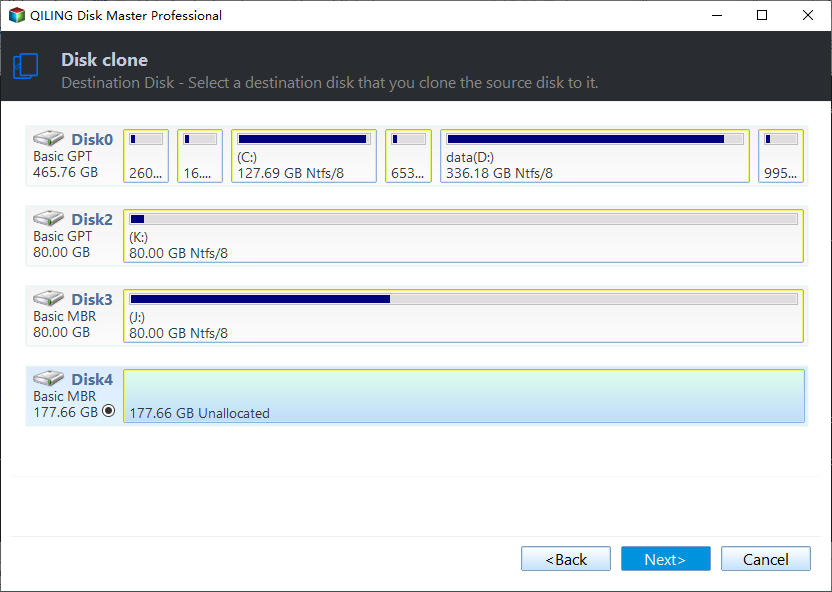
Step 3. Select the purchased SSD as the destination and click Next. Check the disk number and capacity: every existing file on this destination may be overwritten.
Step 4. Review the source-to-destination layout. Confirm that all required partitions fit; enable Optimize for SSD for an SSD target and adjust the layout only if you understand the resulting space. The preview shown is an example; check your own disk map.
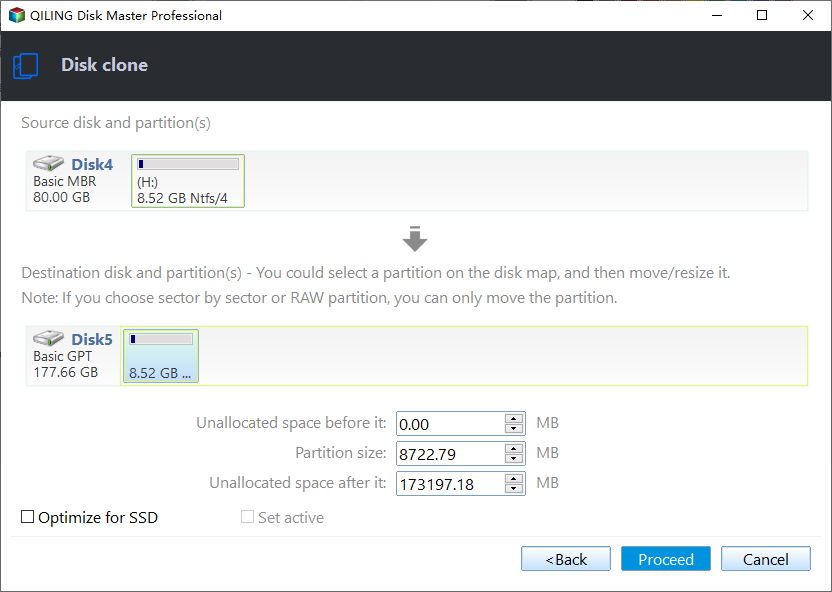
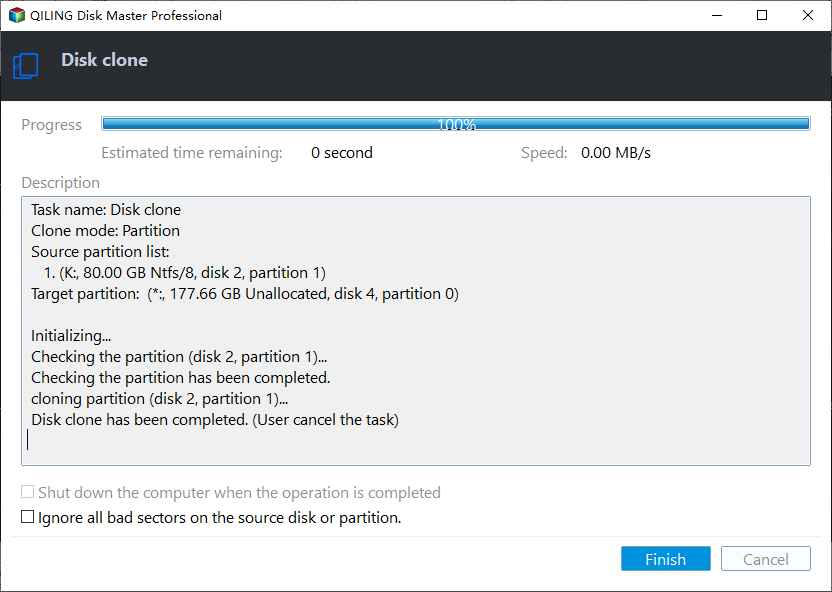
Step 5. Click Proceed, read and confirm the overwrite warning, and keep both drives connected until completion. Boot from the SSD and check capacity before deciding whether to repurpose the old disk.
Frequently Asked Questions
Do I need a paid installation service? Not always. A compatible adapter, backup, and careful clone or clean install may be enough for a user comfortable opening the PC.
Will an SSD raise game frame rates? It usually improves loading and asset access more than GPU-limited frame rates.
Conclusion
Price the correct SSD and connection parts first, then include migration time and backup needs. Test the result before treating the upgrade as complete.
Related Articles
- Windows Cloning Tutorials
Browse Windows disk clone, system migration, and SSD upgrade guides. - Windows Disk Backup and Restore Tutorials
Plan a separate disk image before changing a boot drive. - Windows System Backup and Restore Tutorials
Find system image and recovery options for Windows PCs.
Products
Articles & Tutorials
- Data Recovery
- Data Backup
- File Recovery
- File Backup
- System Backup and Restore
- Disk and Partition Clone
- Technical articles
- Mobile articles
- Disk Master Help
- Windows Data Recovery Tutorials
- Windows Secure Delete Tutorials
- Windows Partition Management Tutorials
- Windows File Backup and Restore Tutorials
- Windows System Backup and Restore Tutorials
- Windows Disk Backup and Restore Tutorials
- Windows Clone Tutorials