How to Restore a Hard Disk Image File in Windows
Restore a hard disk image file to a new or repaired drive, choose the right target disk, and fix boot issues after recovery.
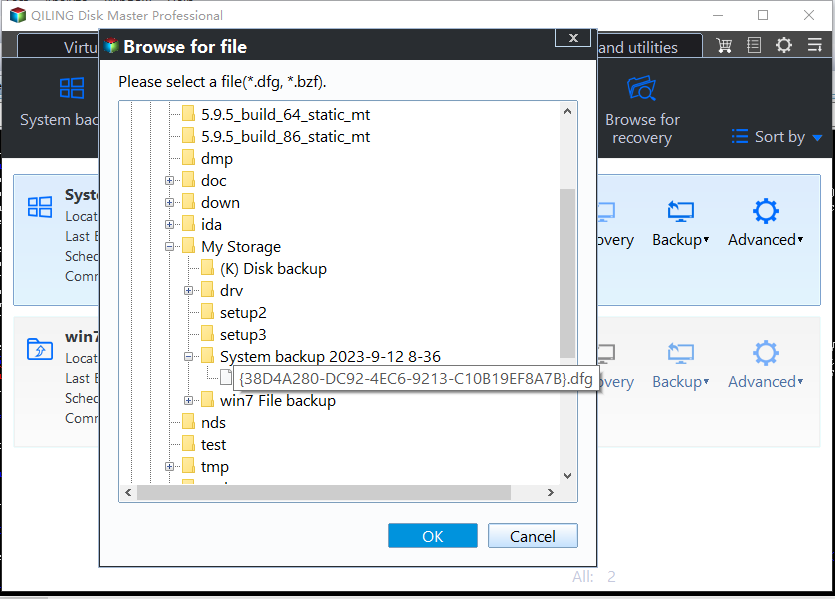
Overview
A hard disk image file stores the contents of a disk or selected partitions in a restorable backup. You can use it after disk failure, Windows corruption, malware cleanup, or a storage upgrade.
The restore target will usually be overwritten, so confirm the disk number before continuing.
What to Prepare First
- Keep the image file on a separate drive, NAS, or external disk.
- Connect the replacement or repaired target drive.
- Create bootable media if Windows cannot start.
- Confirm whether you need to restore the entire disk or selected partitions.
Use Windows Built-in Tools First
Windows System Image Recovery can restore images created by Windows Backup and Restore. Boot into recovery, choose System Image Recovery, select the image, and restore it to the target disk.
If your image was created by Qiling, use Qiling restore media or the installed application to select and restore the image.
Back Up the Disk with Qiling Disk Master
A disk backup is safer than copying folders when you need to preserve Windows, recovery partitions, boot files, and several data partitions together. Save the image to another physical drive or a network location.
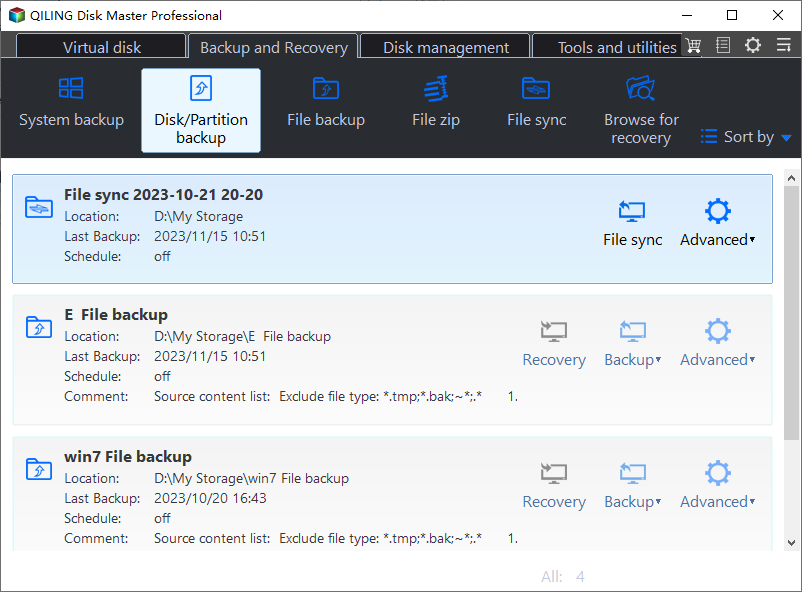
Step 1. Open Qiling Disk Master and choose Disk/Partition Backup. Use this option when the task involves a whole drive, a system image, or several partitions.
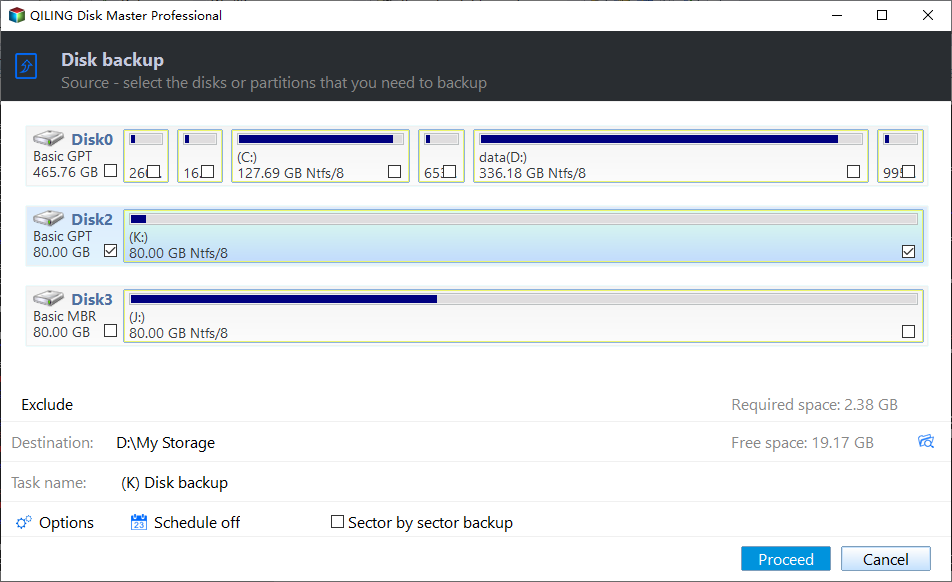
Step 2. Select the disk or partitions you need to protect directly in the source selection area. For a Windows disk, include the EFI/System Reserved partition, C drive, recovery partition, and any data partition that belongs to the same recovery plan.
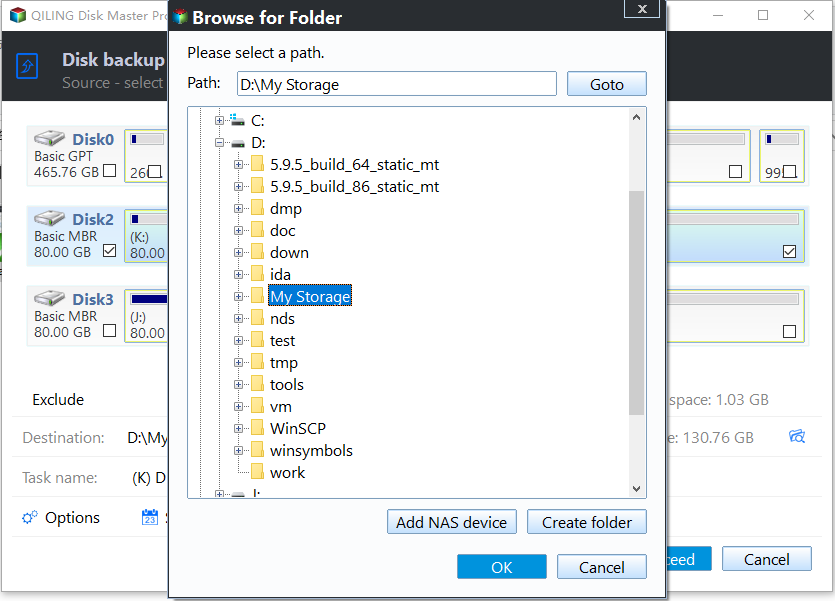
Step 3. Choose a destination on another disk, an external drive, or a NAS folder. Do not store the backup image on the same drive that may fail or be formatted.
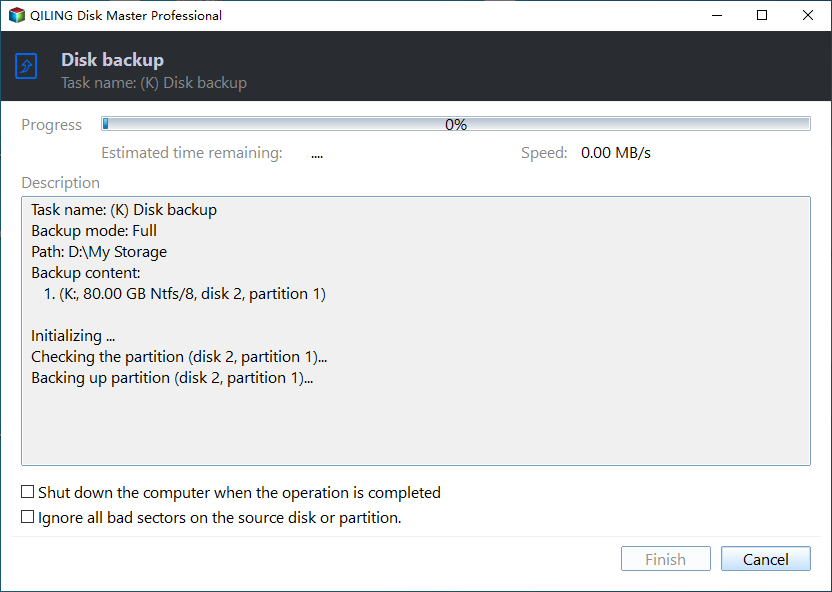
Step 4. Check the source and destination, then click Proceed. Wait until the image is complete and verify that the backup file appears in the destination folder.
Troubleshooting Tips
- If the image is not detected, check the folder location and drive connection.
- If the target drive is smaller, restore only if used space and partition layout fit.
- If Windows does not boot after restore, run Startup Repair or check BIOS boot order.
FAQ
Should I back up before following these steps? Yes. If the disk is readable and the files matter, create a backup before cloning, repairing, formatting, resetting, or changing hardware.
Can I use Windows built-in tools only? Use built-in tools for simple file copy, restore points, File History, Disk Management, and Windows setup. Use Qiling tools when you need a clearer disk map, bootable recovery media, scheduled backup, or disk clone workflow.
Will these operations erase my target drive? Cloning, restoring an image, formatting, and creating some bootable media can overwrite the target drive. Read the warning message and confirm the disk number before clicking Proceed.
Conclusion
Restoring a hard disk image is safest when the image, target disk, and boot mode are all verified before execution.
Related Articles
- Windows System Backup and Restore Tutorials
Browse Windows backup and restore guides for system images, recovery drives, restore points, and safe repair preparation. - Windows Disk Backup and Restore Tutorials
Find Windows disk backup, SSD image backup, external drive backup, and restore tutorials with practical Qiling workflows. - Windows Clone Tutorials
Review Windows cloning guides for system migration, disk clone, SSD upgrade, and safe boot preparation.
Products
Articles & Tutorials
- Data Recovery
- Data Backup
- File Recovery
- File Backup
- System Backup and Restore
- Disk and Partition Clone
- Technical articles
- Mobile articles
- Disk Master Help
- Windows Data Recovery Tutorials
- Windows Secure Delete Tutorials
- Windows Partition Management Tutorials
- Windows File Backup and Restore Tutorials
- Windows System Backup and Restore Tutorials
- Windows Disk Backup and Restore Tutorials
- Windows Clone Tutorials