Is a 1TB SSD Big Enough for a Windows Gaming PC?
A 1TB SSD can be enough for a gaming PC with a curated library, but there is no universal answer. Games, updates, captures, and free working space compete with Windows and applications for the same capacity.
Calculate space from your real library
Check Storage settings and each launcher's installed-game sizes, then add Windows, applications, download cache, patches, mods, recordings, and future titles. A nominal 1TB drive provides less formatted space than the printed decimal figure, and a nearly full SSD leaves little room for game updates.
If you keep only a few games installed, 1TB may be comfortable. Several very large titles, video captures, or multiple users can justify a second or larger drive. Decide based on actual installed sizes, not a general “minimum gaming SSD” claim.
Decide between a second drive and replacement
If the PC has another compatible M.2 or SATA slot, add a data SSD and move game libraries through each launcher where supported. That avoids moving Windows. If the existing Windows SSD must be replaced, a whole-disk clone can preserve boot, applications, and games when the target is compatible and large enough.
An external SSD can carry some game libraries, but speed, disconnect risk, and launcher behavior depend on the interface and title. It is not a substitute for backing up local saves.
Protect local saves and verify migration
Cloud saves are not universal. Check Documents, AppData, the game folder, and launcher settings for local progress. Back up saves and irreplaceable projects separately before moving a drive.
After expanding storage, launch a representative game, load a recent save, inspect free space, and keep the old SSD until the new setup is stable. An SSD upgrade usually improves loading and transfers, not frame rate by itself.
Move a Full Gaming Boot SSD with Qiling
Use a full-disk clone only when replacing the SSD that holds Windows. If adding a second data drive, install and set it up without cloning the boot disk.
Step 1. Connect the destination by a compatible SATA or NVMe port or enclosure. Open Qiling Disk Master and choose Tools and utilities > Disk/Partition clone. Connect a compatible larger target and copy local saves separately.
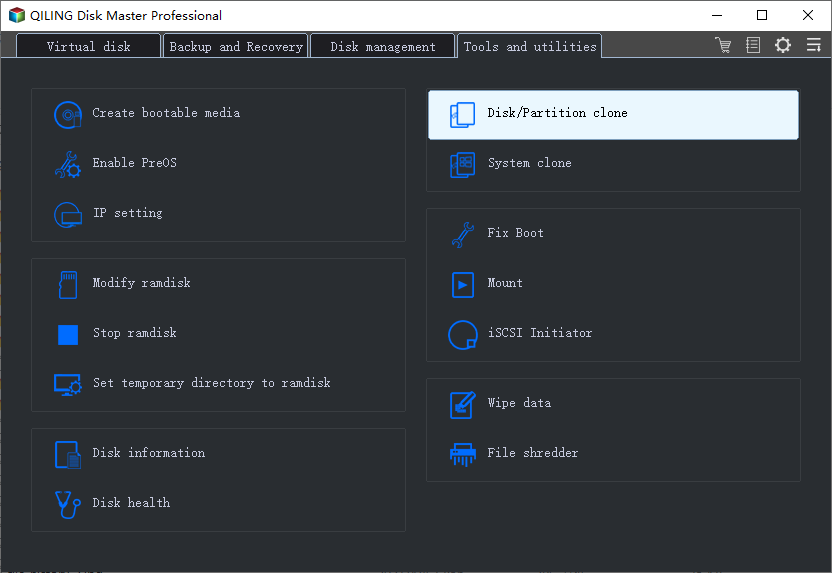
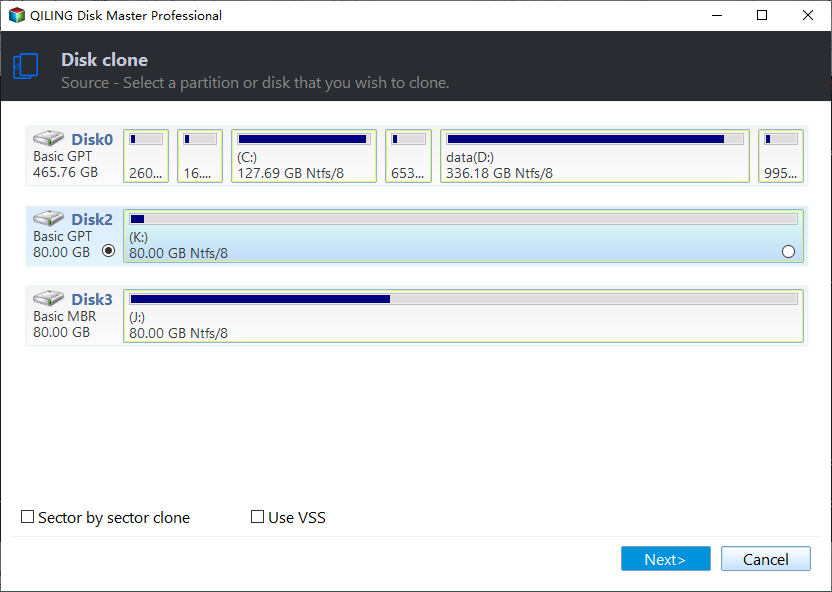
Step 2. Select the entire source disk row by model and capacity, not just its C: partition. Select the current Windows-and-games disk as a whole physical disk.
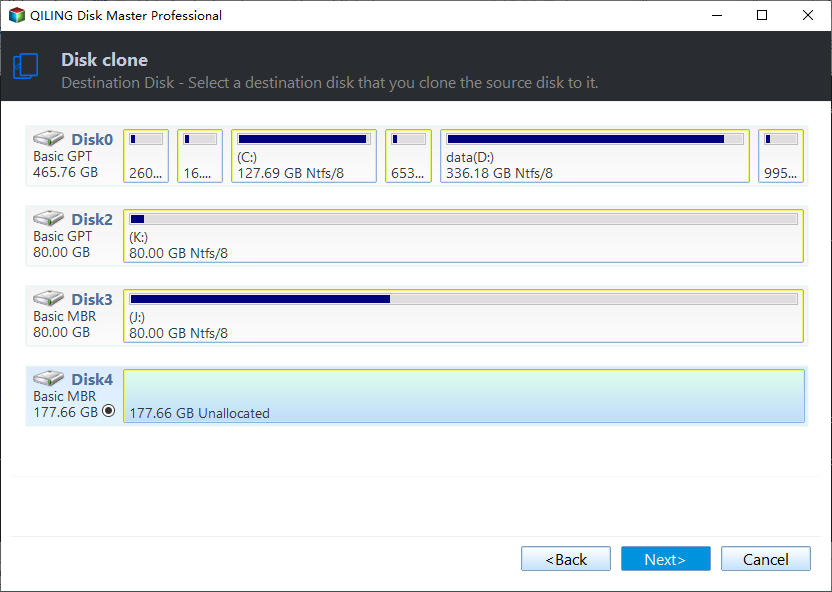
Step 3. Click Next, choose the destination disk by model and capacity, and click Next again. Existing target data will be overwritten. Choose the new SSD and back up any files it already contains.
Step 4. Review the source and destination disk identities and the proposed layout. Make sure the Windows boot partitions are included and check how the extra SSD capacity will be allocated. Then click Proceed and confirm the destination-erase warning.
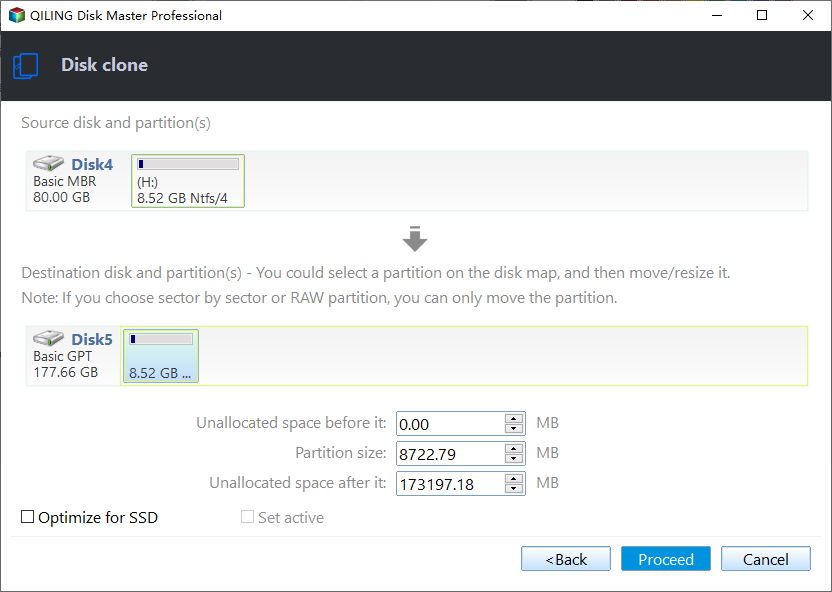
Step 5. Keep both drives connected while the clone runs. Watch the progress window and wait for a successful completion message. The example screenshot below shows a canceled task; if your task is canceled or fails, do not treat the destination as a complete bootable copy.
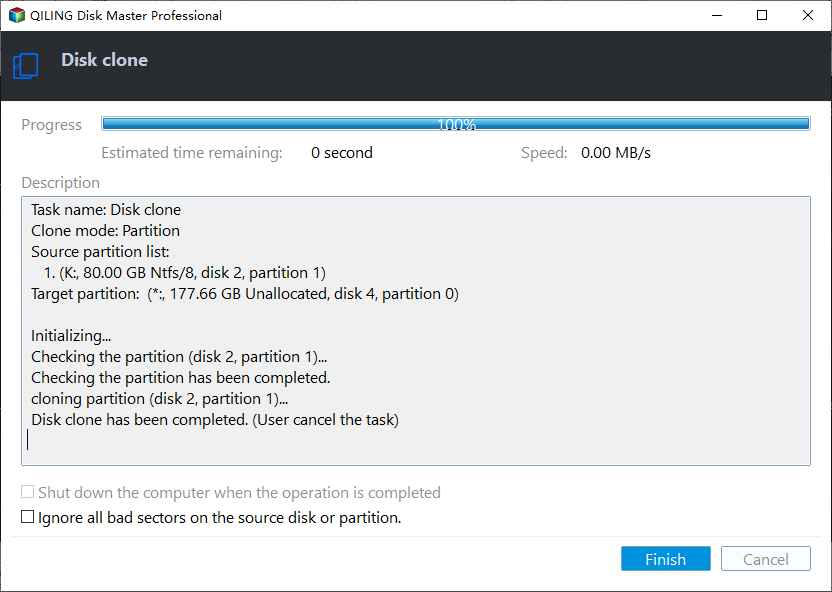
Step 6. Test the target independently before erasing or reusing the source. Boot from the new SSD, then launch a game and load a local save.
Frequently Asked Questions
Does a 1TB SSD increase FPS?
Capacity does not directly raise frame rate; storage mostly affects loading and transfer time.
Do cloud saves make backup unnecessary?
No. Some games and local settings are not synchronized.
Conclusion
Base the choice on your installed titles and future updates, and protect local saves before any disk move.
Related Articles
- Gaming PC Storage Planning
Estimate a full library and recording space. - Windows File Backup
Protect local saves and projects.
Products
Articles & Tutorials
- Data Recovery
- Data Backup
- File Recovery
- File Backup
- System Backup and Restore
- Disk and Partition Clone
- Technical articles
- Mobile articles
- Disk Master Help
- Windows Data Recovery Tutorials
- Windows Secure Delete Tutorials
- Windows Partition Management Tutorials
- Windows File Backup and Restore Tutorials
- Windows System Backup and Restore Tutorials
- Windows Disk Backup and Restore Tutorials
- Windows Clone Tutorials