Can You Clone a System Disk to One Partition?
A system disk contains more than the visible C: partition. On many Windows PCs, EFI/System Reserved and recovery partitions are also involved, so cloning only into an existing data partition is not a reliable boot-drive migration.
Decide whether you need a bootable replacement
If the goal is to start Windows from the other physical drive, use a system or whole-disk clone to an appropriate destination disk. Do not assume that copying C: into D: will create an independent boot option. A clone may replace destination partitions, so back up the target disk first.
If the goal is only to store a recoverable copy of Windows on another partition, create a system image file there instead. The image is not bootable by itself; restoration later needs recovery media or a working Windows environment.
Check the destination layout
- Open Disk Management and identify which partitions belong to the Windows boot disk.
- Identify the physical disk that holds the proposed destination partition; a second partition on the same disk does not protect against that disk failing.
- For a bootable migration, choose a separate target disk with adequate capacity and make a backup of its data before cloning.
Restore and boot considerations
A system image saved on another partition can be restored later, but the target disk and boot configuration must be compatible. Keep the image on an external disk as well when possible. If you need a portable replacement, test the clone with the old disk disconnected and verify the Windows Boot Manager entry.
Save a System Image to Another Drive with Qiling
When you only need a recoverable copy in a folder, System backup is the correct operation. This does not make the destination partition directly bootable.
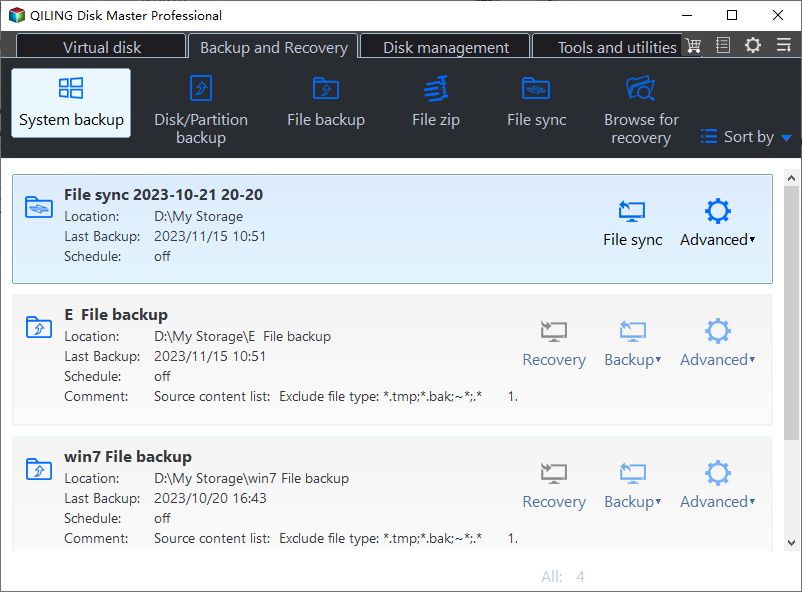
Step 1. Connect a separate backup drive and open Qiling Disk Master. Under Backup and Recovery, choose System backup.
Step 2. Check the automatically selected Windows and boot partitions. Keep the required EFI/System Reserved and recovery partitions included where shown.

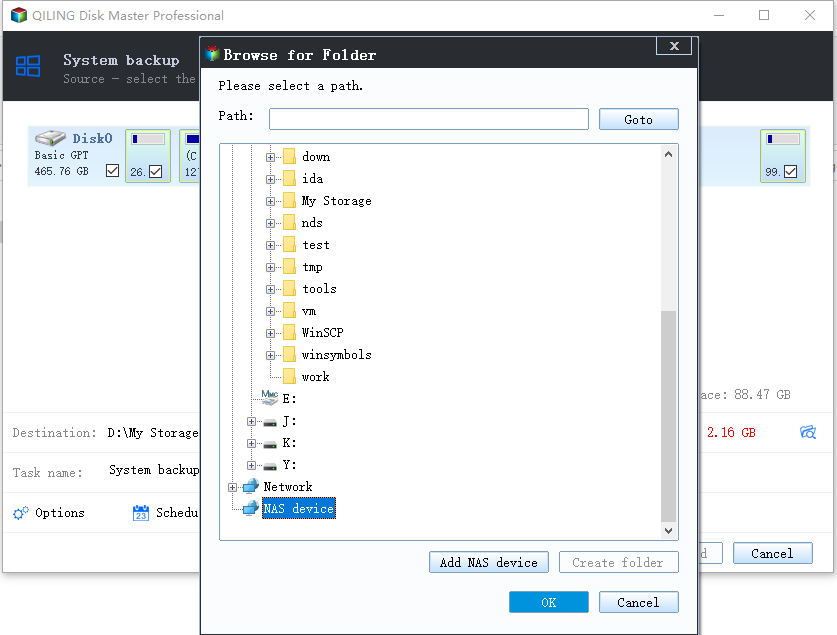
Step 3. Use the destination browse icon to select a folder on a separate physical drive, preferably external, click OK, and check the available space before proceeding.
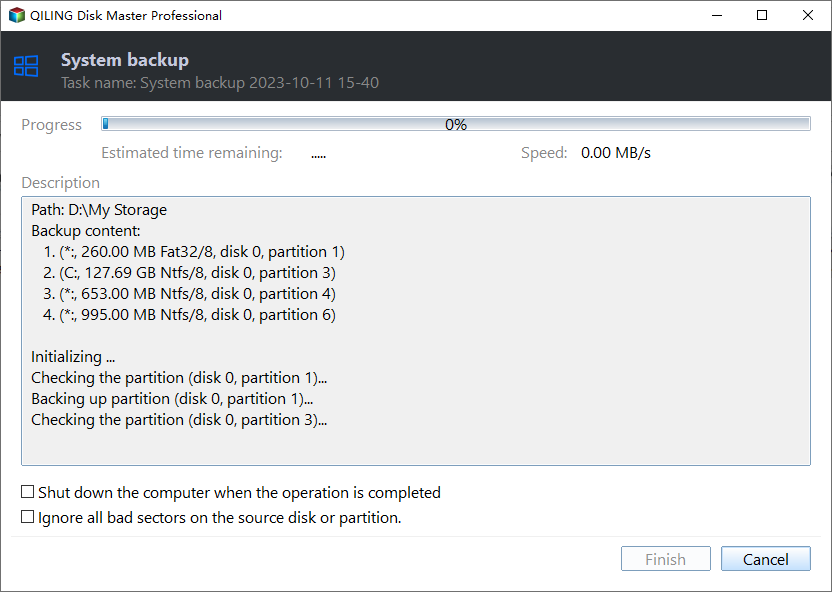
Step 4. Click Proceed and wait for the image task to finish. Confirm the system image exists at that location and create recovery media for use if Windows will not start.
Frequently Asked Questions
Can I make D: boot Windows by copying C: there? Usually not. Required boot partitions and firmware entries are not created by a normal file copy.
Is an image on the same disk enough? It can help with software mistakes but not with failure of that physical disk. Keep a separate copy.
Conclusion
Use a full system clone for a bootable replacement disk; use a system image for a stored recovery copy. A single destination partition serves a different purpose.
Related Articles
- Windows File Backup and Restore Tutorials
Find practical Windows file backup and restore methods. - Windows System Backup and Restore Tutorials
Compare system images, recovery drives, and restore options. - Windows Cloning Tutorials
Explore disk and system migration guides for Windows PCs.
Products
Articles & Tutorials
- Data Recovery
- Data Backup
- File Recovery
- File Backup
- System Backup and Restore
- Disk and Partition Clone
- Technical articles
- Mobile articles
- Disk Master Help
- Windows Data Recovery Tutorials
- Windows Secure Delete Tutorials
- Windows Partition Management Tutorials
- Windows File Backup and Restore Tutorials
- Windows System Backup and Restore Tutorials
- Windows Disk Backup and Restore Tutorials
- Windows Clone Tutorials