Can You Clone a Hard Drive to a USB Flash Drive?
It is sometimes technically possible to copy a hard drive onto a large USB flash drive, but feasibility is not the same as reliability. A normal flash stick may lack capacity, endurance, and dependable boot support.
Check the real constraints
Compare the source disk's partitions and used data with the USB device's actual capacity. A nominally equal-sized target can be a little smaller in bytes. Confirm the cloning utility sees the flash device as a writable destination. The operation erases it. Many PCs will not reliably boot a copied internal Windows installation from an ordinary USB flash stick, and Windows licensing or driver behavior can add complications.
Choose a better destination
For a bootable replacement, use an internal SSD of suitable capacity. For a portable backup, use an external HDD or SSD and create a disk image that can later be restored. For documents only, copy files to an encrypted or otherwise protected USB device and keep a second backup. Do not treat a single USB stick as the only archive of a failing hard drive.
If a direct clone is still appropriate
Use a high-quality USB device with more capacity than the complete source layout. Test on noncritical data first, maintain external power, and verify files afterward. If the tool refuses a removable target, do not force the drive online with destructive formatting. A disk-image backup to an external SSD is the safer fallback.
Attempt a Whole-Disk Clone Only When the USB Target Is Eligible
Proceed only if Qiling detects the USB device as an eligible destination and its actual capacity is sufficient; otherwise use disk backup to an external SSD.
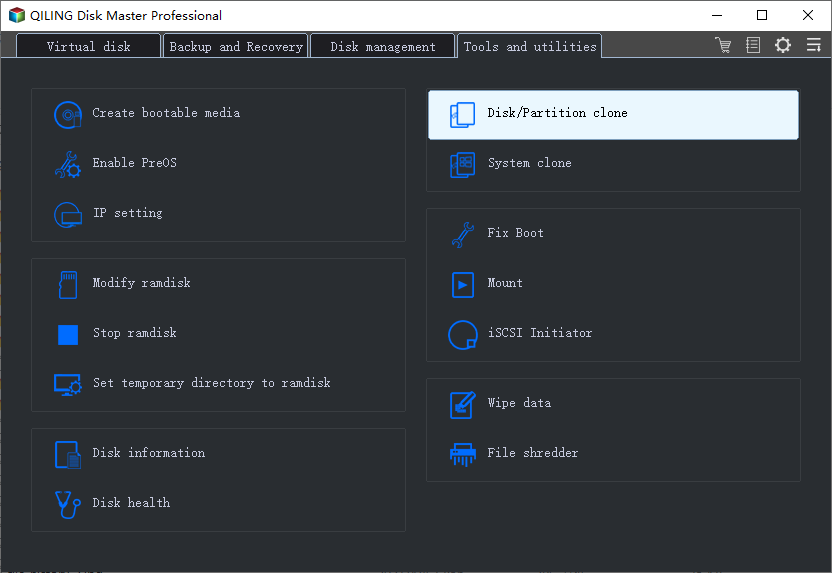
Step 1. Insert the USB flash drive and check its actual capacity. Open Tools and utilities > Disk/Partition clone only if Qiling lists the stick as an eligible destination.
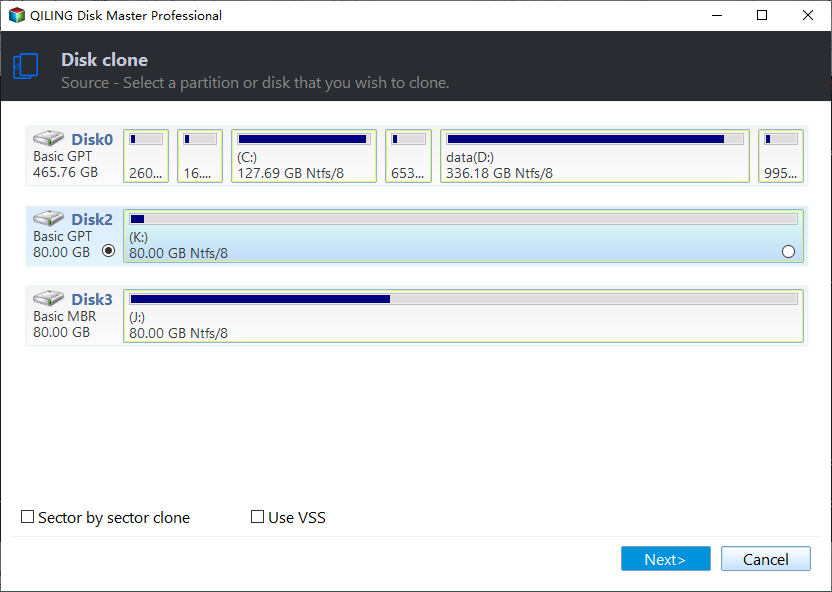
Step 2. Select the complete source HDD disk row and click Next. The screenshot selects a sample data disk; use the model and capacity of your actual HDD.
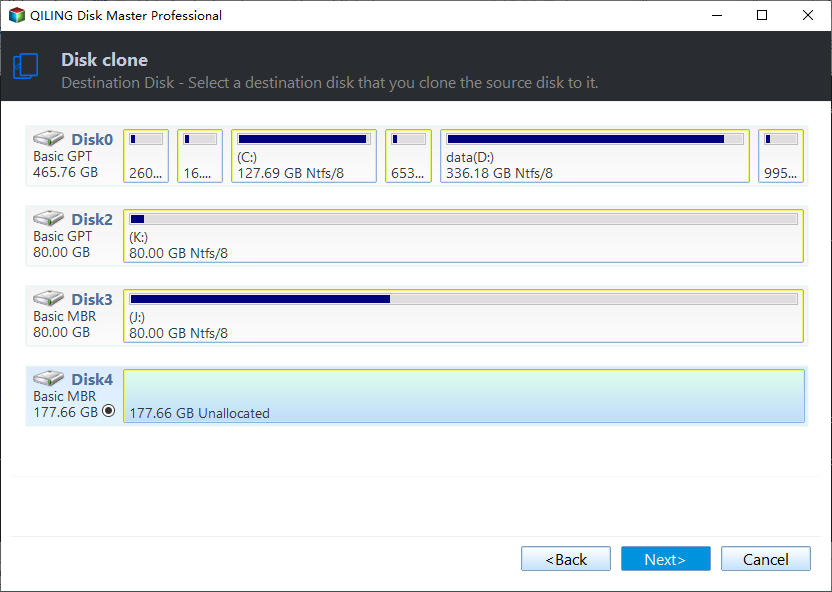
Step 3. Select the USB flash drive as destination and click Next. Check its capacity again: all existing content on the stick will be replaced. The screenshot shows a sample disk, not a USB stick.
Step 4. Review the copied partition layout, click Proceed, and confirm the overwrite warning. Do not choose SSD optimization for an ordinary USB flash drive.
Step 5. Wait for completion, safely eject the USB device, and open representative files from it. Do not assume that a copied internal Windows installation can boot from a removable stick.
If the tool does not accept the flash drive, choose an external SSD for a disk-image backup instead of forcing the clone.
Conclusion
A USB flash drive can hold a copy in some setups, but it is rarely the right place for a Windows boot clone. Prefer an SSD for migration and a disk image for backup.
Related Articles
- Windows System Backup and Restore
Compare system images, cloning, and recovery options. - Windows Disk Backup and Restore
Find disk backup and restore guides for Windows PCs.
Products
Articles & Tutorials
- Data Recovery
- Data Backup
- File Recovery
- File Backup
- System Backup and Restore
- Disk and Partition Clone
- Technical articles
- Mobile articles
- Disk Master Help
- Windows Data Recovery Tutorials
- Windows Secure Delete Tutorials
- Windows Partition Management Tutorials
- Windows File Backup and Restore Tutorials
- Windows System Backup and Restore Tutorials
- Windows Disk Backup and Restore Tutorials
- Windows Clone Tutorials