Can I Move My Boot SSD to Another SSD Without Reinstalling?
Yes. You can clone a healthy boot SSD to another compatible SSD and then boot from the new one. The move should include small EFI/System Reserved and recovery partitions, not only the visible C: volume. A file copy alone will not produce the same bootable result.
Check the two-SSD setup
Make sure the destination works with the PC's slot or enclosure and can hold all used source data. A smaller target may work only if the source partitions can be safely resized; do not assume it will. Confirm the old SSD is readable, save the BitLocker key, and make an independent backup of files you cannot replace. If a source has recurring read errors, address that before running repeated clone attempts.
Connect and identify source and target
Install the target in a spare compatible slot or connect it through a matching USB enclosure. In Disk Management, note both devices' model, capacity, and partition layout. Disconnect other removable drives. Existing files on the target will be overwritten; copy them elsewhere first.
Clone the Boot SSD with Qiling Disk Master
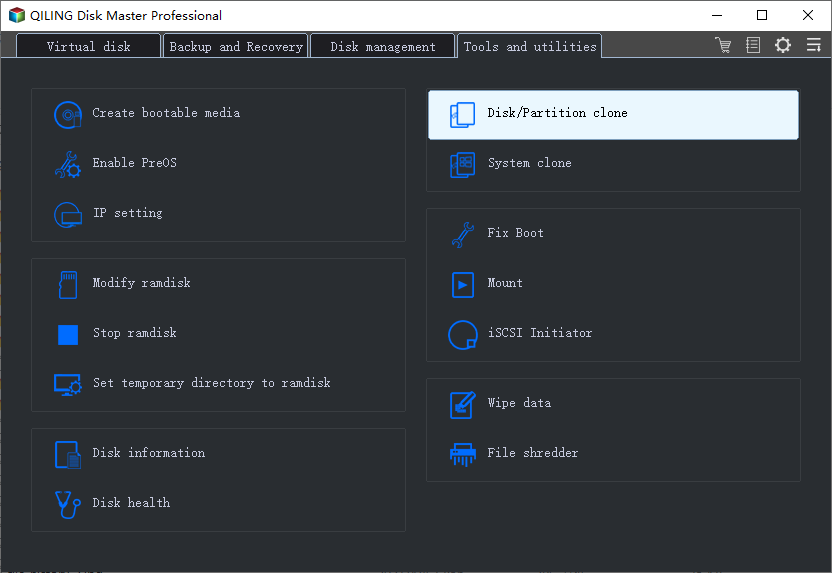
Step 1. Open Tools and utilities > Disk/Partition clone and choose the whole-disk clone route. This avoids missing a hidden boot partition.
Step 2. Select the current boot SSD as source. Confirm that its Windows and EFI partitions appear, then click Next.
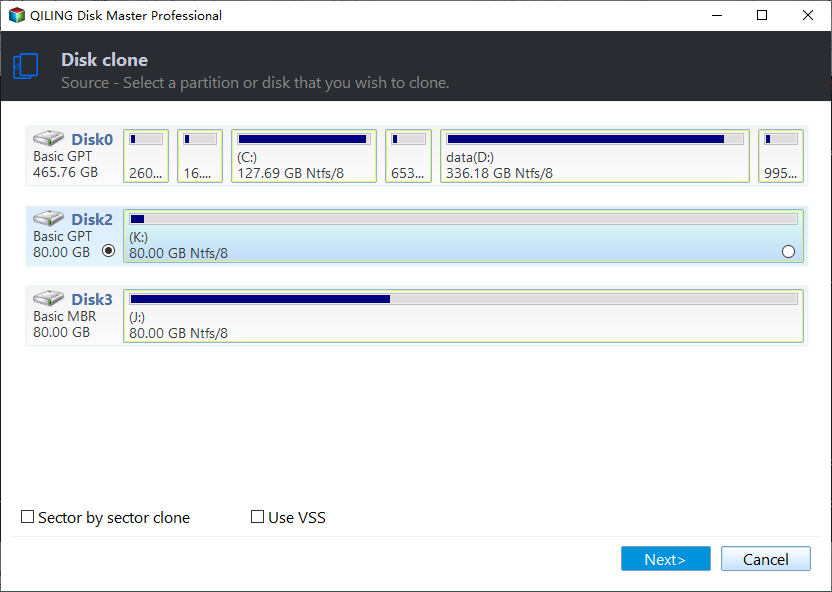
The screenshot shows a sample data disk; select your Windows disk instead.
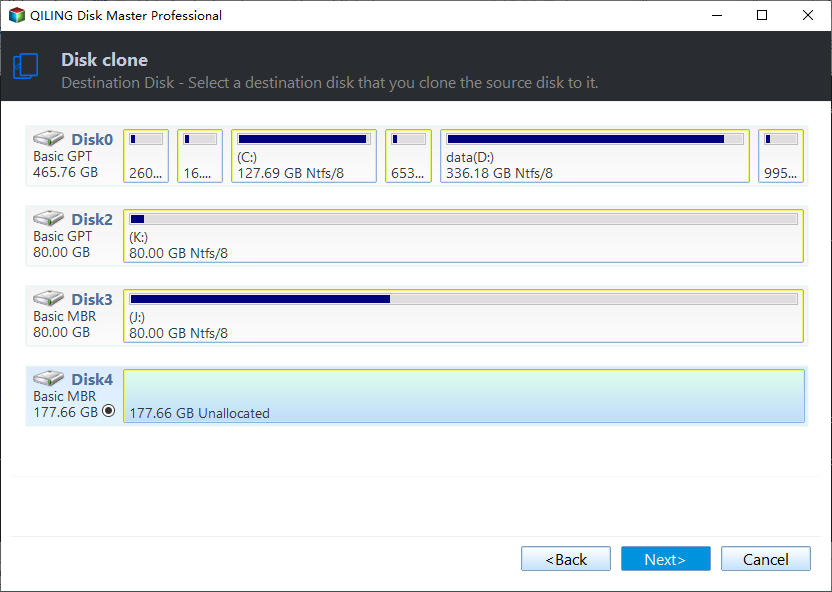
Step 3. Select the replacement SSD as destination and click Next. Compare device names and capacities before continuing.
Step 4. Check the preview for all required partitions, alignment, and any unallocated space. Choose SSD optimization where appropriate.
Step 5. Click Proceed and confirm the warning that the destination is overwritten. Wait for completion before shutting down.
Boot independently from the new SSD
Put the new SSD in the intended boot slot if required. For the first startup, disconnect the original SSD when practical so the firmware cannot silently boot it. Select the new SSD's Windows Boot Manager in UEFI, then confirm Windows loads and files and apps open. Reconnect the old SSD only after the new installation boots alone. If Windows fails to start, inspect boot mode, whether all boot partitions were included, and the firmware boot entry before wiping either disk. On a larger target, check Disk Management for unallocated space.
Conclusion
Clone the complete source disk, not just its data volume, and test the new SSD without the old one connected. Keep the old SSD untouched until the move is verified.
Related Articles
- Windows Cloning Tutorials
Find more boot-drive and SSD migration guides. - Windows System Backup and Restore Tutorials
Plan a separate image before changing Windows hardware.
Products
Articles & Tutorials
- Data Recovery
- Data Backup
- File Recovery
- File Backup
- System Backup and Restore
- Disk and Partition Clone
- Technical articles
- Mobile articles
- Disk Master Help
- Windows Data Recovery Tutorials
- Windows Secure Delete Tutorials
- Windows Partition Management Tutorials
- Windows File Backup and Restore Tutorials
- Windows System Backup and Restore Tutorials
- Windows Disk Backup and Restore Tutorials
- Windows Clone Tutorials