Macrium Reflect Alternative for Windows 11
If you are replacing an imaging tool, plan the transition before uninstalling it. Existing Macrium images do not automatically become restorable by Qiling Disk Master. Keep the old program and rescue media until you have created and tested a new backup in the replacement tool.
Compare recovery, not just backup features
Check support for your Windows build, the source and destination disks, bootable rescue media, image retention, and any scheduling features you rely on. Restore access matters more than the time required to create the first image. Licensing and feature availability can change; verify current terms with each vendor. A file backup complements an image but does not replace it for full-system recovery.
Create the first Qiling Disk Master system image
Step 1. Connect a separate backup disk, open Backup and Recovery, and select System backup.
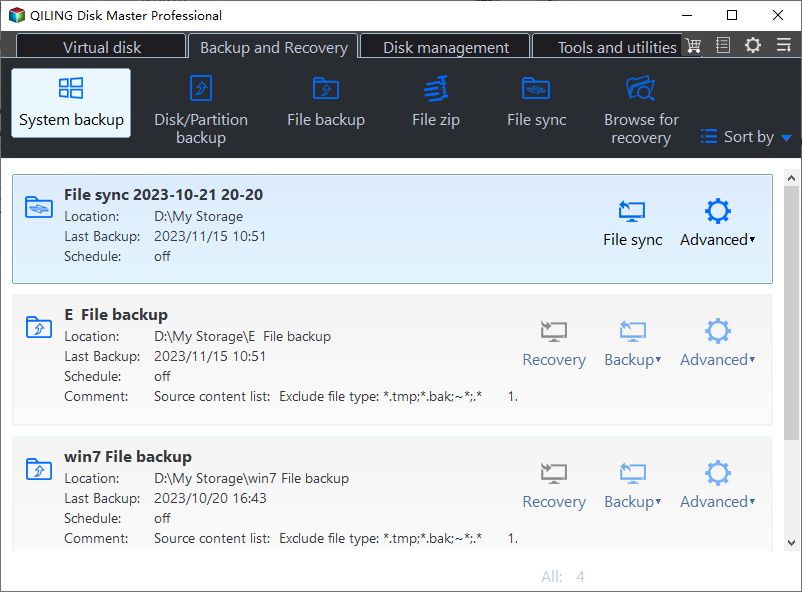
Step 2. Confirm that Windows and its required boot partitions are selected as the source. The example screen shows insufficient space on its current destination; do not proceed with a destination in that state.

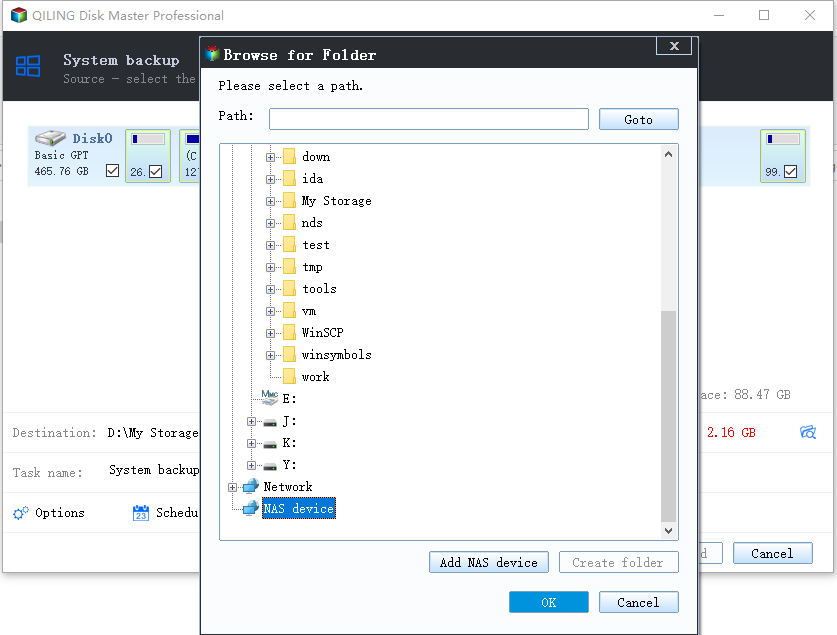
Step 3. Open the destination browser and choose a separate backup disk with enough free space for the image. Check the drive name and capacity before confirming the folder.
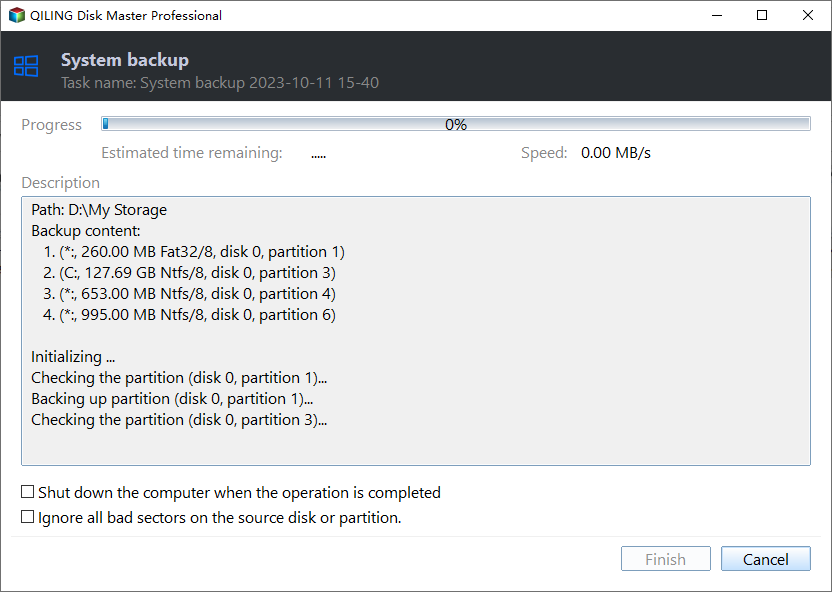
Step 4. Review the source and destination, click Proceed, and wait for completion.
Complete a safe tool transition
Locate the Qiling image, prepare its rescue media, and verify that rescue media can see both the image and the system disk. Restore a sample file to a temporary location where supported. Keep at least one verified older image until the new workflow proves reliable. See the broader Macrium Reflect alternative guide.
Related Articles
- Windows 11 Image Software Checklist
Compare backup and restore readiness.
Products
Articles & Tutorials
- Data Recovery
- Data Backup
- File Recovery
- File Backup
- System Backup and Restore
- Disk and Partition Clone
- Technical articles
- Mobile articles
- Disk Master Help
- Windows Data Recovery Tutorials
- Windows Secure Delete Tutorials
- Windows Partition Management Tutorials
- Windows File Backup and Restore Tutorials
- Windows System Backup and Restore Tutorials
- Windows Disk Backup and Restore Tutorials
- Windows Clone Tutorials