Qiling Disk Master vs AOMEI Backupper for Windows Backup
Qiling Disk Master and AOMEI Backupper can both protect a Windows PC with image backups. The useful question is not which product has a longer feature list, but whether you need a restorable system image, a copy of selected files, or a clone for replacing a drive.
Compare the backup tasks, not just the product names
| Task | Qiling Disk Master | AOMEI Backupper |
|---|---|---|
| System image | System Backup selects Windows-related partitions for an image. | System Backup creates an image of Windows and its required partitions. |
| Selected folders | File Backup lets you choose folders. | File Backup lets you choose folders. |
| Drive replacement | Use a clone task, not a backup image alone. | Use a clone task; edition limits may apply. |
| Free/trial features | Verify the current Qiling edition before starting. | Verify AOMEI Standard versus paid edition features. |
A backup image is a file that needs a restore operation. A clone is a destination disk intended to replace the source. Neither should be mistaken for ordinary file synchronization, which can propagate unwanted changes or deletions.
Which one fits your situation?
If you already use AOMEI and its edition covers your task, there is no need to switch simply to create a routine system image. Qiling may be convenient when you also need its partition management tools. For a damaged disk, prioritize a verified copy and avoid repeated writes; software selection alone cannot repair failing hardware.
How to create a Windows system image with Qiling Disk Master
Connect an external disk or choose another healthy disk with enough free space. Do not save the only backup image to the same physical disk as Windows. Keep the PC on reliable power throughout the task.
Step 1. Open Qiling Disk Master, go to Backup and recovery, and choose System backup. Confirm that the selected source is the Windows installation you intend to protect.
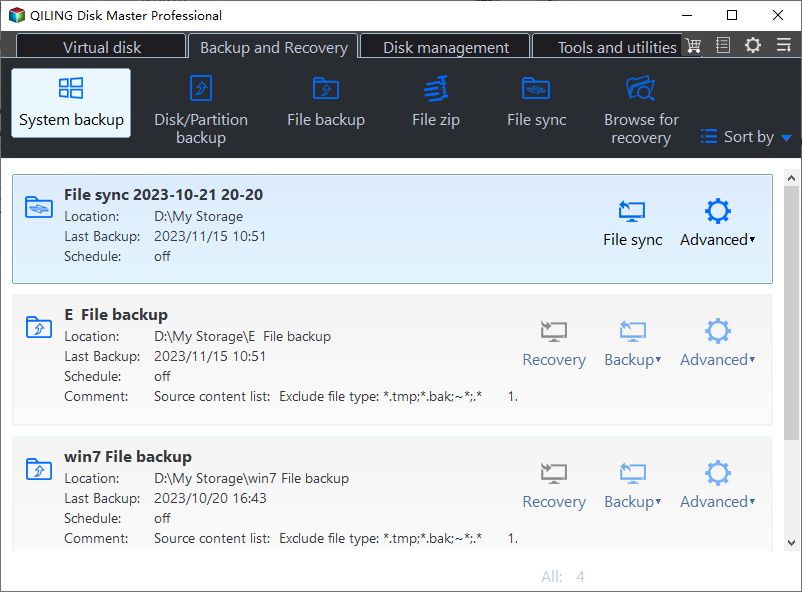
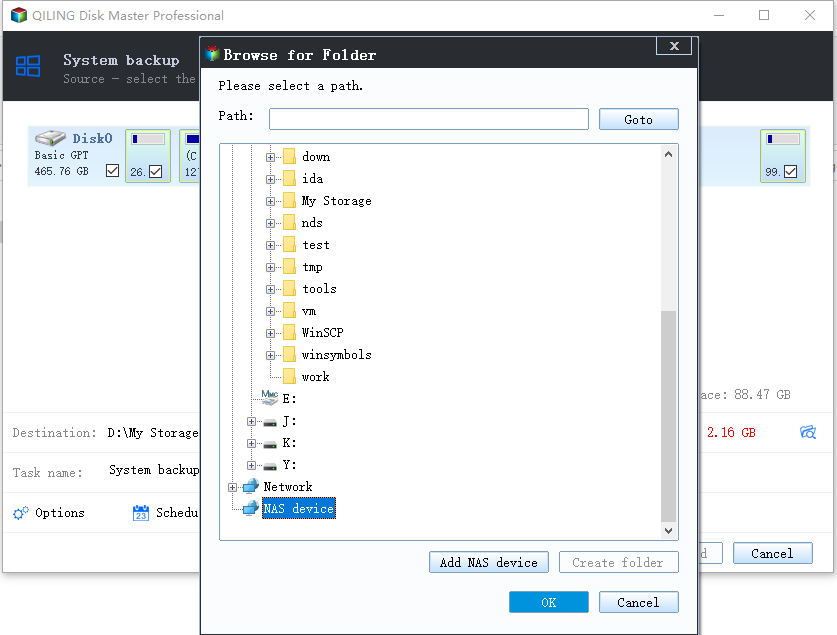
Step 2. Choose the backup destination on another disk or external drive. Check its drive letter and free space; do not choose a partition that you plan to format or clone over.
Step 3. Review the source, destination, and optional schedule. Click Proceed to start the backup, then wait for the completion message before disconnecting the destination.
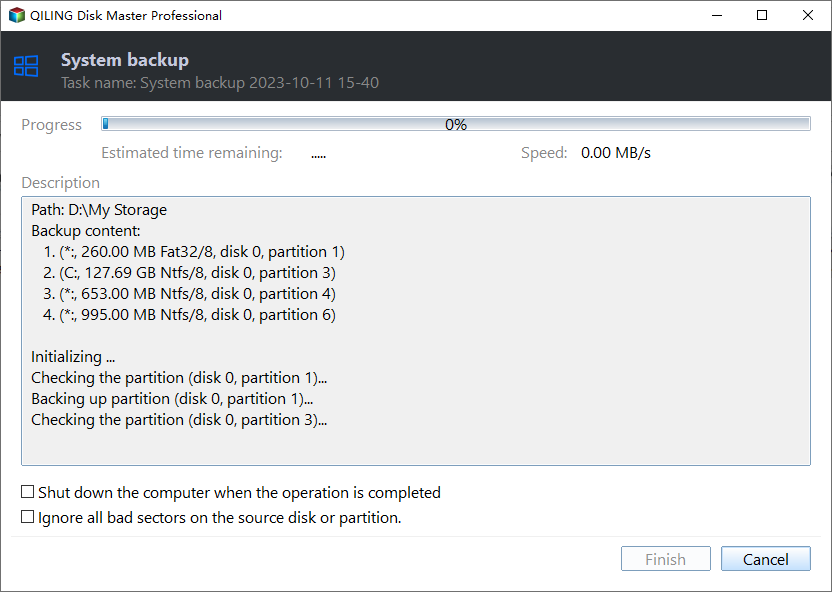
Step 4. Locate the new image on the destination. Record where it is stored and keep any recovery media available; a backup that cannot be found or restored is not useful in an emergency.
Before you rely on the backup
Check the backup task's result and, where available, verify the image. For a boot-drive failure, plan how you will start the computer in a recovery environment and restore the image to a replacement disk. A system image is not a substitute for keeping separate copies of frequently changing personal files.
Related Articles
- Windows System Backup and Restore
Find system-image and recovery guidance for Windows PCs. - Clone vs. Image
Learn when to create a bootable disk copy and when to save an image file.
Products
Articles & Tutorials
- Data Recovery
- Data Backup
- File Recovery
- File Backup
- System Backup and Restore
- Disk and Partition Clone
- Technical articles
- Mobile articles
- Disk Master Help
- Windows Data Recovery Tutorials
- Windows Secure Delete Tutorials
- Windows Partition Management Tutorials
- Windows File Backup and Restore Tutorials
- Windows System Backup and Restore Tutorials
- Windows Disk Backup and Restore Tutorials
- Windows Clone Tutorials