How to Restore a Disk Image to a Larger Drive
Restore a disk image to a larger HDD or SSD, keep Windows bootable, and expand partitions afterward so the extra space becomes usable.
Overview
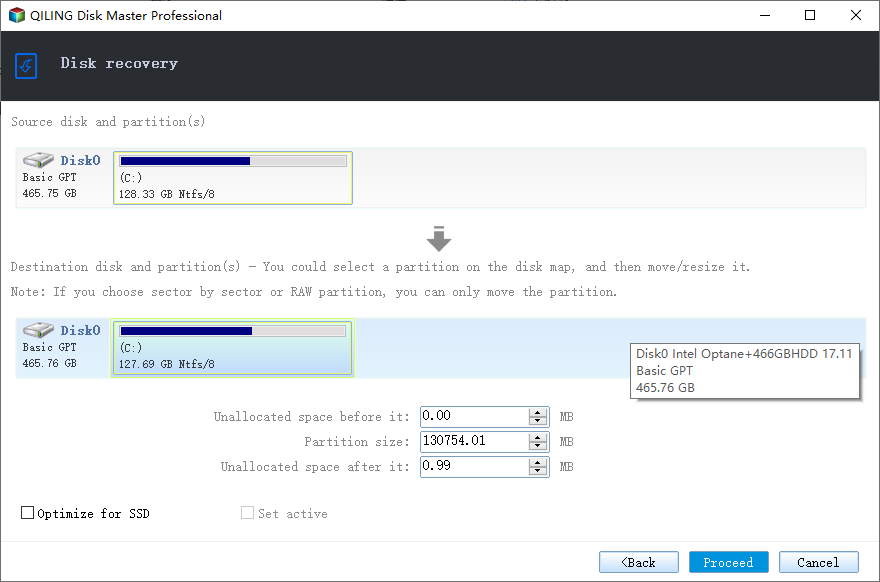
Restoring a disk image to a larger drive is common when replacing a failing disk or upgrading to a bigger SSD. The restore must include all boot partitions, not only C drive.
After restore, Windows may show unallocated space. You can extend a data partition or system partition once the restored system boots correctly.
What to Prepare First
- Connect the larger target drive and confirm it will be overwritten.
- Keep the backup image on a separate drive or NAS.
- Prepare bootable recovery media if the old Windows cannot start.
- Check whether the original system uses GPT/UEFI or MBR/Legacy.
Use Windows Built-in Tools First
Windows system image recovery can restore an image to a new disk, but it may require a disk of equal or larger size and offers limited partition resizing. Boot from Windows recovery media, choose System Image Recovery, and follow the prompts.
If the restore completes but free space remains unallocated, use Disk Management to extend a nearby partition when the unallocated space is directly behind it.
Back Up the Disk with Qiling Disk Master
A disk backup is safer than copying folders when you need to preserve Windows, recovery partitions, boot files, and several data partitions together. Save the image to another physical drive or a network location.
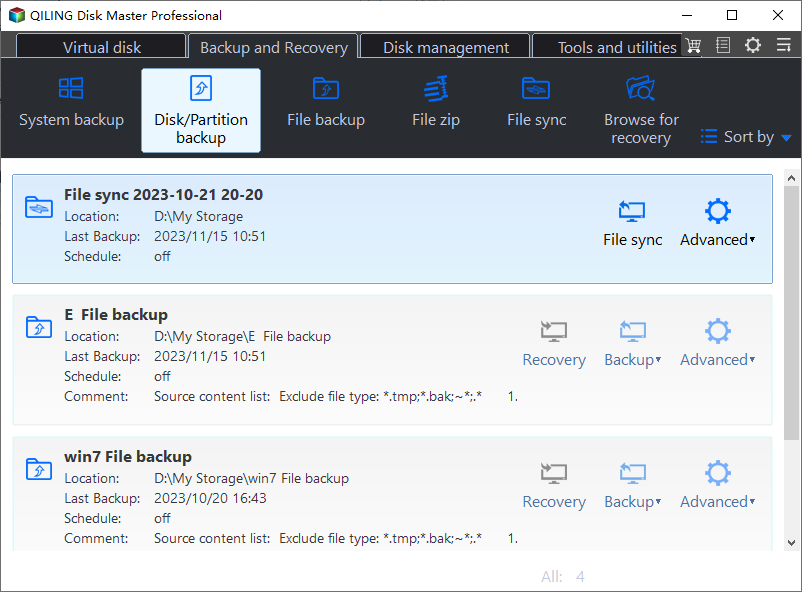
Step 1. Open Qiling Disk Master and choose Disk/Partition Backup. Use this option when the task involves a whole drive, a system image, or several partitions.
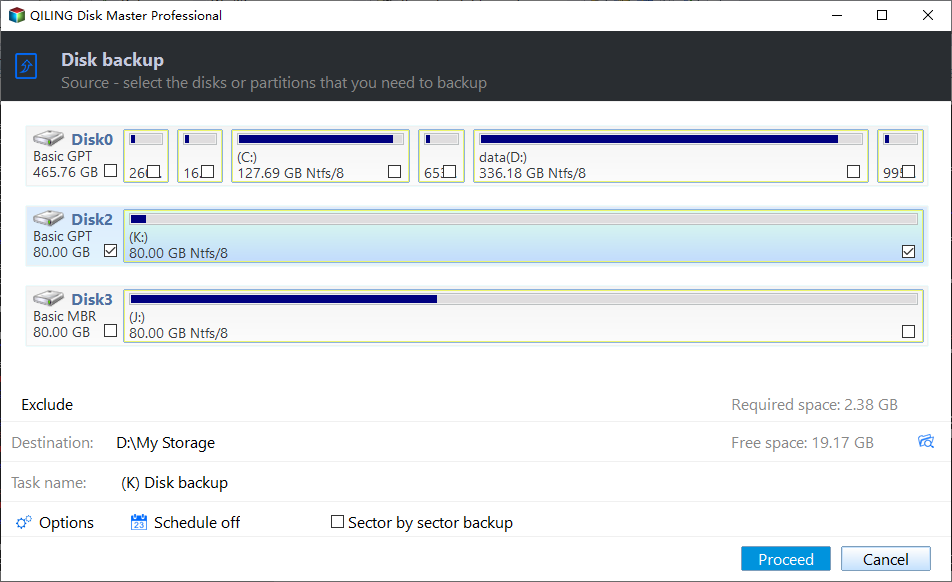
Step 2. Select the disk or partitions you need to protect directly in the source selection area. For a Windows disk, include the EFI/System Reserved partition, C drive, recovery partition, and any data partition that belongs to the same recovery plan.
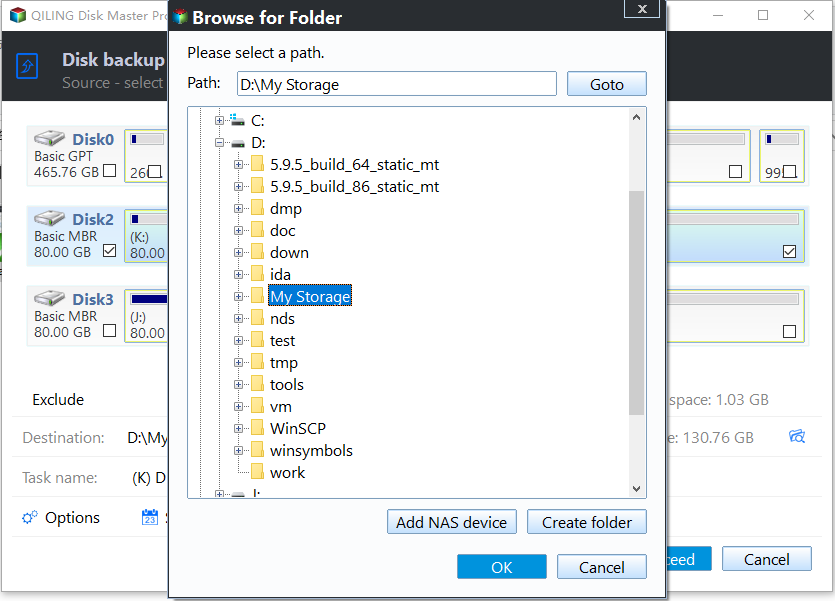
Step 3. Choose a destination on another disk, an external drive, or a NAS folder. Do not store the backup image on the same drive that may fail or be formatted.
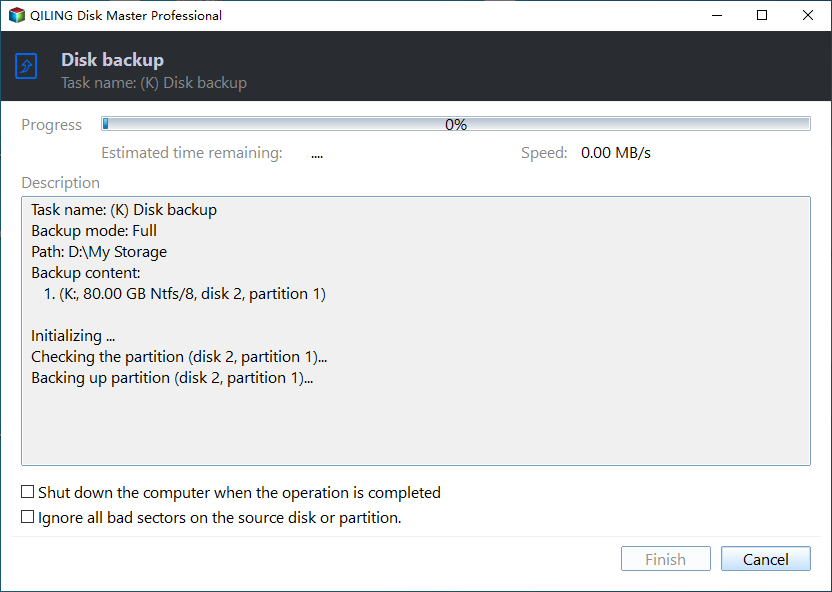
Step 4. Check the source and destination, then click Proceed. Wait until the image is complete and verify that the backup file appears in the destination folder.
Troubleshooting Tips
- If the restored drive will not boot, set it first in BIOS and check UEFI/Legacy mode.
- If Extend Volume is greyed out, the unallocated space is not adjacent to the target partition.
- If Windows recovery cannot find the image, place it in the expected WindowsImageBackup folder or use Qiling restore media.
FAQ
Should I back up before following these steps? Yes. If the disk is readable and the files matter, create a backup before cloning, repairing, formatting, resetting, or changing hardware.
Can I use Windows built-in tools only? Use built-in tools for simple file copy, restore points, File History, Disk Management, and Windows setup. Use Qiling tools when you need a clearer disk map, bootable recovery media, scheduled backup, or disk clone workflow.
Will these operations erase my target drive? Cloning, restoring an image, formatting, and creating some bootable media can overwrite the target drive. Read the warning message and confirm the disk number before clicking Proceed.
Conclusion
A larger target drive gives room to grow, but restore order matters: restore the full image first, confirm boot, then resize partitions to use the extra capacity.
Related Articles
- Windows System Backup and Restore Tutorials
Browse Windows backup and restore guides for system images, recovery drives, restore points, and safe repair preparation. - Windows Disk Backup and Restore Tutorials
Find Windows disk backup, SSD image backup, external drive backup, and restore tutorials with practical Qiling workflows. - Windows Clone Tutorials
Review Windows cloning guides for system migration, disk clone, SSD upgrade, and safe boot preparation.
Products
Articles & Tutorials
- Data Recovery
- Data Backup
- File Recovery
- File Backup
- System Backup and Restore
- Disk and Partition Clone
- Technical articles
- Mobile articles
- Disk Master Help
- Windows Data Recovery Tutorials
- Windows Secure Delete Tutorials
- Windows Partition Management Tutorials
- Windows File Backup and Restore Tutorials
- Windows System Backup and Restore Tutorials
- Windows Disk Backup and Restore Tutorials
- Windows Clone Tutorials