What Is System Restore in Windows 10, and What Does It Save?
System Restore rolls Windows system files, settings, drivers, and some installed programs back to an earlier restore point. It is useful after a problematic update or driver installation. It is not a personal-file backup and does not restore deleted documents or provide a bootable copy of the disk.
What a restore point contains
A point captures system configuration at a particular time. Applying it can remove programs or drivers installed afterward and restore older settings. Personal files are normally left alone, but that is not a guarantee against unrelated disk failure or mistaken deletion. A point is also stored in a Windows-managed area on the system drive, so replacing or losing that drive can remove it.
Turn on protection and create a point
Step 1. Search Windows for Create a restore point and open the System Protection tab. Select the Windows drive, usually C:, and choose Configure.
Step 2. Choose Turn on system protection, allocate disk space, and click Apply. If the setting is locked by organization policy, contact the administrator.
Step 3. Select Create, give the point a descriptive name such as “Before graphics driver update,” and wait for confirmation. Create a point before a change, not after the problem appears.
Apply a point when Windows is unstable
In a working Windows session, press Win+R, enter rstrui.exe, select Next, and choose a point dated before the problem. Use Scan for affected programs to see what may change, then confirm and keep the PC powered during the rollback. If Windows cannot start, enter Windows Recovery Environment and choose Troubleshoot > Advanced options > System Restore; an encrypted PC may ask for its BitLocker recovery key. If no point exists, this method cannot manufacture one retrospectively.
Where Qiling System Backup Fits
A full image complements restore points because it can be saved on an external drive. It is a different operation with a different recovery path.
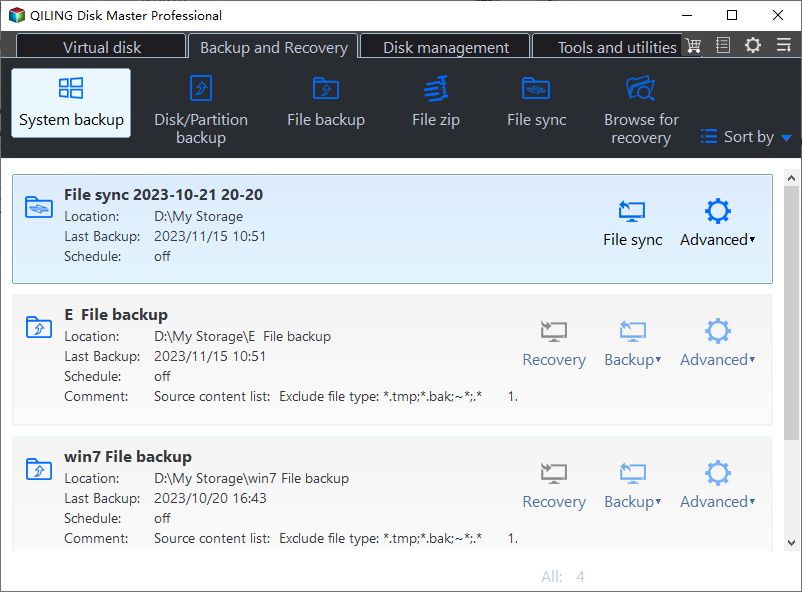
Step 1. Connect the destination storage. In Qiling Disk Master choose Backup and Recovery > System Backup and confirm the Windows partitions.
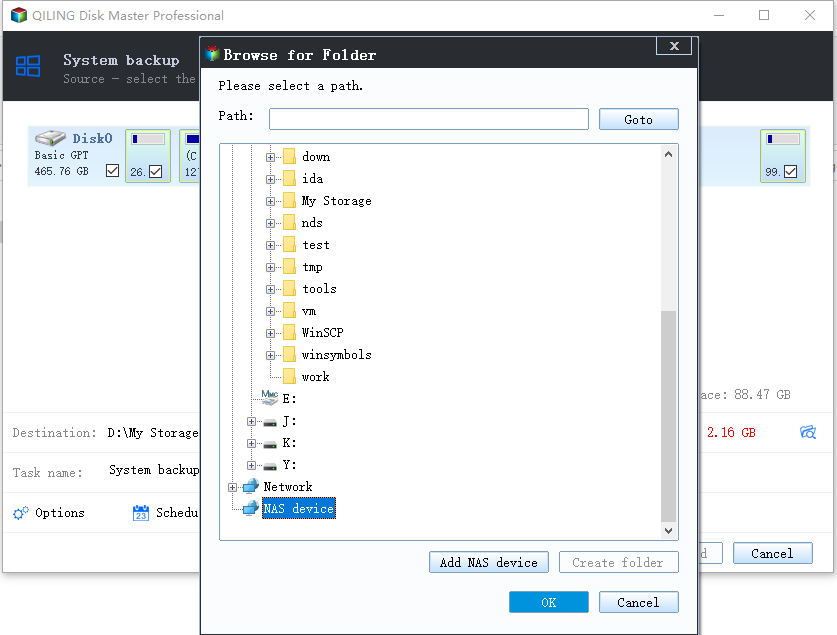
Step 2. Choose an external drive or network location with enough capacity. Check that it is not the same physical disk as Windows.
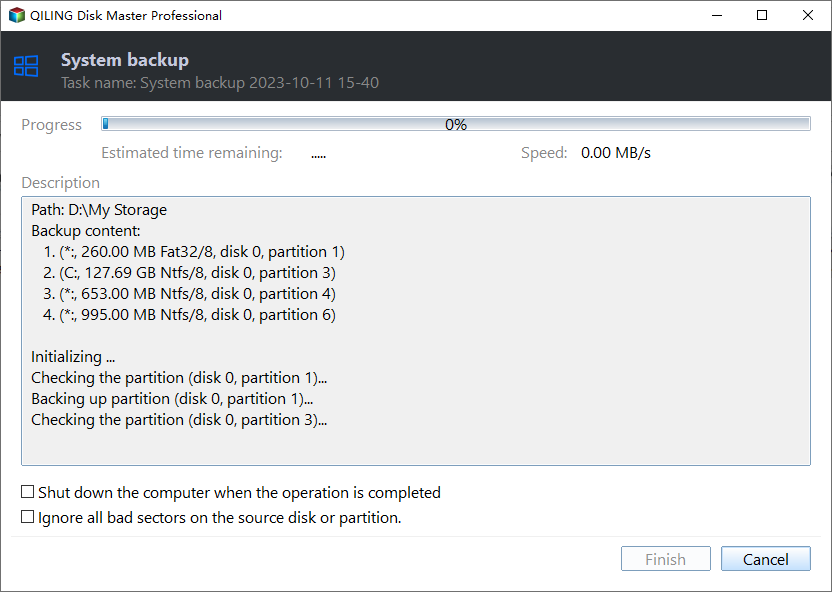
Step 3. Click Proceed and verify the completed image. Keep a separate file backup for frequently changing documents.
Conclusion
Use System Restore for recent Windows configuration problems, a file backup for documents, and an image for wider system recovery. No one method replaces the others.
Related Articles
- Windows System Backup and Restore Tutorials
Compare restore points, images, and recovery methods. - Windows File Backup and Restore Tutorials
Protect changing documents separately from the operating system.
Products
Articles & Tutorials
- Data Recovery
- Data Backup
- File Recovery
- File Backup
- System Backup and Restore
- Disk and Partition Clone
- Technical articles
- Mobile articles
- Disk Master Help
- Windows Data Recovery Tutorials
- Windows Secure Delete Tutorials
- Windows Partition Management Tutorials
- Windows File Backup and Restore Tutorials
- Windows System Backup and Restore Tutorials
- Windows Disk Backup and Restore Tutorials
- Windows Clone Tutorials