Benefits of Installing an SSD in an Older Laptop
An SSD can make an older laptop feel more responsive, particularly if its current drive is a slow HDD. It will not cure insufficient RAM, overheating, or an outdated processor.
What changes after an SSD upgrade
Booting, launching apps, and opening large files usually improve because random storage access is faster. An SSD has no moving platter, so it tolerates ordinary movement better and often uses less power. Actual battery benefit varies with the laptop.
Check compatibility first
- Check the service manual for a 2.5-inch SATA bay or supported M.2 slot. M.2 SATA and M.2 NVMe are not interchangeable.
- Measure used space on the HDD, then choose an SSD that can hold Windows, apps, recovery partitions, and future data.
- Prepare a matching USB adapter if the laptop has one internal bay, and make a separate file backup.
- Confirm the firmware detects the SSD before attempting a clone.
Clone the Disk with Qiling Disk Master
Use a whole-disk clone to move the old laptop's Windows installation, including boot partitions, to a compatible SSD.
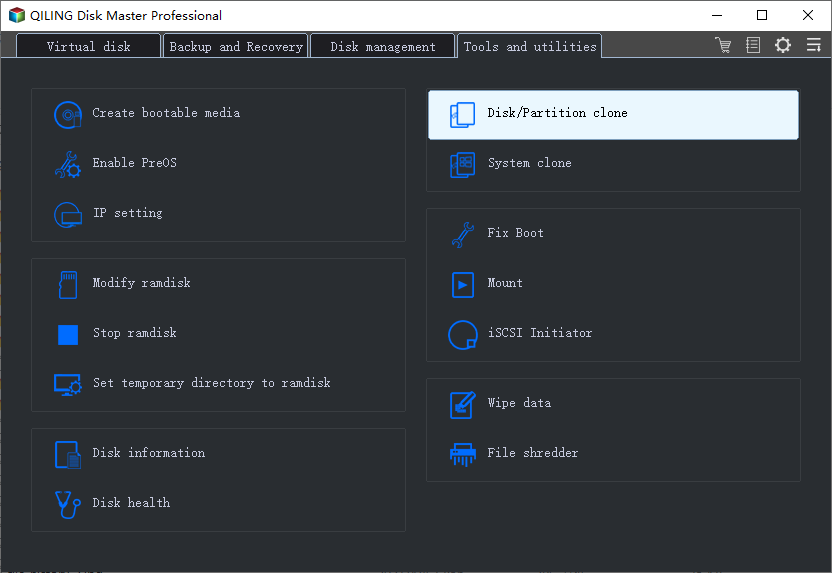
Step 1. Connect the new destination drive. In Qiling Disk Master open Tools and utilities and choose Disk/Partition clone. For a Windows boot-drive replacement, select the whole disk rather than just C:.
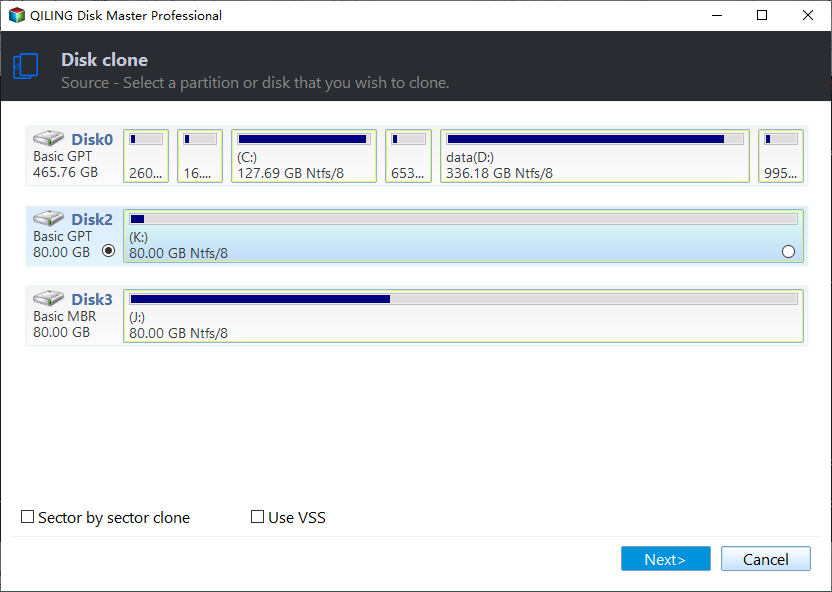
Step 2. Select the original disk as the source. Confirm its model, size, and partition map, including any boot and recovery partitions. Click Next.
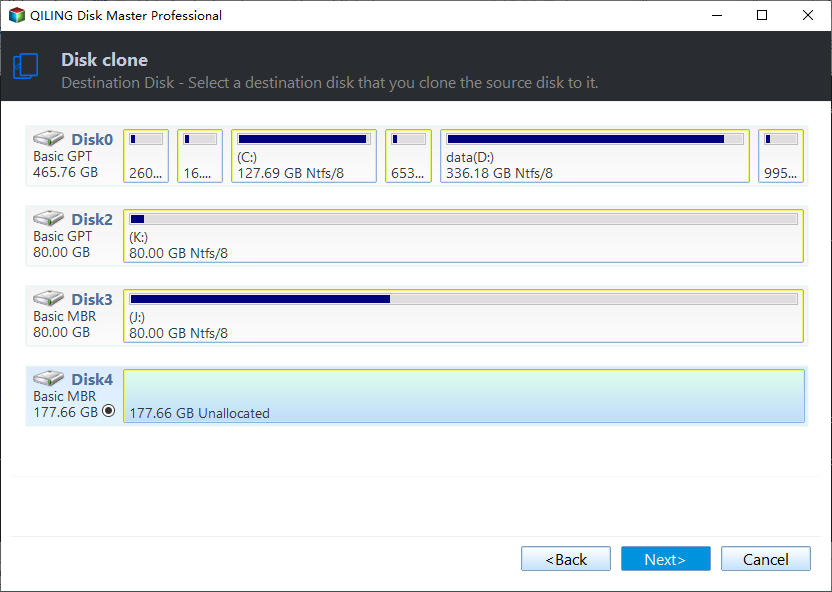
Step 3. Select the replacement drive as the destination by model and capacity, then click Next. All data already on that destination can be overwritten.
Step 4. Review the direction and partition layout. Check that required partitions fit on the destination; enable Optimize for SSD if it is an SSD and the option is available. The illustrated preview shows the controls; check the full layout on your own PC.
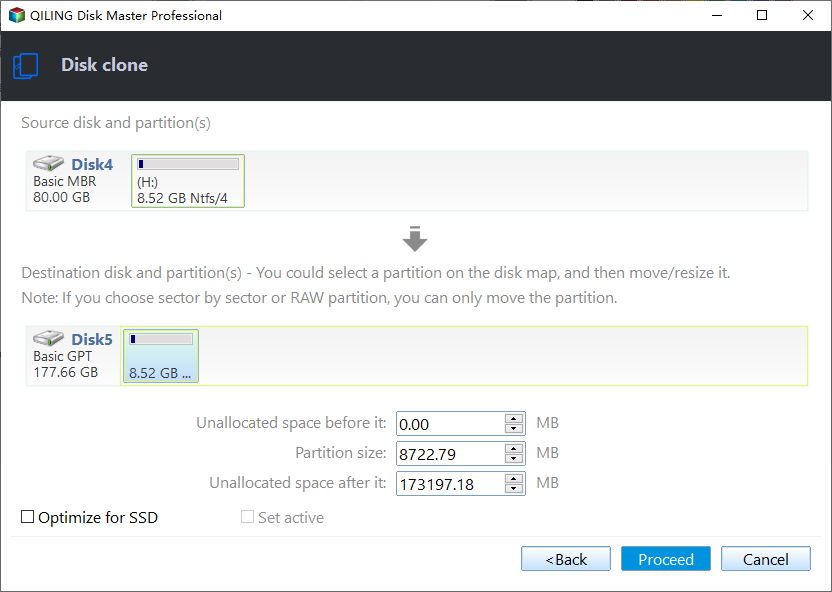
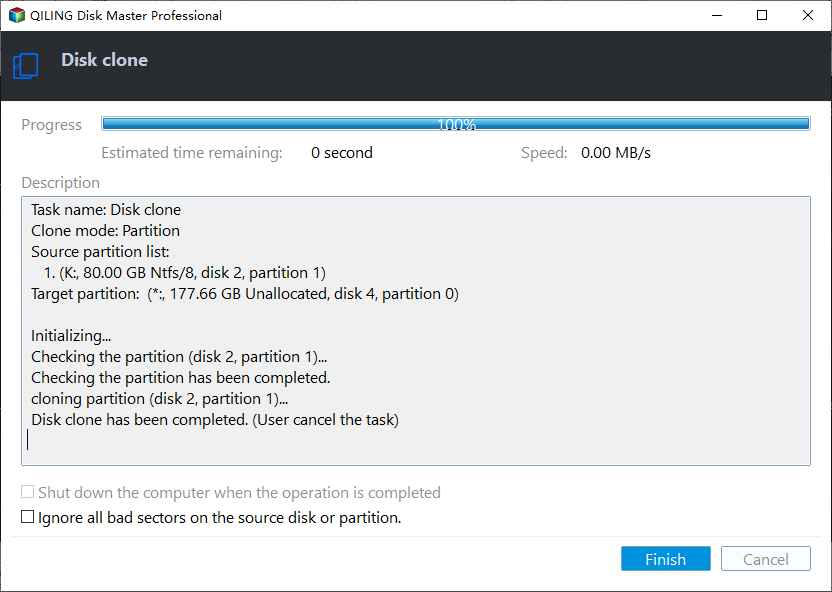
Step 5. Click Proceed. Confirm the overwrite warning only after verifying the destination. Keep both drives connected while the progress screen runs; after completion, boot-test the new drive before erasing the original.
Migrate and test
Clone the full Windows disk if you want to keep applications. For a fresh start, use Windows installation media and restore personal files later. After the swap, boot from the SSD, open key apps and documents, and keep the original HDD untouched until the laptop passes testing.
If the laptop still feels slow
Check available RAM, startup apps, CPU temperature, battery condition, and background updates. An SSD reduces storage delays but does not change the processor's capabilities.
Frequently Asked Questions
Is an SSD worth it for an old laptop? It often is when the HDD is the bottleneck and the device is otherwise usable.
Can I use an NVMe drive in a SATA bay? Not as a direct replacement. Match the connector and protocol.
Conclusion
An SSD can improve an older laptop's storage responsiveness when the interface matches. Verify the clone or clean installation before reusing the HDD.
Related Articles
- Windows Cloning Tutorials
Review system disk and HDD-to-SSD cloning guides. - Windows Disk Backup and Restore Tutorials
Find disk image backup and recovery workflows for Windows drives. - Windows System Backup and Restore Tutorials
Explore system image, recovery, and restore guides for Windows.
Products
Articles & Tutorials
- Data Recovery
- Data Backup
- File Recovery
- File Backup
- System Backup and Restore
- Disk and Partition Clone
- Technical articles
- Mobile articles
- Disk Master Help
- Windows Data Recovery Tutorials
- Windows Secure Delete Tutorials
- Windows Partition Management Tutorials
- Windows File Backup and Restore Tutorials
- Windows System Backup and Restore Tutorials
- Windows Disk Backup and Restore Tutorials
- Windows Clone Tutorials