What to Do When Your Windows SSD Is Full
A full SSD can interrupt Windows updates, game installations, and normal app use. Start by finding what uses the space, then remove or move only files you understand.
Find the largest categories
- Open Settings > System > Storage and inspect Apps, Temporary files, Documents, and other categories.
- Review Downloads and Recycle Bin manually before deleting anything. Temporary files may include items you still need.
- Use Disk Cleanup or Storage Sense for known temporary data, then restart and recheck free space.
Move data safely
Copy photos, videos, archives, and other large personal folders to another drive, then open the copied files before removing originals. Use a game's built-in library move feature rather than dragging its installation folder. Avoid deleting folders under Windows, Program Files, or recovery partitions manually.
Clone the Disk with Qiling Disk Master
When the SSD is simply too small, Qiling Disk Master can clone it to a larger replacement. Cleanup alone is not a permanent fix for an undersized system drive.
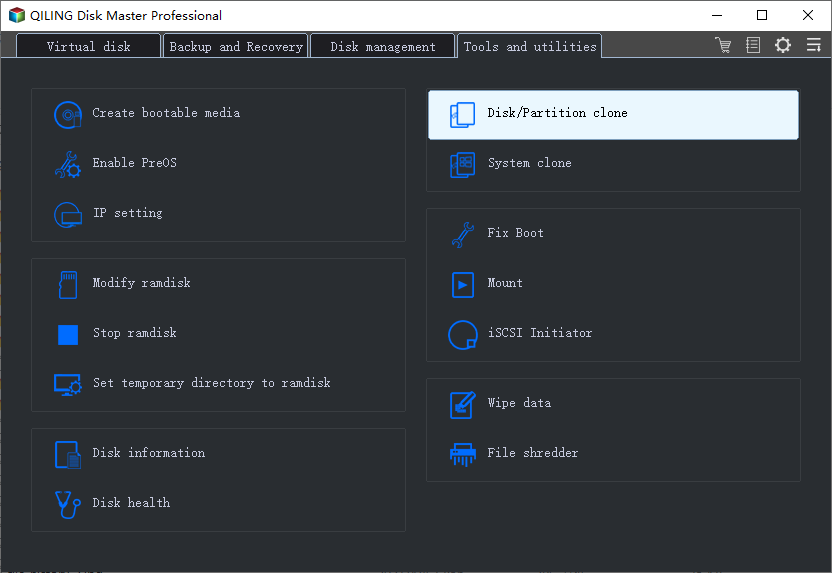
Step 1. Connect the new destination drive. In Qiling Disk Master open Tools and utilities and choose Disk/Partition clone. For a Windows boot-drive replacement, select the whole disk rather than just C:.
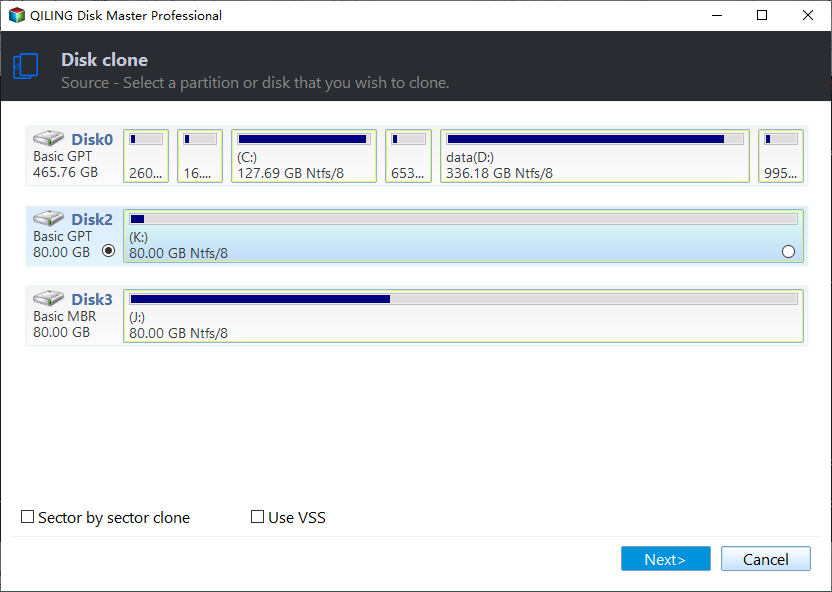
Step 2. Select the original disk as the source. Confirm its model, size, and partition map, including any boot and recovery partitions. Click Next.
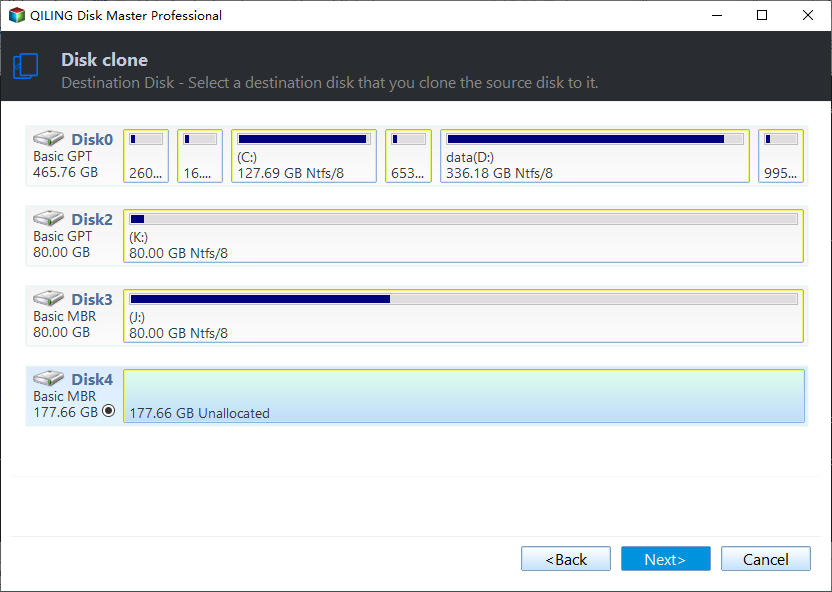
Step 3. Select the replacement drive as the destination by model and capacity, then click Next. All data already on that destination can be overwritten.
Step 4. Review the direction and partition layout. Check that required partitions fit on the destination; enable Optimize for SSD if it is an SSD and the option is available. The illustrated preview shows the controls; check the full layout on your own PC.
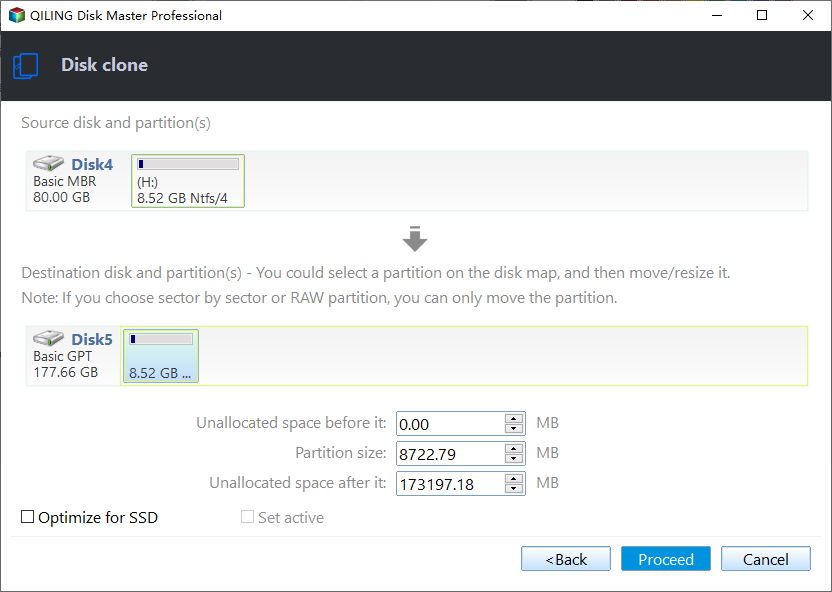
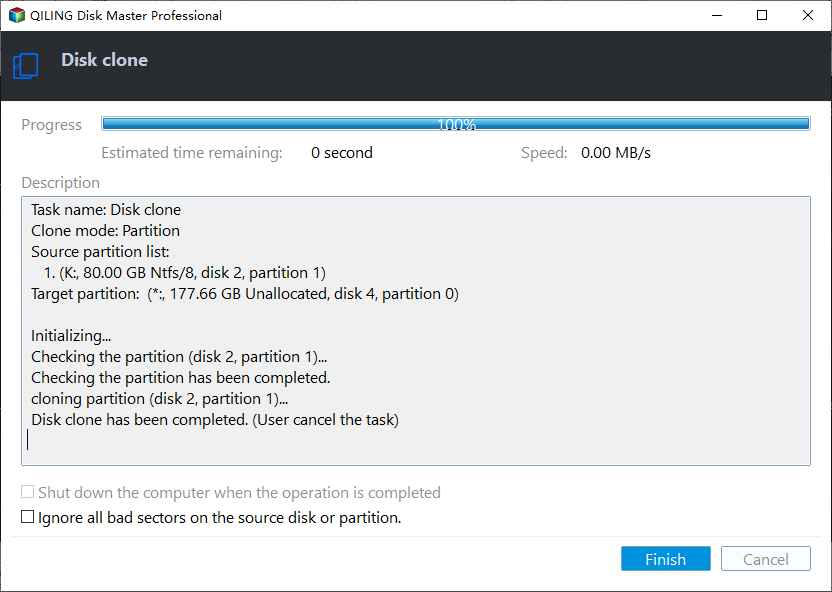
Step 5. Click Proceed. Confirm the overwrite warning only after verifying the destination. Keep both drives connected while the progress screen runs; after completion, boot-test the new drive before erasing the original.
Check other space users
Cloud sync can keep local copies; review its online-only options if available. Restore points consume some disk space, but they are not ordinary files to delete by hand. Hibernation and page files have system roles; change them only when you understand the effect.
When to upgrade the SSD
If cleaning and moving personal files leaves too little room for updates and applications, plan a larger compatible SSD. Back up first, clone the old system disk, and boot-test the new drive before erasing the original.
Frequently Asked Questions
Can I delete recovery partitions for space? Do not do so without confirming Windows recovery configuration and a separate backup.
Will a bigger SSD automatically expand C:? Not always; check unallocated space after migration.
Conclusion
Clean up known temporary data, move files safely, and upgrade to a larger SSD when the system consistently runs out of space.
Related Articles
- Windows Cloning Tutorials
Review system disk and HDD-to-SSD cloning guides. - Windows Disk Backup and Restore Tutorials
Find disk image backup and recovery workflows for Windows drives. - Windows System Backup and Restore Tutorials
Explore system image, recovery, and restore guides for Windows.
Products
Articles & Tutorials
- Data Recovery
- Data Backup
- File Recovery
- File Backup
- System Backup and Restore
- Disk and Partition Clone
- Technical articles
- Mobile articles
- Disk Master Help
- Windows Data Recovery Tutorials
- Windows Secure Delete Tutorials
- Windows Partition Management Tutorials
- Windows File Backup and Restore Tutorials
- Windows System Backup and Restore Tutorials
- Windows Disk Backup and Restore Tutorials
- Windows Clone Tutorials