What Happens When You Reset a Windows PC?
Reset this PC reinstalls Windows. The result depends on whether you choose Keep my files or Remove everything, so check the option before the final confirmation.
Choose the right reset option
Keep my files preserves personal files but removes installed apps and resets many settings. Remove everything removes personal files, apps, and settings from the selected scope. Cloud download obtains Windows files online; Local reinstall uses files already on the PC. Neither choice should be treated as a substitute for an independent backup.
Prepare before you reset
- Copy irreplaceable documents, photos, browser exports, and game saves to an external drive or a trusted account.
- List installed applications and locate license keys or sign-in details you will need later. Export app-specific profiles that are not in your user folders.
- If BitLocker or device encryption is enabled, save the recovery key where you can access it after a reboot.
- Connect AC power, disconnect unnecessary external disks, and confirm which drive Windows says will be affected.
Reset Windows 10 or 11
- In Windows 10, open Settings > Update & Security > Recovery > Reset this PC > Get started. In Windows 11, open Settings > System > Recovery > Reset PC.
- Choose Keep my files or Remove everything. Read the next screen for the exact apps and files that will be removed.
- Choose Cloud download or Local reinstall, review any additional settings, then start the reset.
- Let Windows restart as needed. Do not power it off merely because the screen stays dark for several minutes.
- Sign in, install updates and drivers, reinstall apps, and compare your files with the backup before deleting it.
If the reset cannot finish
From Windows Recovery Environment, use Troubleshoot > Reset this PC. If the disk is failing or the reset loops, stop retrying writes to the disk and protect your data first.
Back Up Selected Files with Qiling Disk Master
Back up personal folders to a different physical drive before choosing a reset option. A file backup does not preserve installed Windows applications.
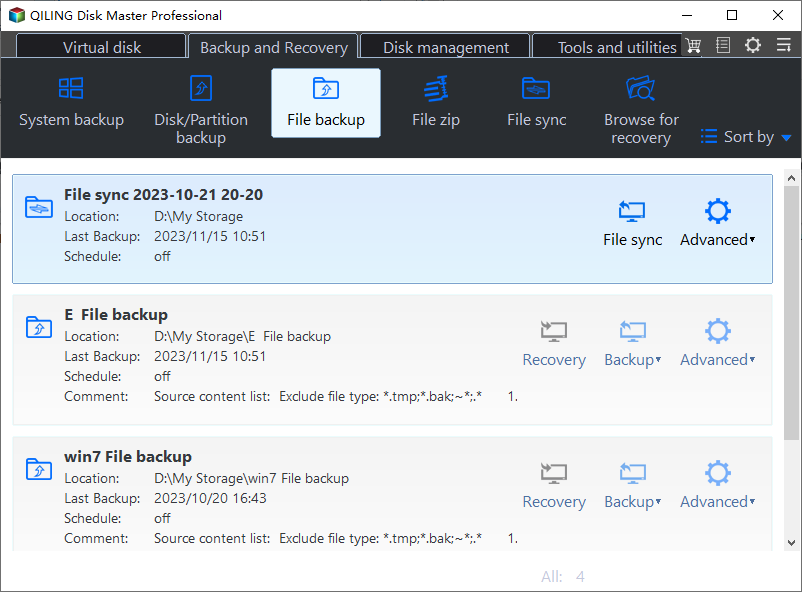
Step 1. Connect a separate backup drive. Open Backup and Recovery and choose File backup.
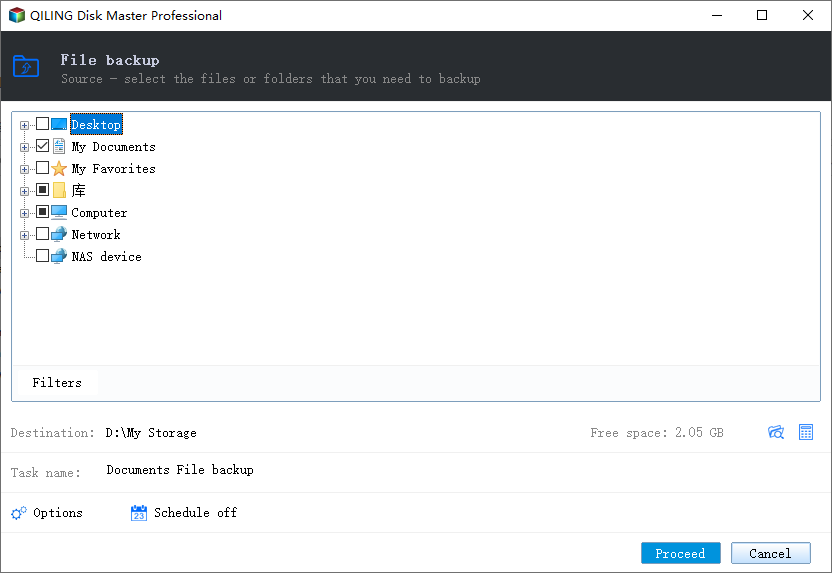
Step 2. In the folder tree, expand the appropriate drive and select the folders you need to protect. Check game saves, Documents, Pictures, or other locations that matter for this task; do not assume every needed file is in one folder.
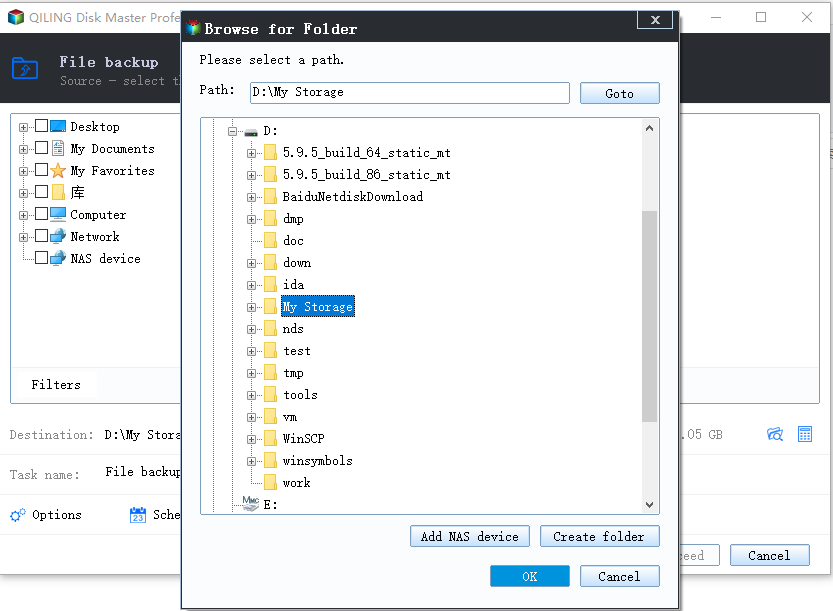
Step 3. Choose a destination on another physical drive or a trusted network location. Check its free space and give the task a recognizable name.
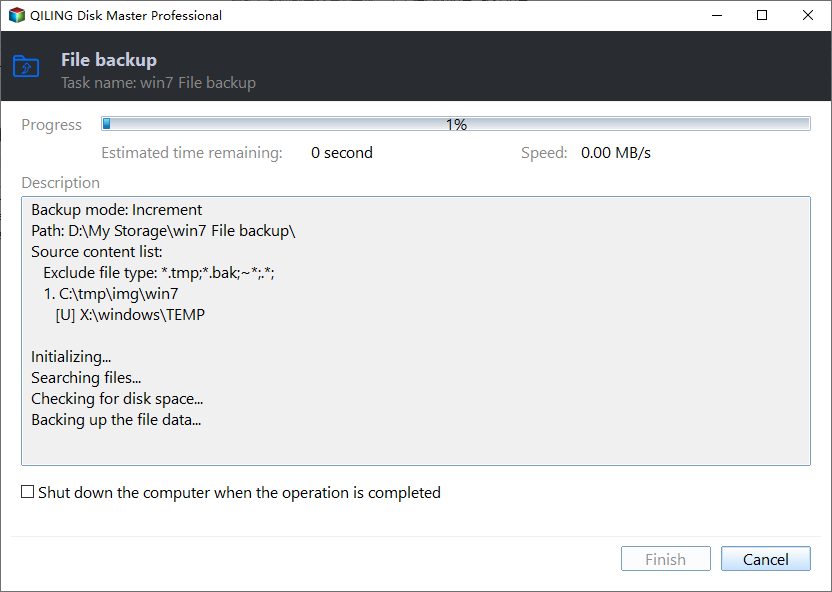
Step 4. Click Proceed and wait for the progress screen to finish. Confirm the backup exists, then keep the backup drive separate from the source PC.
Frequently Asked Questions
Will Keep my files preserve programs? No. Expect to reinstall desktop apps and review settings afterward.
Does reset remove files from every drive? The result depends on the chosen reset scope and settings. Read the final confirmation and disconnect drives not involved.
Conclusion
A reset can keep personal files or remove them, but it still changes apps and settings. Read the final choice and verify a separate backup before starting.
Related Articles
- Windows File Backup and Restore Tutorials
Compare ways to protect and restore personal files in Windows. - Windows System Backup and Restore Tutorials
Find system image, recovery drive, and restore guides for Windows. - Windows Disk Backup and Restore Tutorials
Explore disk image backup and restoration workflows for Windows drives.
Products
Articles & Tutorials
- Data Recovery
- Data Backup
- File Recovery
- File Backup
- System Backup and Restore
- Disk and Partition Clone
- Technical articles
- Mobile articles
- Disk Master Help
- Windows Data Recovery Tutorials
- Windows Secure Delete Tutorials
- Windows Partition Management Tutorials
- Windows File Backup and Restore Tutorials
- Windows System Backup and Restore Tutorials
- Windows Disk Backup and Restore Tutorials
- Windows Clone Tutorials