Fastest Practical Way to Transfer Data Between Two Drives
The fastest transfer method depends on what you are moving. A direct file copy is suitable for documents; disk cloning is better when the second drive must replace the first as a bootable disk.
Choose the method by outcome
File Explorer is simple for ordinary files. Robocopy can resume and log large directory transfers, but options such as /MIR can delete destination files. A disk clone reproduces partitions and boot data, and overwrites the entire target.
Prepare a fast connection
- Connect both drives directly to the PC or to reliable enclosures. USB 3.x ports can help, but the HDD's own speed may remain the limit.
- Check cable quality, destination free space, and drive health. A slow or repeatedly disconnecting drive needs diagnosis before more copying.
- Close applications writing to the source and prevent sleep. Copy one large representative folder first to estimate the rate.
Clone the Disk with Qiling Disk Master
Use Qiling Disk Master only for a full-disk transfer that should preserve the bootable layout. For personal files alone, choose file copy.
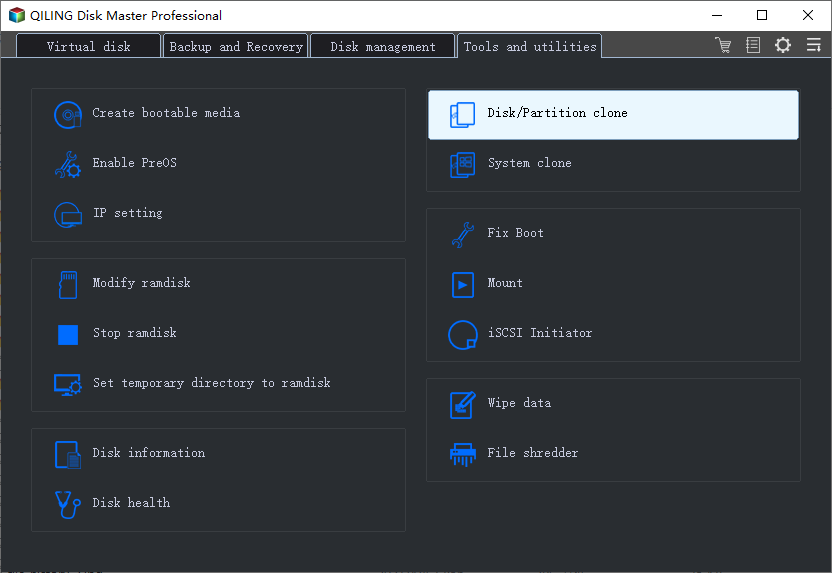
Step 1. Connect the new destination drive. In Qiling Disk Master open Tools and utilities and choose Disk/Partition clone. For a Windows boot-drive replacement, select the whole disk rather than just C:.
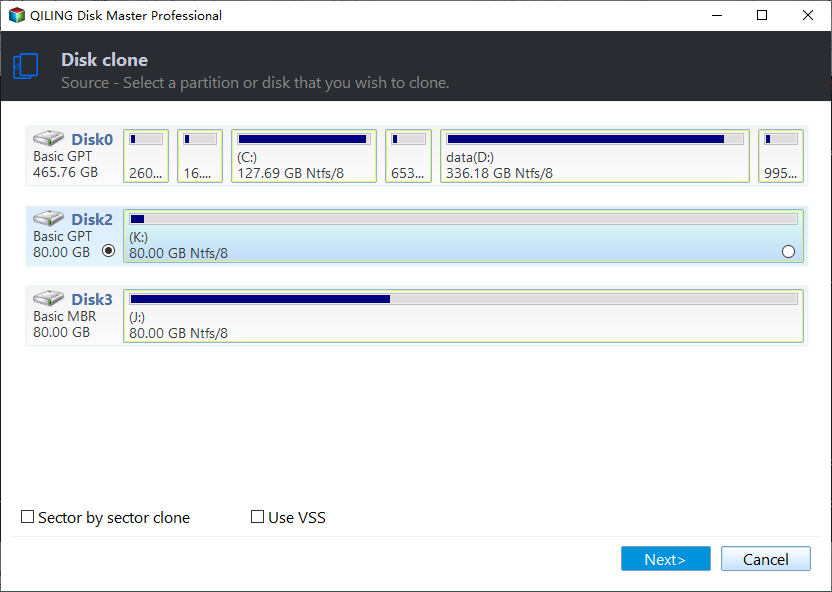
Step 2. Select the original disk as the source. Confirm its model, size, and partition map, including any boot and recovery partitions. Click Next.
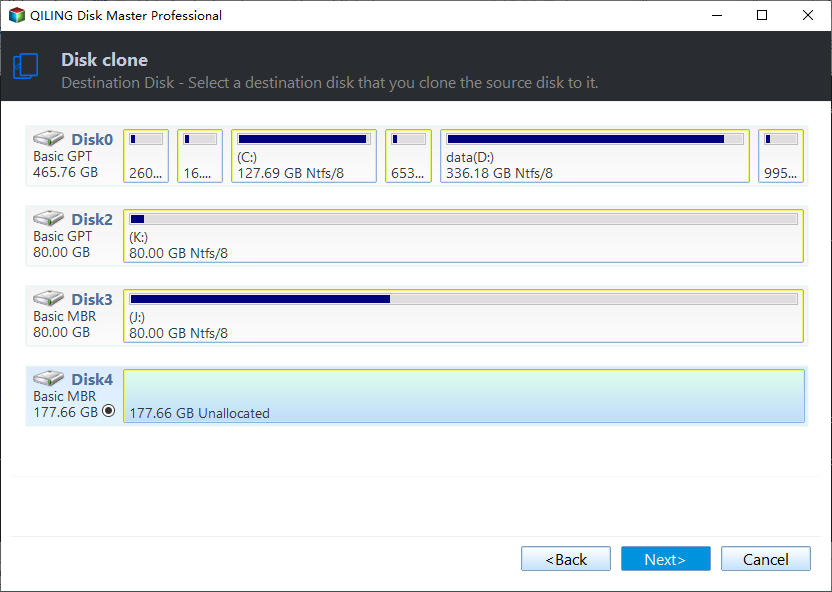
Step 3. Select the replacement drive as the destination by model and capacity, then click Next. All data already on that destination can be overwritten.
Step 4. Review the direction and partition layout. Check that required partitions fit on the destination; enable Optimize for SSD if it is an SSD and the option is available. The illustrated preview shows the controls; check the full layout on your own PC.
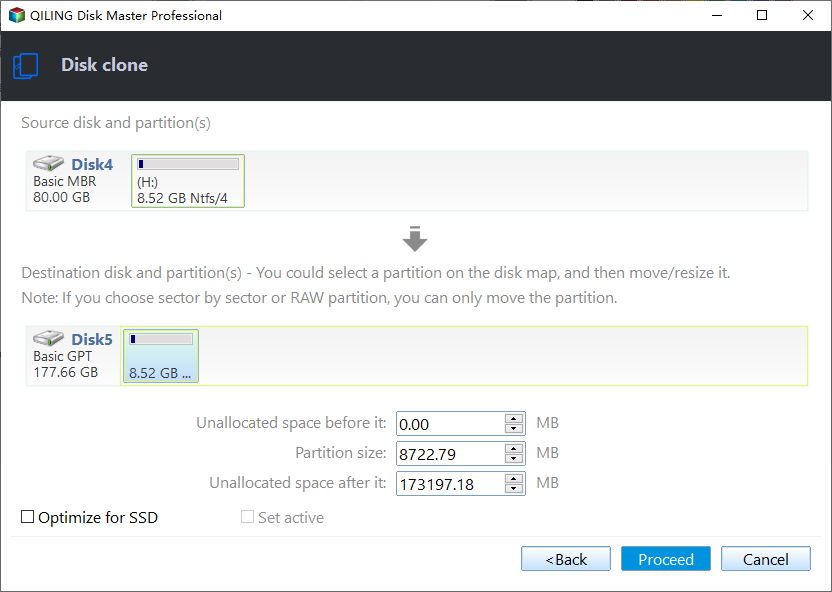
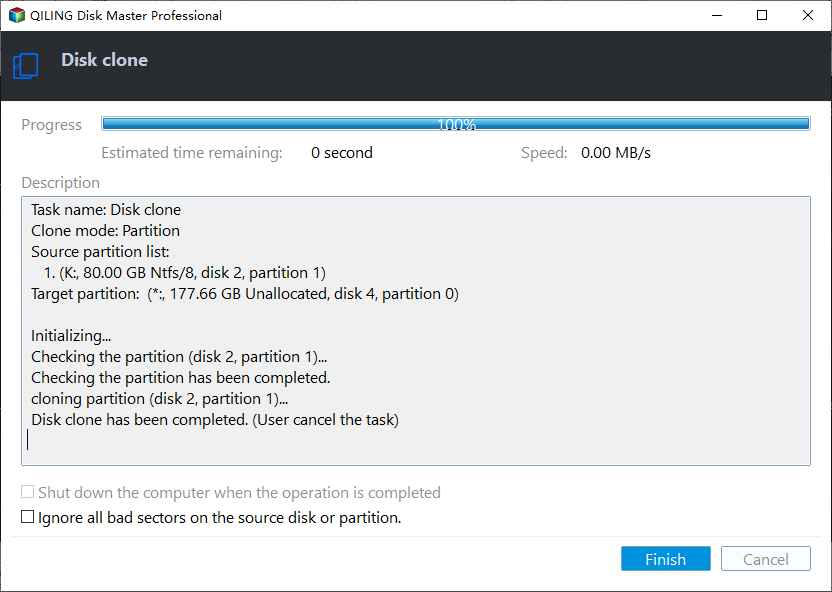
Step 5. Click Proceed. Confirm the overwrite warning only after verifying the destination. Keep both drives connected while the progress screen runs; after completion, boot-test the new drive before erasing the original.
Transfer files with Windows
- Open both drives in File Explorer. Copy a folder to the target without deleting the source.
- For a large repeatable copy, run Robocopy with source and destination paths that you have verified; use conservative switches and keep a log. Avoid /MIR until you understand deletion behavior.
- After the transfer, compare file counts and open several files. Only then consider removing the originals.
When cloning is appropriate
If Windows, boot partitions, or installed applications must work from the second drive, perform a whole-disk clone. Confirm target capacity and every warning before starting.
Frequently Asked Questions
Does USB speed determine the whole transfer? No. The slower drive, interface, file sizes, and read errors can dominate.
Is a clone always faster than copying? Not necessarily. A clone may transfer more data and partitions than you need.
Conclusion
Pick file copy for personal data and whole-disk cloning for a bootable replacement. A stable direct connection and post-transfer checks matter more than a speed claim.
Related Articles
- Windows Cloning Tutorials
Review system disk and HDD-to-SSD cloning guides. - Windows Disk Backup and Restore Tutorials
Find disk image backup and recovery workflows for Windows drives. - Windows System Backup and Restore Tutorials
Explore system image, recovery, and restore guides for Windows.
Products
Articles & Tutorials
- Data Recovery
- Data Backup
- File Recovery
- File Backup
- System Backup and Restore
- Disk and Partition Clone
- Technical articles
- Mobile articles
- Disk Master Help
- Windows Data Recovery Tutorials
- Windows Secure Delete Tutorials
- Windows Partition Management Tutorials
- Windows File Backup and Restore Tutorials
- Windows System Backup and Restore Tutorials
- Windows Disk Backup and Restore Tutorials
- Windows Clone Tutorials