Why Is Windows 10 Backup Disabled?
A disabled Backup setting can have different causes. It may be a missing destination drive, an account or policy restriction, a stopped service, or confusion between File History, Windows Backup, and the older Backup and Restore tool.
Identify the feature that is unavailable
Note the exact screen and message. File History needs a usable external or network destination. Windows Backup may require a Microsoft account and supported sync settings. Backup and Restore (Windows 7) is a separate legacy feature. Troubleshooting the wrong feature can waste time.
On a managed work or school PC, a policy may intentionally disable backup choices. Ask the administrator rather than bypassing security controls.
Check common blockers
- Reconnect the intended backup drive and confirm it appears in File Explorer with enough free space.
- Check whether the destination is read-only, failing, or disconnected from the network.
- Sign in with the account that owns the backup configuration and review any displayed Windows Security or policy message.
- Restart the PC and revisit the backup setting. If an error code appears, record it and use the corresponding Windows guidance rather than repeatedly resetting the configuration.
Keep protection while troubleshooting
Do not wait indefinitely for a disabled toggle to become available. Copy irreplaceable files to a separate healthy drive or create a backup with a trusted alternative. Verify that the alternate backup includes the right folders and can be read. Later, repair the built-in feature if you still need it for ongoing protection.
Back Up Files with Qiling While Windows Backup Is Unavailable
A separate file backup can protect personal data without changing Windows policy settings.
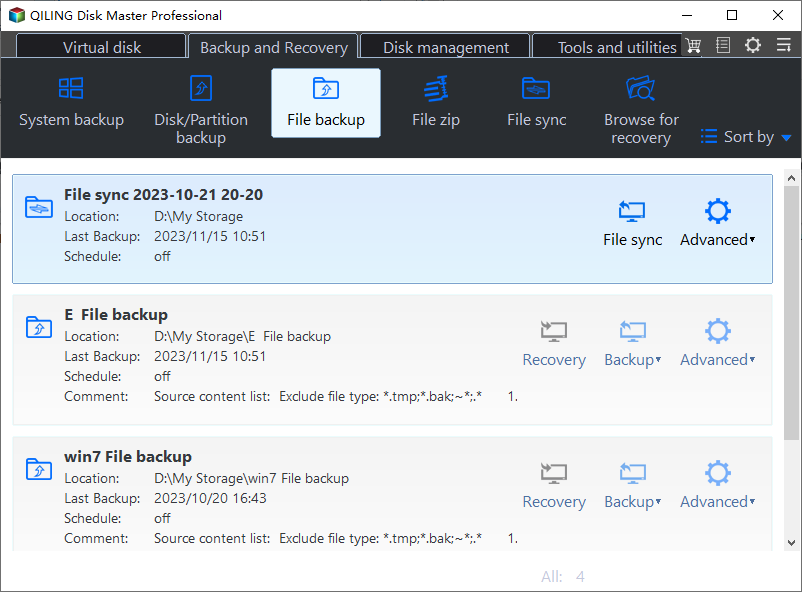
Step 1. Connect a healthy external drive and open Qiling Disk Master. Under Backup and Recovery, choose File backup.
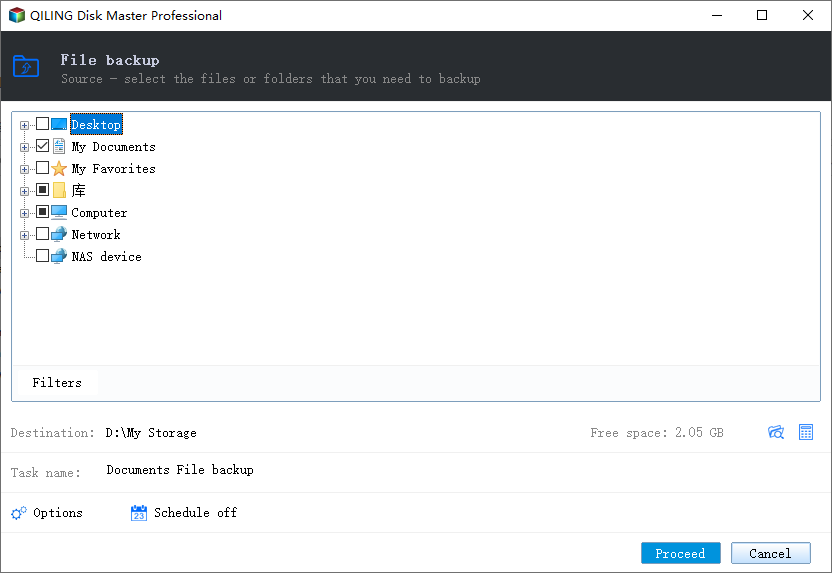
Step 2. In the folder tree, select the user folders and other important data locations. Expand folders and check the selected paths; there is no separate Add Folder button in this screen.
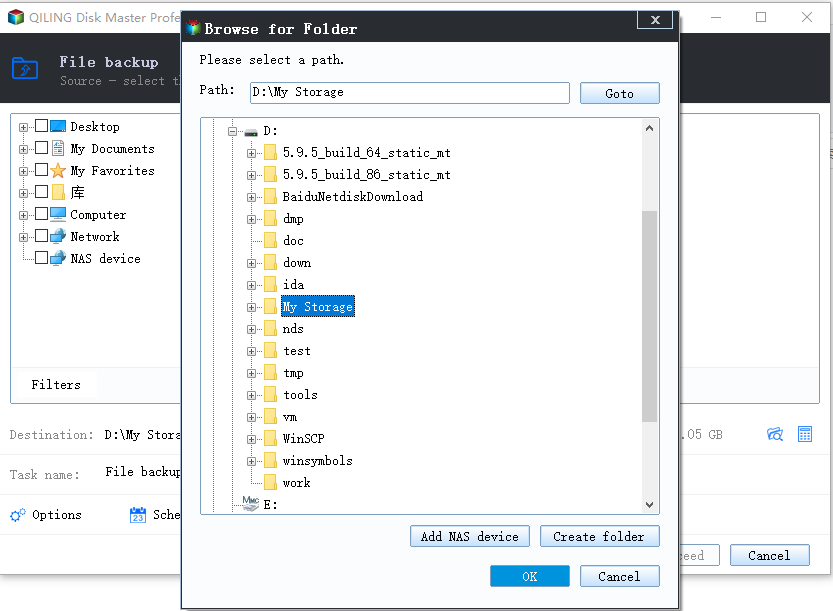
Step 3. Open the destination chooser, select a folder on an external healthy disk, and click OK. Verify that the destination is not the same disk as the files being protected and has enough free space.
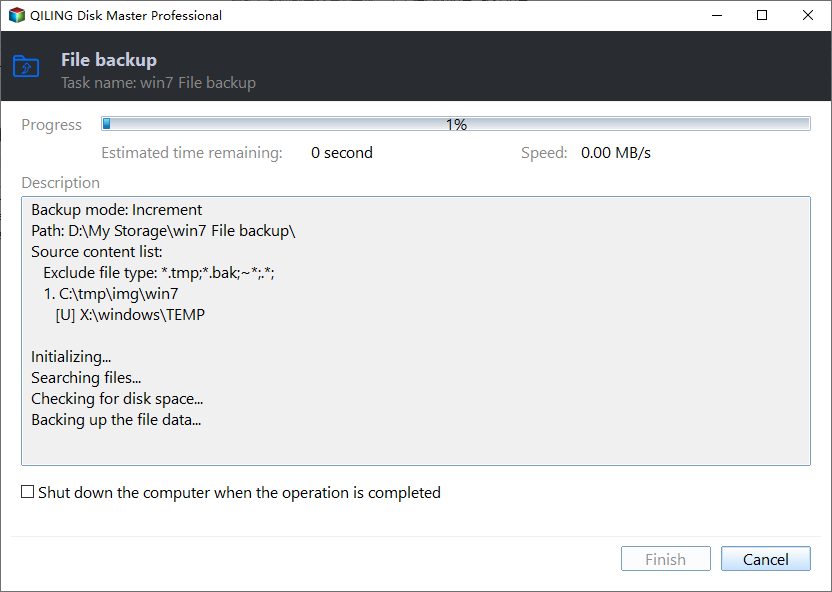
Step 4. Review the task name and selected folders, then click Proceed. Wait for the backup to finish. Verify the image and test a sample restore; revisit the disabled Windows setting separately.
Frequently Asked Questions
Should I disable security software to make backup work? Not as a first step. Check the message, destination, account, and policy before changing protections.
Does Qiling File backup replace a full system image? No. It protects selected files; use System backup for an image of Windows and boot partitions.
Conclusion
Identify the disabled Windows feature and its actual blocker, protect files immediately with a separate backup, then repair the built-in configuration if needed.
Related Articles
- Windows File Backup and Restore Tutorials
Choose a backup route for personal files and folders. - Windows System Backup and Restore Tutorials
Compare system image and recovery methods. - Windows Disk Backup and Restore Tutorials
Plan disk image backup and restore for Windows drives.
Products
Articles & Tutorials
- Data Recovery
- Data Backup
- File Recovery
- File Backup
- System Backup and Restore
- Disk and Partition Clone
- Technical articles
- Mobile articles
- Disk Master Help
- Windows Data Recovery Tutorials
- Windows Secure Delete Tutorials
- Windows Partition Management Tutorials
- Windows File Backup and Restore Tutorials
- Windows System Backup and Restore Tutorials
- Windows Disk Backup and Restore Tutorials
- Windows Clone Tutorials