Will I Lose My Files If I Change from HDD to SSD
Changing from HDD to SSD does not have to delete files. Clone the old disk or back up data first, then install and boot from the SSD safely.
Overview
You will lose files only if you remove, format, or overwrite the old drive without a backup. If you clone the HDD to the SSD, Windows, apps, and files can move together.
The safest upgrade keeps the old HDD unchanged until the SSD boots successfully.
What to Prepare First
- Buy an SSD large enough for the used space on the HDD.
- Connect the SSD with a SATA/NVMe adapter or install it as a second drive.
- Back up irreplaceable files before cloning.
- Check whether the SSD is detected in BIOS and Windows.
Use Windows Built-in Tools First
If you want a fresh Windows installation, copy files to an external drive first, install Windows on the SSD, and copy files back. This is clean but requires reinstalling apps.
If you want to keep everything, clone the HDD to the SSD and then boot from the SSD.
Clone the Drive with Qiling Disk Master
Use this workflow when you want Windows, installed programs, boot files, and personal data to move together. Cloning is different from copying files: the target drive receives a bootable disk layout, so check the source and target carefully before you start.
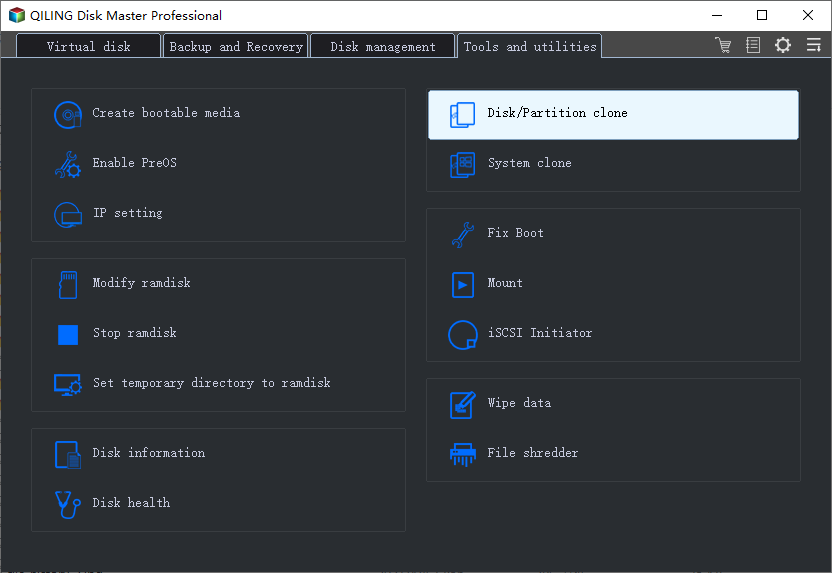
Step 1. Connect the target drive to the PC. Open Qiling Disk Master, go to the tools page, and choose Clone. If you are cloning a whole Windows disk, choose disk clone instead of copying individual folders.
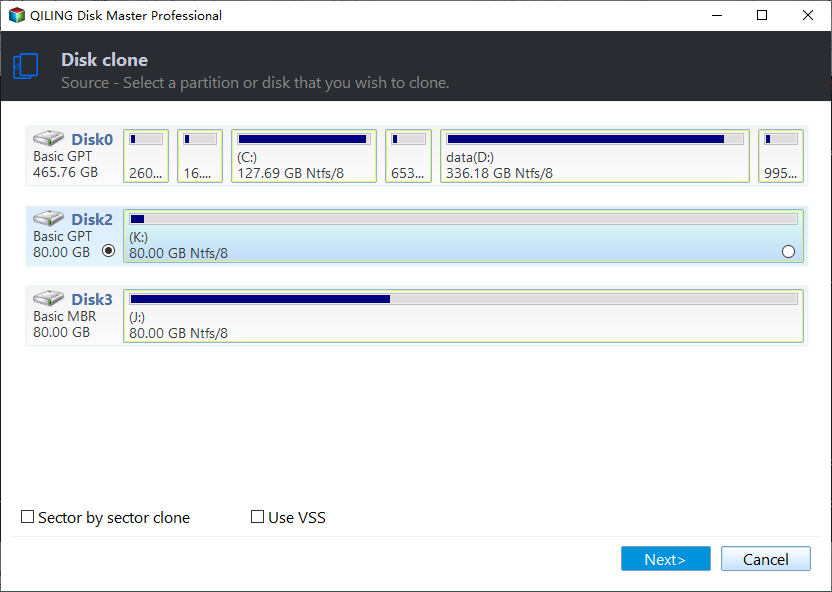
Step 2. Select the source disk that currently contains Windows or the data you want to move. Confirm the disk number, capacity, drive letters, and model name so you do not choose the wrong drive.
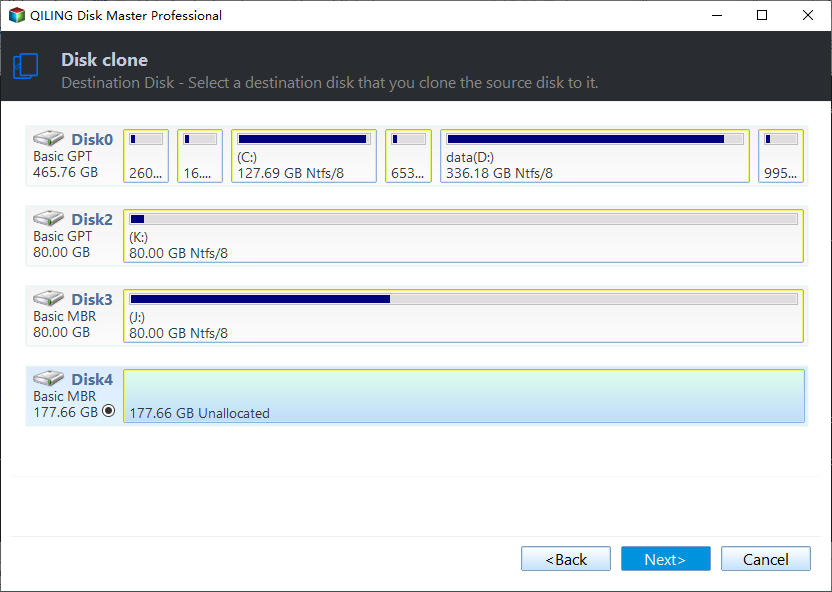
Step 3. Select the destination disk. The destination will be overwritten during cloning, so move any useful files away from it first.
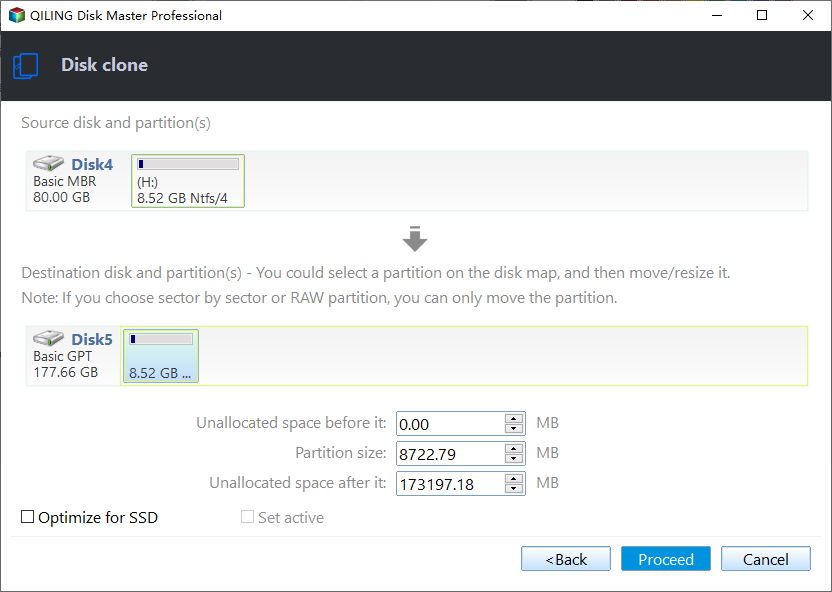
Step 4. Preview the disk layout. Use the automatic layout when the target is larger, choose the SSD option when cloning to an SSD, and make sure every required system partition is included.
Step 5. Click Proceed. If a warning appears that the destination disk will be erased, confirm it only after checking that you have selected the correct destination and saved any important files from it elsewhere. Monitor the cloning progress and keep both disks connected until the operation finishes. Wait for the completion message before continuing to Step 6.
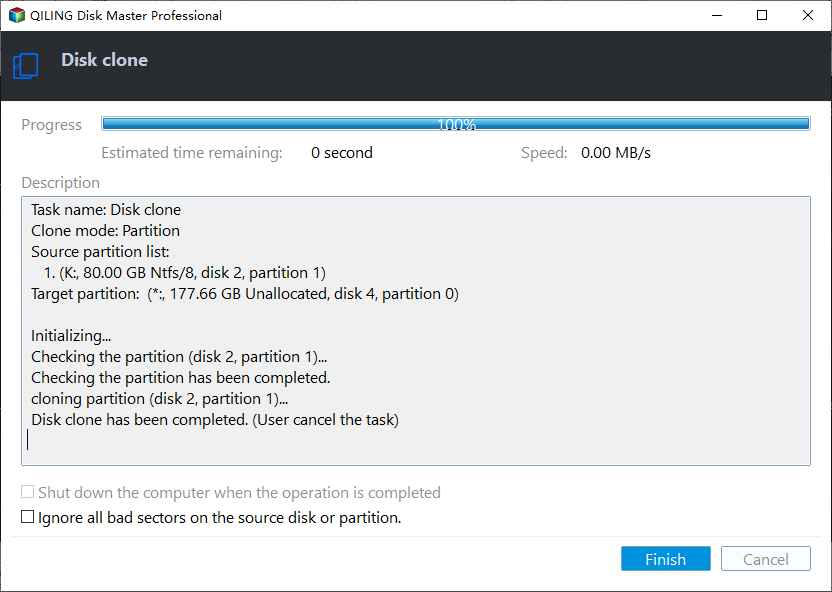
Step 6. After cloning, shut down the computer, replace the old drive if needed, and set the cloned drive as the first boot device in BIOS or UEFI.
Troubleshooting Tips
- If the SSD is smaller, remove unnecessary files or move personal folders before cloning.
- If Windows boots from the old HDD after cloning, change boot order in BIOS.
- If the cloned SSD is slow, confirm AHCI/NVMe drivers and SSD alignment.
FAQ
Should I back up before following these steps? Yes. If the disk is readable and the files matter, create a backup before cloning, repairing, formatting, resetting, or changing hardware.
Can I use Windows built-in tools only? Use built-in tools for simple file copy, restore points, File History, Disk Management, and Windows setup. Use Qiling tools when you need a clearer disk map, bootable recovery media, scheduled backup, or disk clone workflow.
Will these operations erase my target drive? Cloning, restoring an image, formatting, and creating some bootable media can overwrite the target drive. Read the warning message and confirm the disk number before clicking Proceed.
Conclusion
Changing from HDD to SSD is safe when you clone or back up first. Do not erase the HDD until the SSD has booted and your files are verified.
Related Articles
- Windows System Backup and Restore Tutorials
Browse Windows backup and restore guides for system images, recovery drives, restore points, and safe repair preparation. - Windows Disk Backup and Restore Tutorials
Find Windows disk backup, SSD image backup, external drive backup, and restore tutorials with practical Qiling workflows. - Windows Clone Tutorials
Review Windows cloning guides for system migration, disk clone, SSD upgrade, and safe boot preparation.
Products
Articles & Tutorials
- Data Recovery
- Data Backup
- File Recovery
- File Backup
- System Backup and Restore
- Disk and Partition Clone
- Technical articles
- Mobile articles
- Disk Master Help
- Windows Data Recovery Tutorials
- Windows Secure Delete Tutorials
- Windows Partition Management Tutorials
- Windows File Backup and Restore Tutorials
- Windows System Backup and Restore Tutorials
- Windows Disk Backup and Restore Tutorials
- Windows Clone Tutorials