How to Clone an HDD to a Crucial SSD
A Crucial SSD can replace a slow HDD without reinstalling Windows if the old disk is healthy and a compatible target is available. Prepare the hardware and a separate backup before running the clone.
Check Crucial SSD compatibility
Use the exact PC model and Crucial's current compatibility information to choose 2.5-inch SATA or the supported M.2 format. Confirm the physical size, interface, and capacity; M.2 SATA and M.2 NVMe are not equivalent. A one-slot laptop needs an external enclosure matching the new SSD. For a 3.5-inch desktop bay, check mounting and power cables.
Prepare the source
Copy irreplaceable data to another healthy disk and save BitLocker recovery keys. Inspect the HDD for clicking, disconnects, or file-read errors. A clone is not a repair tool for physical damage. Check whether the used source partitions fit on the SSD; when moving to a smaller SSD, review the full partition layout rather than comparing only C: free space.
Finish the upgrade
After cloning, power down and swap the drives using the manufacturer's instructions. Select the Crucial SSD as the boot device and test Windows, applications, and several restarts. Check the SSD's reported capacity and whether any free space remains unallocated. Keep the old HDD unchanged until you trust the new setup.
Clone the Existing System to the Replacement SSD with Qiling
Use whole-disk cloning to carry Windows and its boot partitions to the Crucial SSD.
Step 1. Connect the Crucial SSD with an adapter matching its interface. Open Qiling's Tools and utilities > Disk/Partition clone and select the entire old HDD row on the source screen.
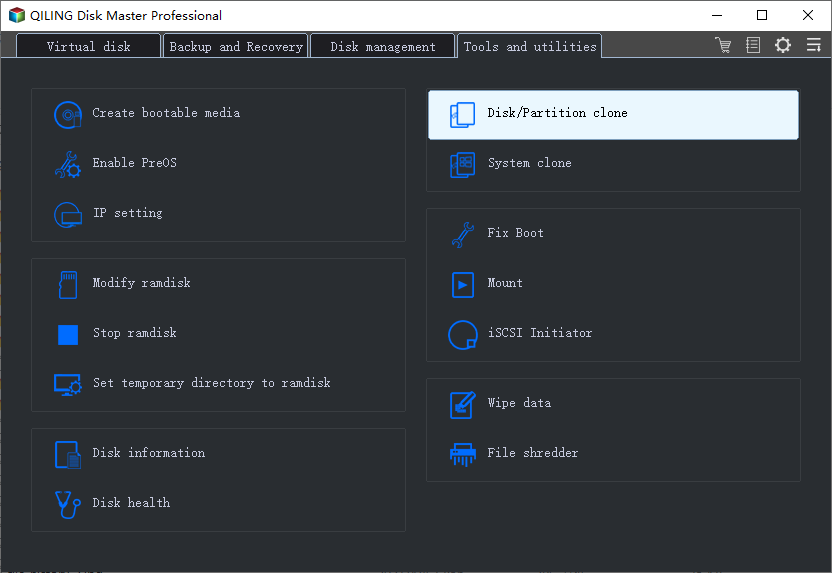
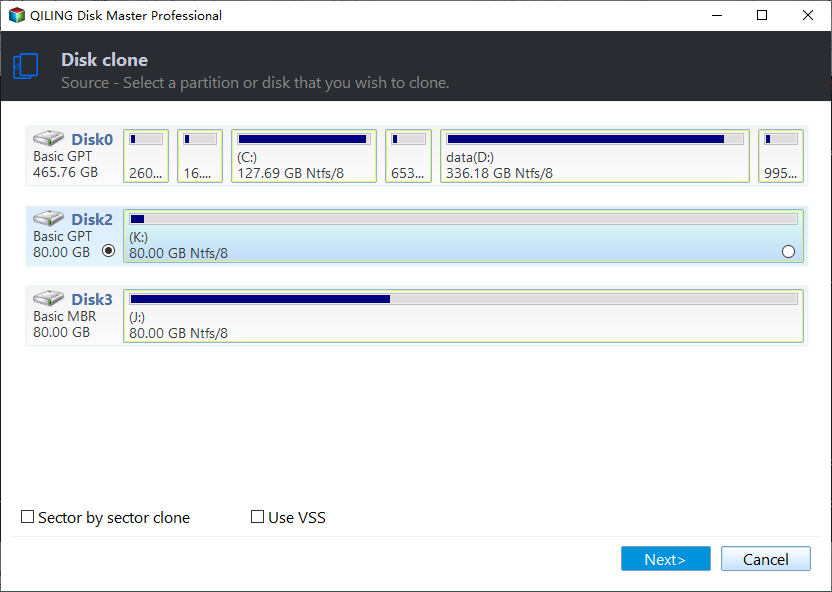
Step 2. Select the old system disk as the source, verify model and capacity, and click Next. The example image shows a data disk; select the complete Windows disk on your PC.
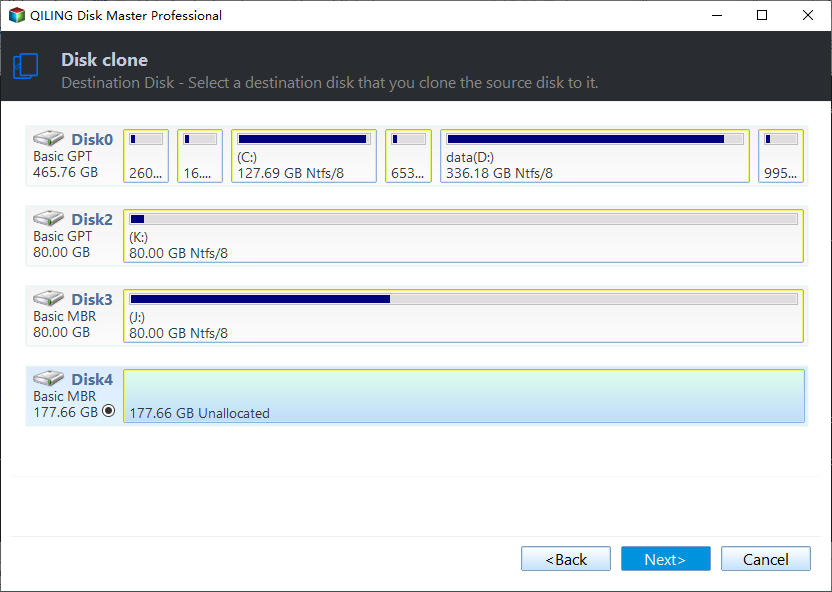
Step 3. Select the replacement SSD as destination and click Next. Back up anything already on it because it will be overwritten.
Step 4. Review source and destination, including EFI or System Reserved and recovery partitions. Enable SSD optimization if available, click Proceed, and confirm the warning.
Step 5. Wait for completion, power off, put the SSD in the internal slot, and boot it alone if practical. Verify Windows, applications, files, and capacity before retiring the original.
If Windows fails to start, check firmware boot mode and boot order before modifying partitions. Keep the original disk as a recovery path.
Conclusion
A compatible SSD, a readable source, and a verified first boot matter more than the brand of the cloning utility.
Related Articles
- Windows System Backup and Restore
Compare system images, cloning, and recovery options. - Windows Disk Backup and Restore
Find disk backup and restore guides for Windows PCs.
Products
Articles & Tutorials
- Data Recovery
- Data Backup
- File Recovery
- File Backup
- System Backup and Restore
- Disk and Partition Clone
- Technical articles
- Mobile articles
- Disk Master Help
- Windows Data Recovery Tutorials
- Windows Secure Delete Tutorials
- Windows Partition Management Tutorials
- Windows File Backup and Restore Tutorials
- Windows System Backup and Restore Tutorials
- Windows Disk Backup and Restore Tutorials
- Windows Clone Tutorials