How to Clone a USB Drive to an SSD in Windows
First decide what is on the USB drive
If it contains only documents, copying files in File Explorer is usually easier than cloning and leaves the SSD's existing layout intact. If it is a bootable installer, rescue disk, or a specially partitioned device, a whole-disk clone may preserve its partitions. But an installer USB cloned to an internal SSD does not automatically become a normal Windows installation; its boot behavior is defined by the original USB layout.
Prepare a safe target
Step 1. Identify the USB device and SSD by model and capacity in Disk Management. Disconnect other removable drives. Back up anything on the SSD: cloning overwrites its partitions.
Step 2. Check the USB for read errors and make a separate copy of valuable files. The SSD must be large enough for the cloning mode chosen; sector-by-sector copying may require at least the USB's full advertised size.
Step 3. After cloning, verify files and partition sizes. A large SSD may show unallocated space because it inherited the smaller USB layout. Extend a suitable partition only after confirming the copy.
For a Windows installer or portable OS
Use Microsoft's official installation media to install Windows onto an SSD. Do not rely on cloning an installer stick. A portable Windows workspace or recovery USB has different licensing and boot requirements and may not start as a normal internal installation.
Clone the USB Device to the SSD with Qiling Disk Master
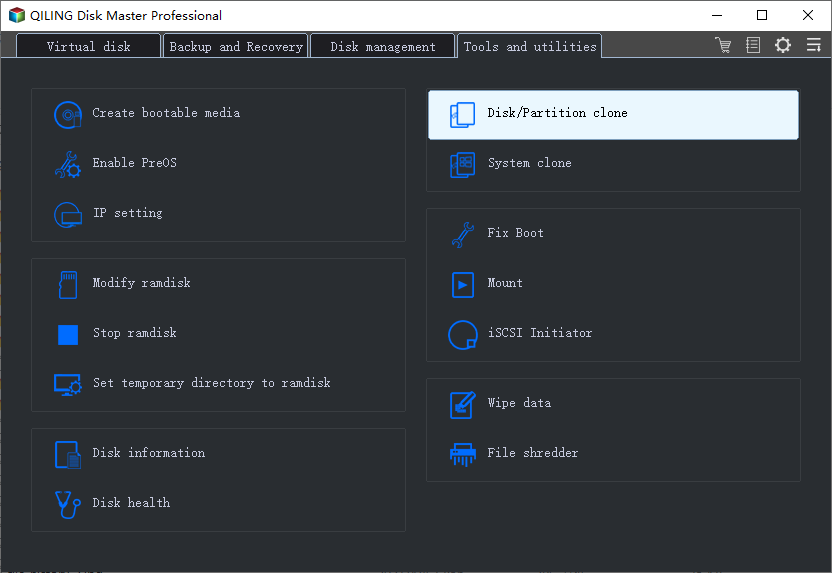
Step 1. Connect both drives and open Tools and utilities > Disk/Partition clone. Choose the whole source disk when all partitions must move.
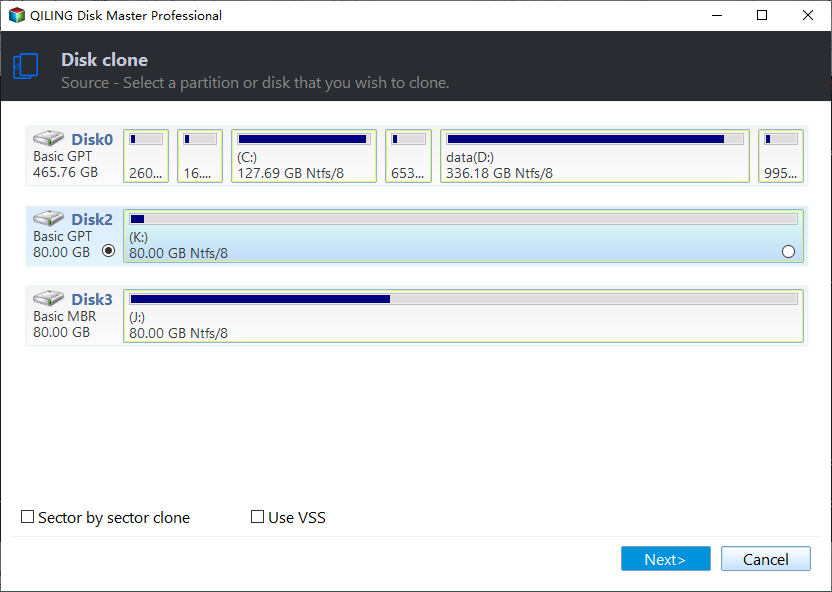
Step 2. Select the source by model and capacity and click Next. The example image highlights a data disk; select your actual source, which may be a different disk.
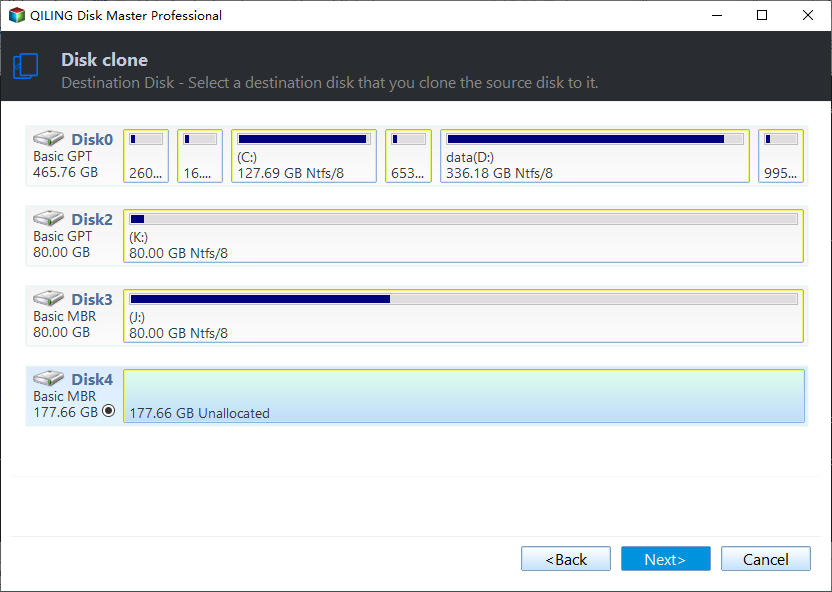
Step 3. Select the destination and click Next. Verify it a second time because its partitions and existing files will be overwritten.
Step 4. Review the complete source-to-target layout. Check all partitions, especially EFI and recovery partitions for a Windows boot disk. If the target is an SSD, choose SSD optimization when available and appropriate.
Step 5. Click Proceed, confirm the overwrite warning, and wait for completion. Verify copied files or boot the target independently before changing the source.
Conclusion
For ordinary files, copy instead of cloning. Clone only when you need the USB's full partition layout, and do not mistake a bootable USB copy for a Windows install.
Related Articles
- Windows Cloning Tutorials
Explore Windows disk, system, and SSD migration topics. - Windows Disk Backup and Restore Tutorials
Compare migration with a separate disk image.
Products
Articles & Tutorials
- Data Recovery
- Data Backup
- File Recovery
- File Backup
- System Backup and Restore
- Disk and Partition Clone
- Technical articles
- Mobile articles
- Disk Master Help
- Windows Data Recovery Tutorials
- Windows Secure Delete Tutorials
- Windows Partition Management Tutorials
- Windows File Backup and Restore Tutorials
- Windows System Backup and Restore Tutorials
- Windows Disk Backup and Restore Tutorials
- Windows Clone Tutorials