Hard Drive Making Noise: What to Do Before Data Is Lost
A new clicking, grinding, or repeated spin-up sound from a mechanical hard drive is a warning, not a software problem. The first decision is whether the data is valuable enough to stop using the drive immediately.
Distinguish ordinary sound from a fault
Some hard drives make a soft seek or spin sound during normal work. Loud rhythmic clicks, grinding, scraping, repeated spin-up and spin-down, and a drive that disappears from Windows are different. Write down when the noise began and whether the BIOS/UEFI still detects the drive. A physically damaged HDD is not repaired by a formatting tool, CHKDSK, or a clone command.
Protect the data before troubleshooting
If the data is irreplaceable or the drive is clicking or grinding, shut the PC down and ask a professional recovery service for an assessment. Repeated power cycles and full-surface scans can make recovery less likely. Do not open the sealed drive. If the data is replaceable and the disk remains stable, copy the most important small files first to a different healthy disk; avoid installing software onto the noisy HDD.
Rule out external causes cautiously
For an external drive, inspect the cable, power supply, USB port, and enclosure only after the drive is off. A bad connection may cause resets, but continued mechanical clicking after a known-good connection suggests an internal problem. If Windows can still read the drive without errors, monitor it only long enough to extract data. Do not treat a successful copy as evidence the hardware is safe to keep using.
Back Up Readable Files with Qiling Disk Master
Use this only when the drive is stable and the data is not worth a professional recovery attempt. File Backup reads selected folders; it cannot fix damaged heads or unreadable sectors.
Step 1. Connect a healthy destination drive with enough free space. In Qiling Disk Master, open Backup and Recovery > File backup.
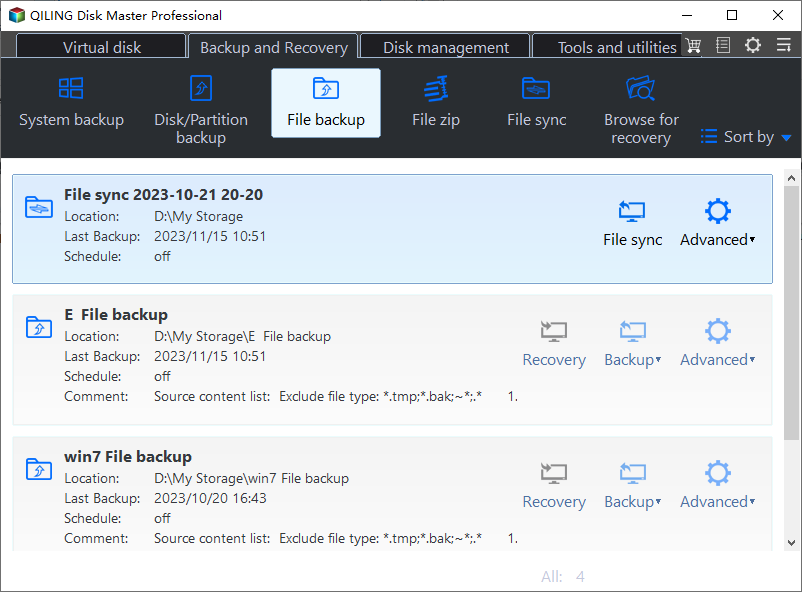
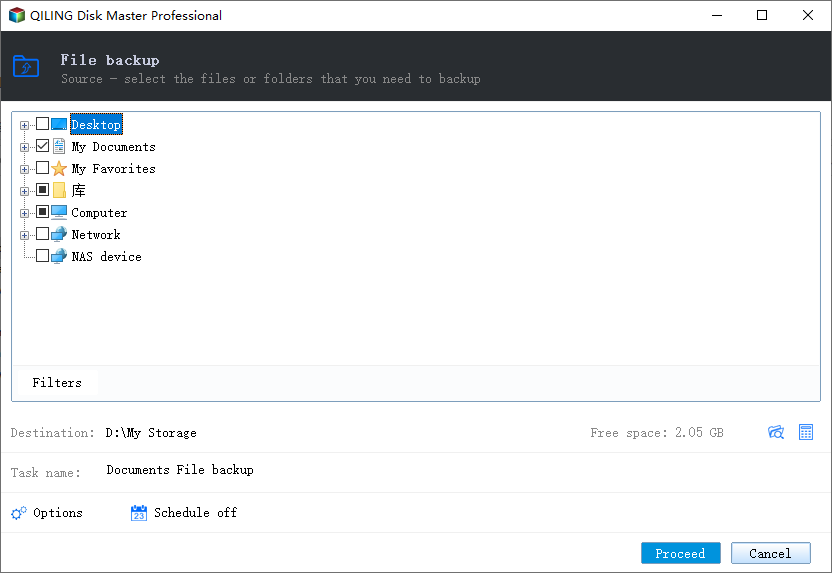
Step 2. In the folder tree, select the most important folders first, such as Documents and Photos. Avoid the entire noisy drive if it is struggling to read.
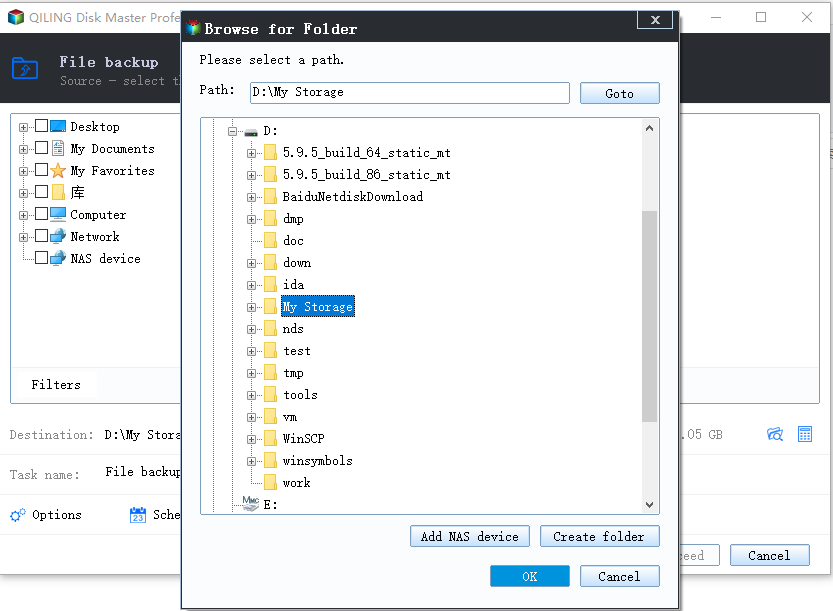
Step 3. Choose the healthy external drive as the destination. Make sure source and destination are different physical disks.
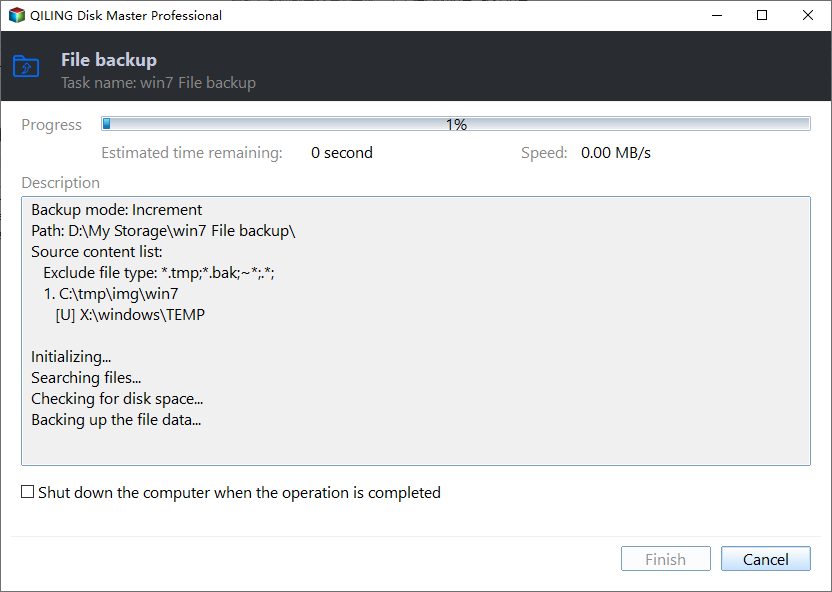
Step 4. Click Proceed to start the backup. Stop if the drive disconnects, makes worsening sounds, or reports repeated read errors.
Step 5. Open several files from the backup on the healthy disk. Replace the noisy HDD; do not return it to routine storage.
If the file backup fails, do not repeatedly retry the entire disk. Consider professional recovery according to the value of the missing files.
Conclusion
A noisy HDD needs a data-protection decision first. Software can copy accessible files but cannot repair physical damage.
Related Articles
- Windows System Backup and Restore
Compare system images, cloning, and recovery options. - Windows Disk Backup and Restore
Find disk backup and restore guides for Windows PCs. - How to Make a Forensic Copy of a Hard Drive in Windows
Learn what a forensic disk image requires, how to protect the original, and when a Qiling sector clone is only a working copy rather than legal evidence.
Products
Articles & Tutorials
- Data Recovery
- Data Backup
- File Recovery
- File Backup
- System Backup and Restore
- Disk and Partition Clone
- Technical articles
- Mobile articles
- Disk Master Help
- Windows Data Recovery Tutorials
- Windows Secure Delete Tutorials
- Windows Partition Management Tutorials
- Windows File Backup and Restore Tutorials
- Windows System Backup and Restore Tutorials
- Windows Disk Backup and Restore Tutorials
- Windows Clone Tutorials