How to Transfer a Windows 10 SSD to a New PC Safely
An SSD that booted one computer may not start another cleanly. A new motherboard can change storage drivers, UEFI settings, encryption recovery, and Windows activation. Decide whether you need the files or the entire old installation.
Separate file transfer from OS migration
For most different-hardware moves, install Windows on the new PC and restore personal files from a backup. Reinstall apps from legitimate installers and sign in to their accounts. This avoids inheriting old drivers and OEM utilities that may not fit the new hardware.
A direct disk move may be worth testing when hardware and boot mode are compatible, but it is not guaranteed. Windows 10 standard support ended in 2025; when the new PC supports it, consider a supported Windows version instead of migrating an aging installation.
Check encryption, drivers, and licensing
Before removing the SSD, save the BitLocker or Device Encryption recovery key, back up files separately, and note whether the old system uses UEFI/GPT. A new motherboard may prompt for the recovery key. Do not clear encryption protection without a known recovery path.
Windows activation may need reactivation after a significant hardware change, and an OEM license may not transfer. Microsoft explains the conditions in its activation guidance. If Windows cannot boot on the new PC, use installation media and restore files rather than wiping the only copy.
Test the new PC before retiring the old one
After a fresh install, apply the PC maker's chipset, storage, graphics, and network drivers. Restore documents to their proper folders and check application-specific data such as browser profiles, mail archives, and game saves.
Verify the files open, activation status is understood, and backups are current. Keep the original SSD untouched for a while; it is a useful rollback source if a profile or license was overlooked.
Back Up Files Before Moving to the New PC
For different hardware, Qiling file backup is the safer default than copying an entire Windows installation. Complete the new PC's Windows setup first, then restore the backed-up files.
Step 1. On a working Windows PC, connect a separate backup drive with enough free space. Open Qiling Disk Master and choose Backup and Recovery > File backup. Unlock the old SSD if encrypted and confirm it is readable.
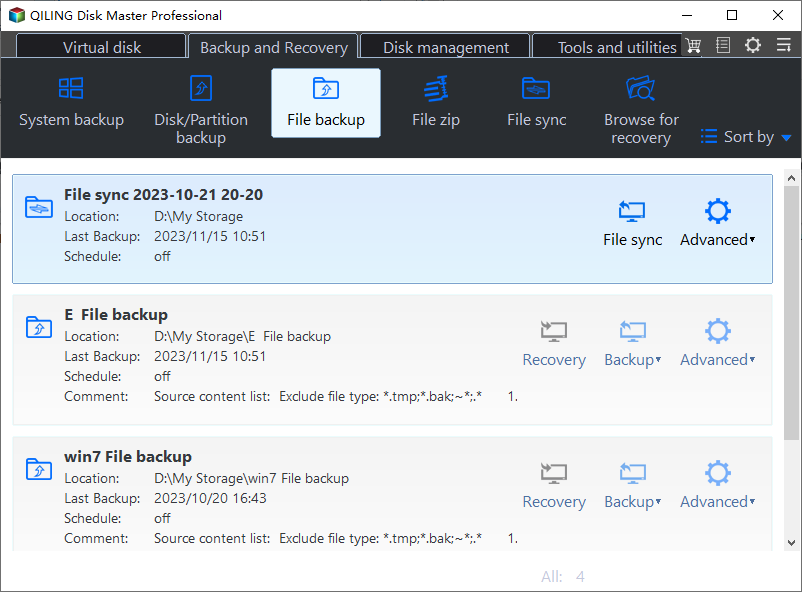
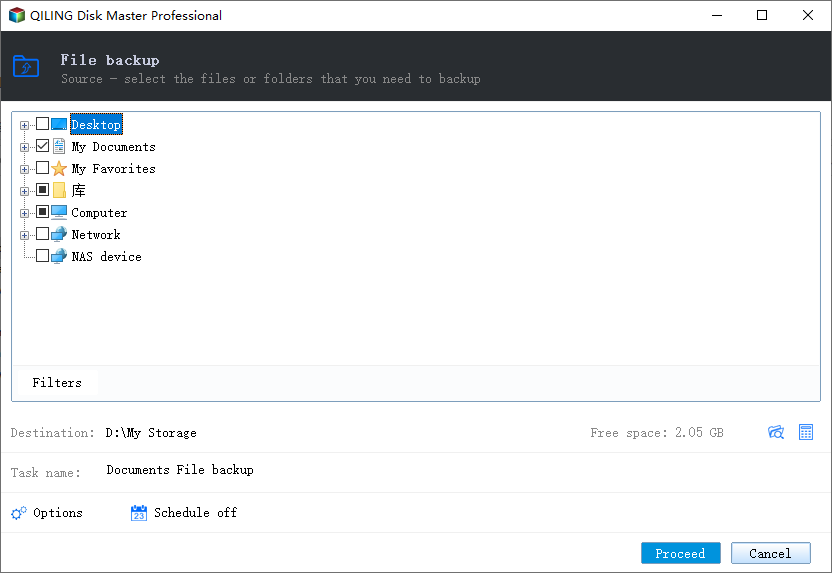
Step 2. In the source tree, select the folders you actually need to protect. Include Documents, Desktop, Pictures, projects, local saves, and other user folders; account for data stored outside the default profile.
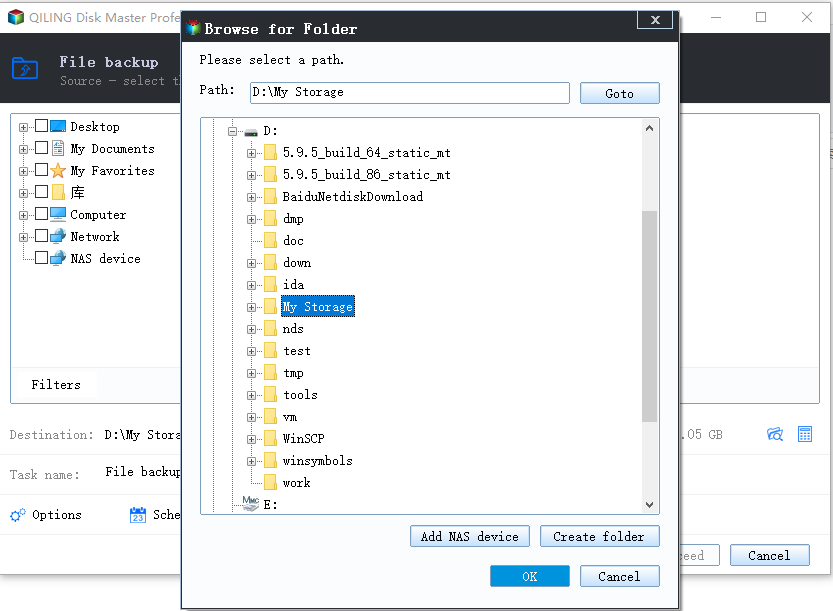
Step 3. Choose a destination on the separate drive, not the source volume. Confirm that the destination has room for the selected files. Use a removable backup disk that can connect to the new PC.
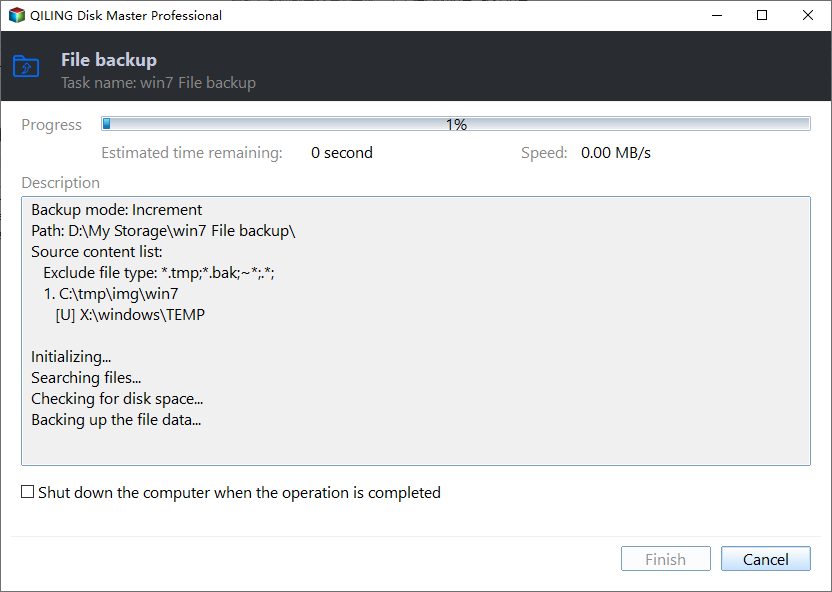
Step 4. Review the selected source and destination, then click Proceed. Leave both drives connected until the job completes. Confirm the selected folders and destination path before starting.
Step 5. Use the backup task's Recovery option to restore a small sample to a separate folder, then open those files to confirm that the backup is usable. On the new PC, use the Qiling restore workflow or open the backup as supported, then check files and reinstall applications.
Do not assume installed software can be transferred by copying Program Files; applications often require installation and reactivation.
Frequently Asked Questions
Will the same SSD automatically boot in a different PC?
Not necessarily. Drivers, UEFI mode, encryption, and activation can all change.
Can I keep the old Windows 10 license?
That depends on the license type and activation rules; check Microsoft's hardware-change guidance.
Conclusion
For a different PC, protect the files first and prefer a clean, supported Windows installation. Treat a direct SSD boot as a conditional experiment, not the default migration plan.
Related Articles
- Transfer Windows 10 to Another Computer
Compare full-system and file-first transfer approaches. - Windows File Backup and Restore
Create an independent copy of personal data.
Products
Articles & Tutorials
- Data Recovery
- Data Backup
- File Recovery
- File Backup
- System Backup and Restore
- Disk and Partition Clone
- Technical articles
- Mobile articles
- Disk Master Help
- Windows Data Recovery Tutorials
- Windows Secure Delete Tutorials
- Windows Partition Management Tutorials
- Windows File Backup and Restore Tutorials
- Windows System Backup and Restore Tutorials
- Windows Disk Backup and Restore Tutorials
- Windows Clone Tutorials