How to Transfer Data from an Old Hard Drive to a New PC
An old hard drive can be attached to a new computer as a secondary disk, but copying the entire Windows installation usually is not the right migration method. Move user data and reinstall applications on the new PC.
Connect the old drive safely
Determine whether the old drive is 2.5-inch SATA, 3.5-inch SATA, or another interface. A 3.5-inch HDD generally needs an enclosure with its own power supply; a simple USB cable may not supply enough power. Connect the drive after the new PC has completed setup. Do not initialize, format, or erase it when Windows prompts; first inspect Disk Management to identify it by capacity.
Find and copy the important files
Check the old user profile's Desktop, Documents, Downloads, Pictures, Videos, and any custom project folders. If files were encrypted with EFS or BitLocker, obtain the corresponding keys before attempting access. Cloud placeholders may require signing into the original account. Copy to the new PC or a separate backup disk and compare representative files, not only folder sizes.
Finish the migration
Install applications afresh using official installers, import exported settings, and check license transfer rights. If an old program relied on local databases or a mail archive, use its export/import workflow. Keep the old HDD unchanged until all critical data and accounts are verified. If it shows physical failure, stop ordinary copy attempts and consider recovery assistance.
Transfer Personal Files with Qiling File Backup
When the old Windows installation still starts, a structured Qiling file backup helps gather data before attaching the drive to the new PC.
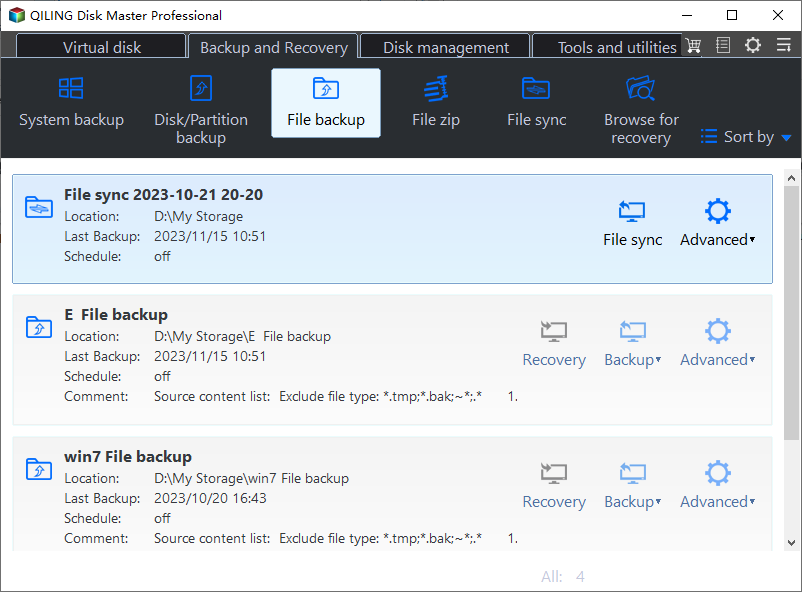
Step 1. Attach a healthy external destination to the old PC. Open Backup and Recovery > File backup in Qiling Disk Master.
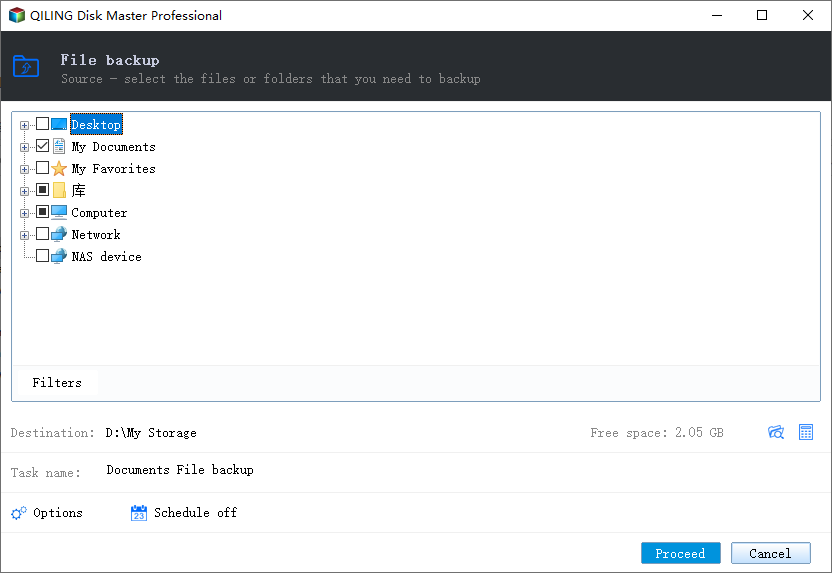
Step 2. Select the required folders directly in the source tree. Include other user profiles or secondary drives only if you have permission to access them.
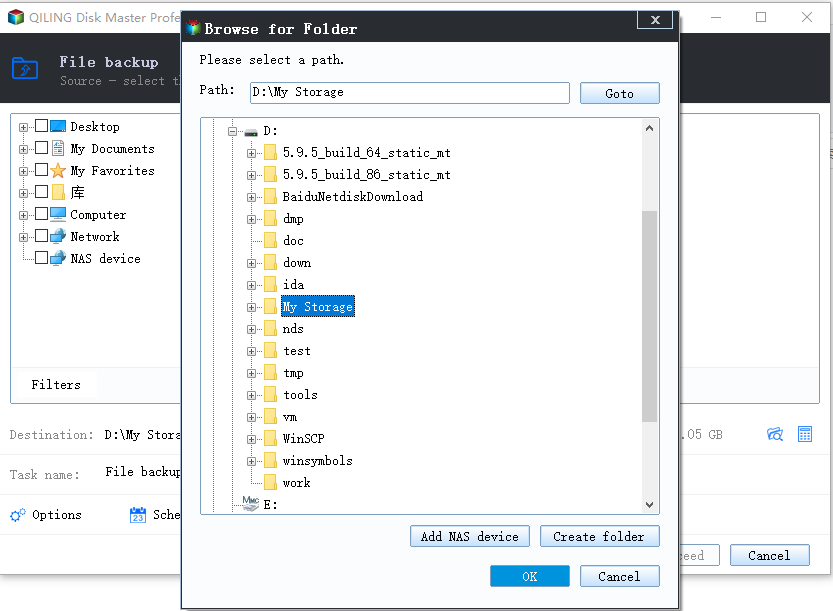
Step 3. Choose the external backup drive as the destination, confirm adequate free space, and click Proceed.
Step 4. Open sample files from the completed backup. On the new PC, install Qiling, open the restore function, select the backup image, and choose the appropriate destination folder.
Step 5. Verify restored documents, photos, and project files. Reinstall applications separately and transfer their licenses according to vendor terms.
File restoration does not move drivers, installed programs, or the old PC's Windows license.
Conclusion
Treat the old HDD as a data source, not as a ready-made system disk for dissimilar hardware. Verify key files before retiring it.
Related Articles
- Windows System Backup and Restore
Compare system images, cloning, and recovery options. - Windows Disk Backup and Restore
Find disk backup and restore guides for Windows PCs.
Products
Articles & Tutorials
- Data Recovery
- Data Backup
- File Recovery
- File Backup
- System Backup and Restore
- Disk and Partition Clone
- Technical articles
- Mobile articles
- Disk Master Help
- Windows Data Recovery Tutorials
- Windows Secure Delete Tutorials
- Windows Partition Management Tutorials
- Windows File Backup and Restore Tutorials
- Windows System Backup and Restore Tutorials
- Windows Disk Backup and Restore Tutorials
- Windows Clone Tutorials