Disk Clone vs System Clone: What's The Difference?
Cloning is the process of creating an exact copy of your data, often confused with backup but different, as it involves making a digital copy of your entire data, with two main types of cloning.
- Disk cloning is the process of copying an entire disk, including all data, such as Windows, applications, files, and documents, to another hard drive or solid-state drive (SSD).
- System cloning, on the other hand, involves transferring all essential system data, including the system partition and system-related partitions, to a new location.
When deciding between a disk clone and a system clone, it's essential to understand the differences between the two. A disk clone creates an exact copy of your hard drive, including all data, operating system, and applications, while a system clone, on the other hand, only duplicates the operating system and installed software, leaving your personal files intact. This guide will help you determine which type of cloning is right for you, depending on your specific needs and goals.
Disk Clone vs System Clone
The type of cloning you need depends on the files or content you want to transfer. If you're looking to upgrade your drive, disk cloning is the way to go. This involves creating an exact duplicate of your existing drive, including all its files, settings, and applications, which can be useful for transferring your operating system, programs, and data to a new drive. On the other hand, if you're only looking to transfer specific files or folders, file cloning or copying might be a better option.
Disk cloning allows you to migrate all data from your current HDD to a new SSD, including the old operating system if desired, or transfer data to a disk with more storage capacity if the current drive is full.
When upgrading your hard disk, you may need to transfer your data to a smaller SSD, and the choice between cloning types depends on your specific requirements and preferences.
System cloning is useful when users want to create a portable Windows USB, as it creates an exact copy of the system drive with the same files and disk layout, allowing users to run their own system on any other computer.
Which Tool Is Best for Cloning?
There is no built-in tool for system and disk cloning. Reliable third-party software is needed, but not all options are trustworthy.
Before buying a tool, consider its features and whether it's worth the price. Many tools are overpriced and fail to deliver on their promises, so it's essential to do your research and not waste your money on something that won't serve you well.
The Qiling Backup is a tried and tested tool that can save you from the hassle of researching and finding a foolproof tool for backing up your data. It is a reliable option that you can consider using.
How to Clone the Disk and System with Qiling Backup
Qiling Backup offers a range of versions, including Free, Home, Business, and more, catering to various needs, making cloning effortless and convenient for users.
Let's give you a quick preview of its features.
Key Features
- System/File/Disk/Outlook Email backup and restore
- Disk/Partition backup and restore
- Backup to the network drive
- Backup to cloud
- Full/incremental/differential backup
- Disk clone, migrate OS to SSD/HDD
- Smart Backup
Qiling Backup offers impressive features, including the ability to transfer data from a larger hard drive to a smaller SSD with ease, making the process hassle-free. The software also supports disk cloning and system cloning, allowing for seamless data restoration in seconds. With Qiling Backup, you can download and explore the tool with a free trial, making it a great option for those looking to simplify their data transfer and backup needs.
Disk Clone
Step 1. Open Qiling Backup and click on the "Tools and utilities" page, where you can select from various functions available.
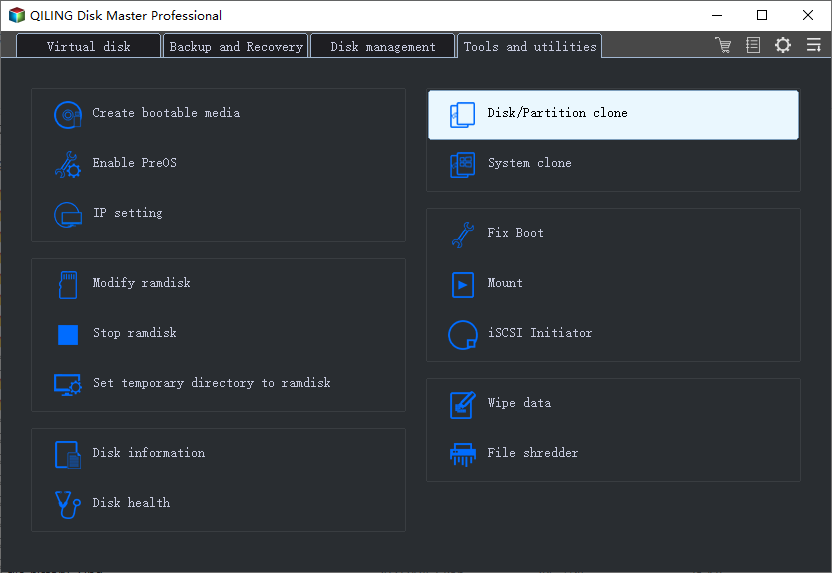
Step 2. Qiling Backup will automatically select the boot and system partition, allowing you to simply choose the target disk and click to complete the backup process.Next". 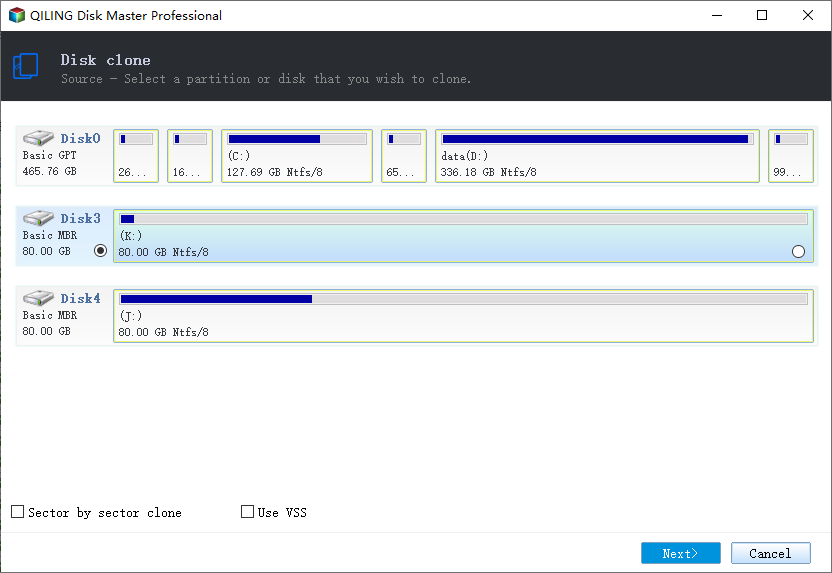 To successfully clone a disk, ensure that the partition style of the source disk and the target disk are the same. This means both disks should be either in the Master Boot Record (MBR) partition style or the GUID Partition Table (GPT) partition style. If the partition styles are different, you may need to convert the source disk to match the target disk's partition style before cloning.
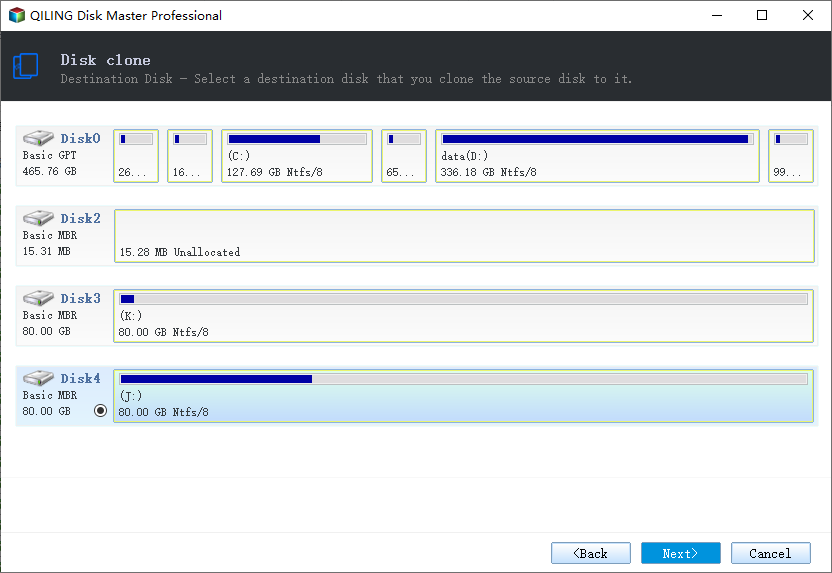
*System clone will wipe out all data, please make sure you back up your data in advance.
Step 3. If you want to clone your system to an SSD, you can choose "optimize for SSD" in the advanced options.
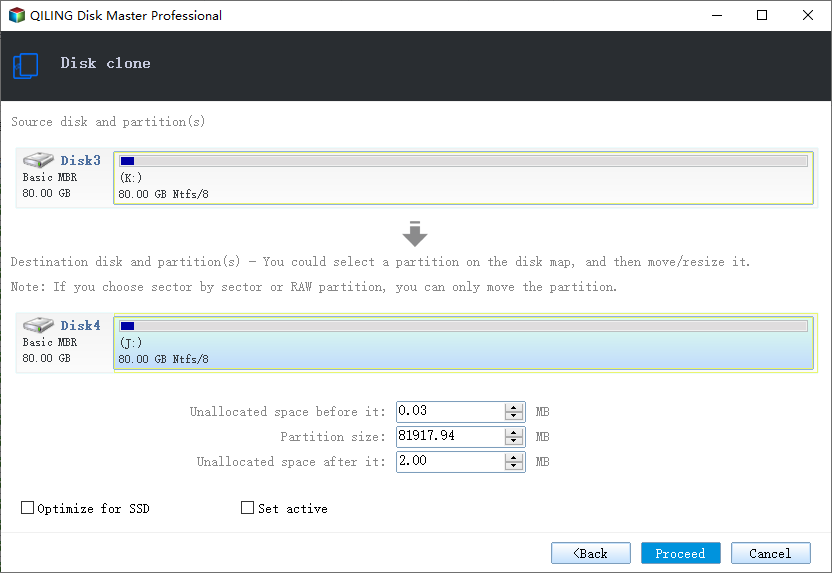
Step 4. Click "Proceed" to start cloning.
System Clone
Step 1. On the main page, click on the "Tools and utilities" tab, where you can find system clone and other utilities.
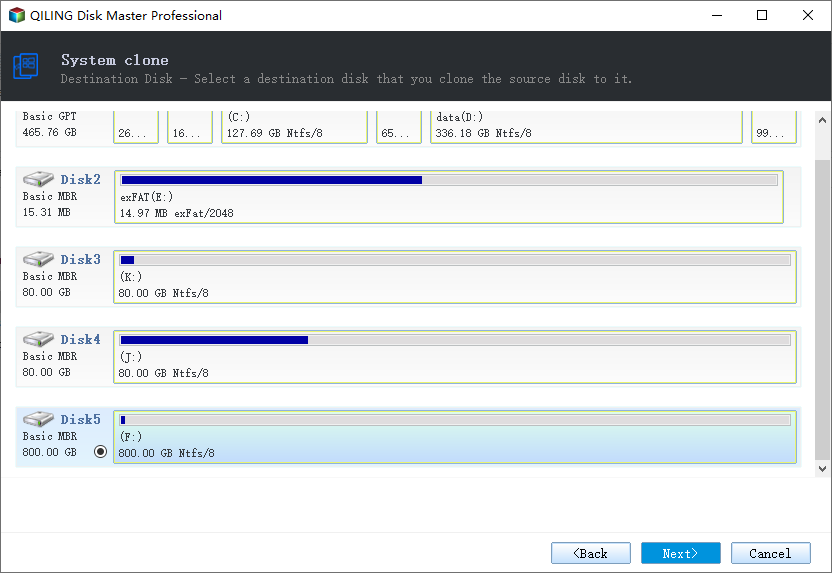
Step 2. Qiling Backup will automatically select the boot and system partition, choose the target disk and click "Next".
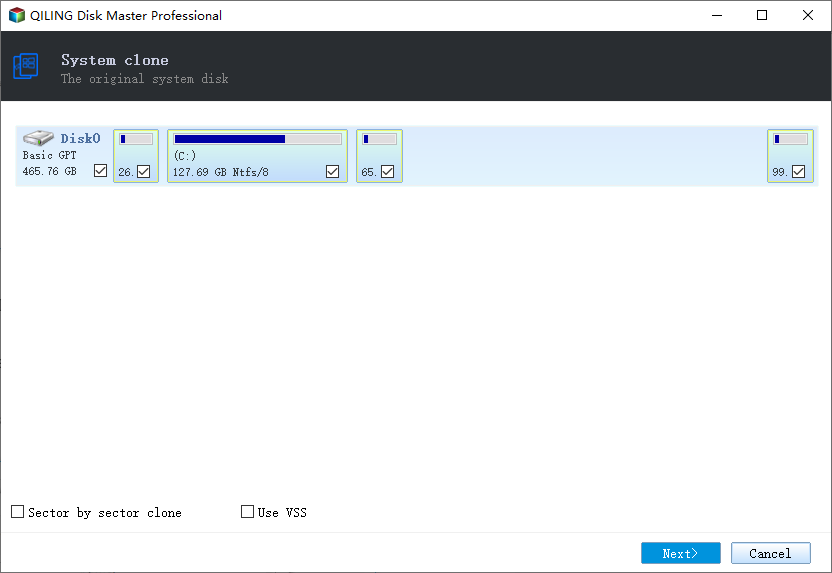
The system clone feature will completely erase all data and cannot convert a Master Boot Record (MBR) disk to a GUID Partition Table (GPT) or vice versa. It's essential to ensure that the source and target disks have the same partition style.
Step 3. If the target disk is a SSD, choose the "optimize for SSD" option in the advanced settings.
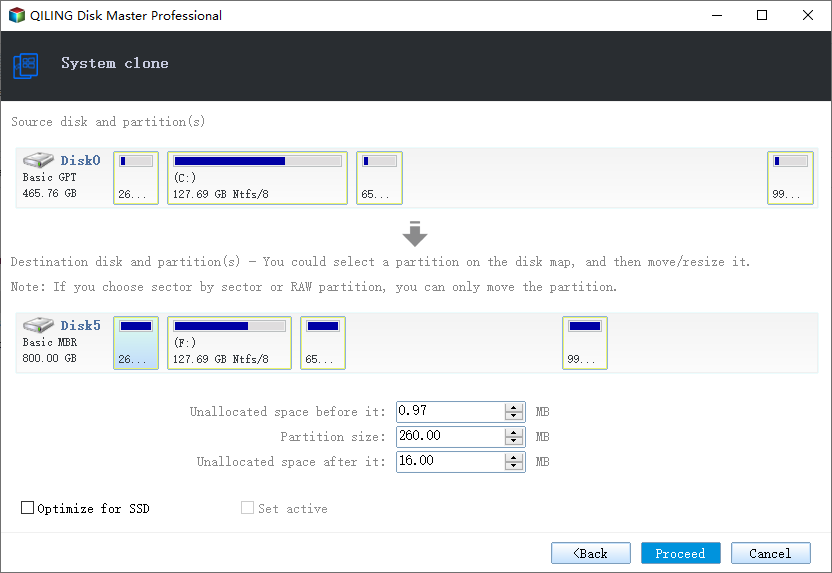
Step 4. Click "Proceed" to start cloning.
Conclusion
Don't worry about your hard drive crashing suddenly! With Qiling Backup, you can easily clone your system and always have a backup, so if something goes wrong, you won't lose your data.
This tool is very easy to use and offers a free version, making it extremely affordable and accessible to a wide range of users.
This tool is very efficient and settles the debate between disk clone and system clone with its handy Qiling Backup feature, which we highly recommend downloading.
Related Articles
- What Is A System Image? Everything You Need to Know About Creating System Image Backups
- Install & Pair Bluetooth on Windows 10/11
- Top 10 Reasons to Download Qiling Backup
- Upgrade 32 Bit to 64 Bit in Windows 10 Without Losing Data
- Volume(s) OS Have an Unsupported File System-3 Ways to Fix
Learn the three different methods to fix the volume(s) OS have an unsupported file system error received when trying to back up dell computer. The last one is safer. - System State Backup and Recovery with Wbadmin Commands
For Windows OS, data protection becomes critical because computer failure may cause data loss. But how to back up and restore Windows easily? Wbadmin command lines will help you.
Products
Articles & Tutorials
- Data Recovery
- Data Backup
- File Recovery
- File Backup
- System Backup and Restore
- Disk and Partition Clone
- Technical articles
- Mobile articles
- Disk Master Help
- Windows Data Recovery Tutorials
- Windows Secure Delete Tutorials
- Windows Partition Management Tutorials
- Windows File Backup and Restore Tutorials
- Windows System Backup and Restore Tutorials
- Windows Disk Backup and Restore Tutorials
- Windows Clone Tutorials