Clonezilla vs Qiling Disk Master for Windows Disk Cloning
Clonezilla and Qiling Disk Master can both be used when moving Windows to another drive, but they work differently. Clonezilla is typically booted outside Windows and offers imaging and disk-to-disk modes. Qiling presents graphical backup and clone tasks inside its Windows-focused interface. The important choice is whether you need an image for later restore or a drive to replace the current one.
Disk image is not the same as disk clone
| Question | Clonezilla | Qiling Disk Master |
|---|---|---|
| Where does the task run? | Usually from bootable Clonezilla media, outside the installed Windows session. | From its Windows interface or supported recovery environment. |
| Can it save an image? | Yes, it can save and restore disk or partition images. | Yes, use a disk or system backup task. |
| Can it copy to a replacement disk? | Yes, with disk-to-disk mode. | Yes, with disk or system clone, depending on the intended scope. |
| Can I browse an image like a folder? | Clonezilla documents that its image format cannot be mounted or explored directly. | Qiling documents mounting supported backup images to inspect files. |
Clonezilla's offline workflow can be useful when Windows will not boot. Qiling's graphical workflow may be easier for a user who can still start Windows. Neither removes the need to know exactly which disk is the source and which will be overwritten.
Check both drives before any clone
Record each drive's model, serial number, and capacity. Disconnect unrelated external disks when practical. Make a separate backup of anything on the destination: a clone operation replaces its contents. If the source uses BitLocker, save the recovery key and understand how encryption will be handled after moving the disk. Use reliable power and confirm that the target can physically and logically hold the data you intend to move.
If the original disk is mechanically failing, repeatedly cloning or scanning it may worsen the failure. Consider a professional recovery path rather than repeated DIY attempts.
Prepare a Qiling system image before changing drives
This creates a safety image on a separate disk. It is not the clone operation and does not make the image drive a bootable replacement.
Step 1. Connect a healthy external drive with sufficient free space. In Qiling Disk Master, open Backup and Recovery and choose System backup.
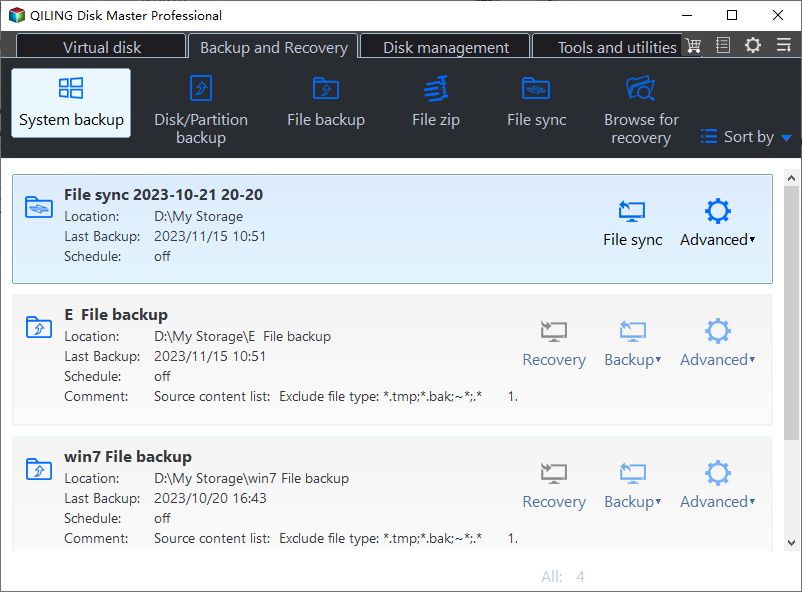
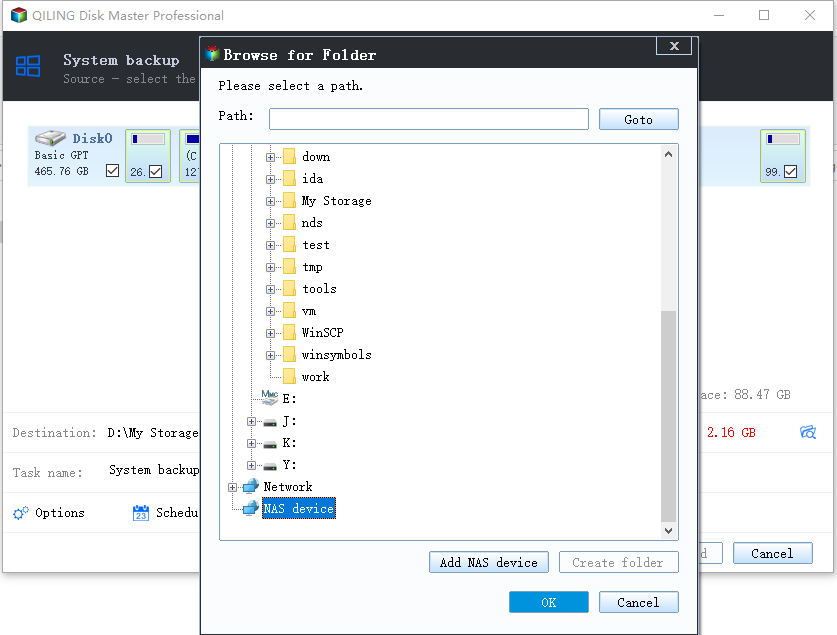
Step 2. Select a destination on another physical disk. Check its path so the backup is not stored on the old drive or on a disk you plan to overwrite.
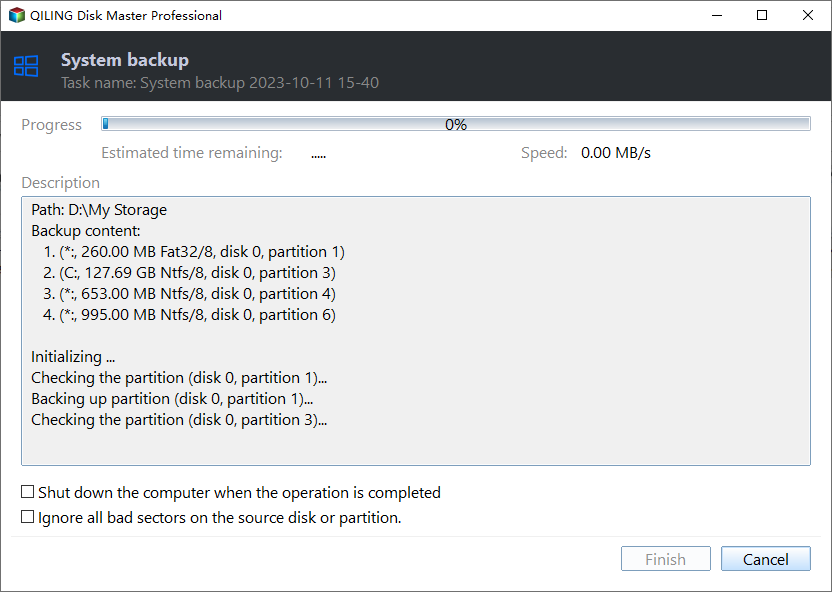
Step 3. Review the source and destination, click Proceed, and wait for the backup to complete. Record the image location and verify that you can access it.
Which workflow fits?
Choose Clonezilla if you are comfortable booting its media and navigating its offline imaging modes. Choose Qiling if you prefer an in-Windows graphical workflow and want its backup tools alongside cloning. Whichever product you use, compare the boot result and important files before erasing or reusing the old drive.
Related Articles
- Clonezilla Alternatives
Explore other disk cloning options for Windows users. - Clone vs. Image
Understand the difference between a replacement drive and a backup image.
Products
Articles & Tutorials
- Data Recovery
- Data Backup
- File Recovery
- File Backup
- System Backup and Restore
- Disk and Partition Clone
- Technical articles
- Mobile articles
- Disk Master Help
- Windows Data Recovery Tutorials
- Windows Secure Delete Tutorials
- Windows Partition Management Tutorials
- Windows File Backup and Restore Tutorials
- Windows System Backup and Restore Tutorials
- Windows Disk Backup and Restore Tutorials
- Windows Clone Tutorials