What to Do When iPhone Is Disabled and Says Try Again
Quick Navigation:
- What Does It Mean When It Says iPhone Is Disabled
- How to Fix the 'iPhone Is Disabled Try Again' Error Message
- Method 1. How to Unlock a Disabled iPhone with iPhone Unlock Software
- Method 2. How to Fix a Disabled iPhone with iTunes
- Method 3. How to Reset a Disabled iPhone with iCloud
- The Bottom Line
"Why is my iPhone disabled?"
If you enter a wrong passcode on your iPhone 5 times in a row, it will become disabled and you'll see a notification saying "try again in 1 minute". If you still enter the wrong passcode after 1 minute, the wait time will increase. If you input the wrong passcode 10 times in a row, the phone will be completely disabled and you'll need to connect it to iTunes.
By encrypting iPhone data, Apple can protect it from unauthorized access, safeguarding users' private information and preventing strangers or others from acquiring it.
What Does It Mean When It Says iPhone Is Disabled
When your iPhone says it's disabled, it means you're locked out and can only make emergency calls. The situation varies depending on the error message. Some possible reasons include entering the wrong passcode too many times, a software glitch, or a hardware issue.
If you see "iPhone is disabled try again in XX minutes," you still have the chance to enter the right passcode to unlock the iOS device correctly. However, if you're unable to recall the passcode, the situation can worsen, resulting in an incredibly long time interval or the iPhone saying "iPhone is disabled connect to iTunes," at which point you'll have to reset the device to fix it.
How to Fix the 'iPhone Is Disabled Try Again' Error Message
If you've forgotten your iPhone passcode, you can't access your device and will see the 'iPhone is disabled' message. To resolve this, you'll need to reset your iPhone, which will erase all data, including the passcode. You can use an iPhone unlocker, iTunes, or iCloud to help with the reset process.
Notes: Factory resetting your iPhone will erase all data and settings, including photos, messages, and apps. If you have a backup, you can restore your data after the reset, but if not, you'll lose everything.
Method 1. How to Unlock a Disabled iPhone with iPhone Unlock Software
To disable an iPhone, you need an iPhone unlocker like Qiling MobiUnlock, which can unlock iPhones, iPads, or iPod touches without a passcode, helping when you forgot your iPhone passcode or your iPhone is disabled, and also removes Touch ID or Face ID on an iOS or iPadOS device.
To reset a disabled iPhone:
Step 1. Run Qiling MobiUnlock on your computer, select "Unlock Screen Passcode."
Step 2. Connect your iPhone, iPad, or iPod to your computer, then click "Start" to begin the process.
Step 3. Wait for the firmware download to complete, then you can verify the information and start the process.
Step 4. After verification is complete, click "Unlock Now" to unlock your iPhone, iPad, or iPod without a passcode. In the warning window, enter the required information and click "Unlock" again.
Step 5. Wait for the tool to reset your device, then you can set up and use your device again.
Method 2. How to Fix a Disabled iPhone with iTunes
To unlock a disabled iPhone, you can use a third-party iPhone unlocker or apply Apple's iTunes to restore the device to factory settings, thereby erasing the passcode and unlocking the iPhone.
If your iPhone is disabled, you can refer to Apple's guide on what to do if your iPhone is disabled for troubleshooting steps.
Method 3. How to Reset a Disabled iPhone with iCloud
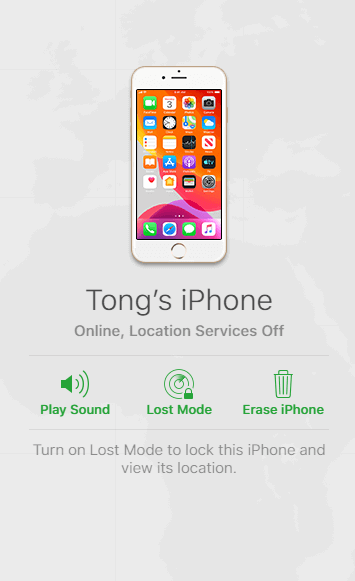
If you've enabled Find My iPhone on the disabled iPhone and it has a Wi-Fi connection, you can remotely reset it via iCloud.com.
Step 1. On another functional device, go to iCloud.com and sign in with the Apple ID used on the iPhone.
Step 2. Among the options, choose "Find iPhone."
Step 3. Choose "All Devices" and select the disabled iPhone.
Step 4. Click "Erase iPhone" to reset the device.
The Bottom Line
To summarize, after unlocking the iPhone, you can set up a new passcode, access the device, and use it normally. It's essential to set a memorable password and regularly back up your iPhone to prevent data loss.
Related Articles
- Qiling Image Deploy | SYSPREP Workaround in Windows 7, 8, 10, 11
This article describes a great Sysprep alternative in Windows 7, 8, 10, 11 - Qiling Image Deploy which can deploy system to multiple computers simultaneously. - Best Deployment Tool for Windows 10 – Qiling Image Deploy
Find the best method to deploy Windows 10 operating system (OS) image to similar and dissimilar computer via Windows 10/8/7 deployment tools step by step. - Fixed | System Image Restore Failed 0x80042412 in Windows 7/8/10
If you encountered system image restore error 0x80042412 in Windows 7 or 10, what could be the reason? How to fix it? Here you'll find several solutions along with an alternative to restore system image without such errors. - Top 5 Free SSD Imaging Software for Windows 11 | 2023
This article will introduce you to 5 of the best free SSD imaging software for Windows 11, 10, 8 and 7, so hurry up and explore to find the best one for you!
Products
Articles & Tutorials
- Data Recovery
- Data Backup
- File Recovery
- File Backup
- System Backup and Restore
- Disk and Partition Clone
- Technical articles
- Mobile articles
- Disk Master Help
- Windows Data Recovery Tutorials
- Windows Secure Delete Tutorials
- Windows Partition Management Tutorials
- Windows File Backup and Restore Tutorials
- Windows System Backup and Restore Tutorials
- Windows Disk Backup and Restore Tutorials
- Windows Clone Tutorials