Failed to Read Sector When Cloning Hard Drive
A clone may fail when the source disk has bad sectors or unstable connections. Treat the old drive as fragile and avoid unnecessary writes.
What to Do First
- Reconnect the disk with a stable cable or dock.
- Stop installing apps or saving files to the failing drive.
- Check SMART status if Windows still detects the drive.
- Recover critical files first if the disk clicks, freezes, or disconnects.
Clone Strategy
Clone to a new healthy disk with enough capacity. If the source drive is badly damaged, file recovery may be safer than repeated full-disk cloning attempts.
Use Qiling When the Built-in Method Is Risky
Windows tools are useful for simple checks, but Qiling gives you a visual preview before disk changes. Use it when the operation affects partitions, boot records, cloned disks, USB capacity, or files you cannot afford to lose.
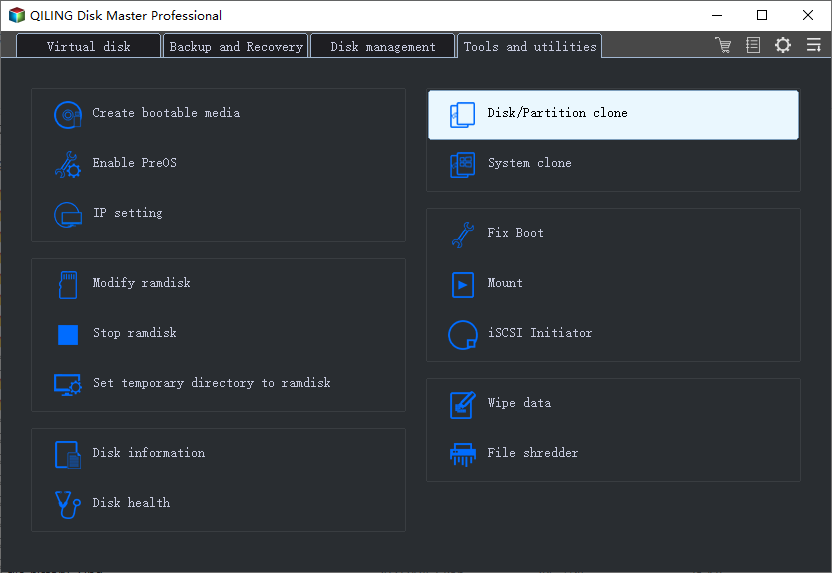
Step 1. Open Qiling Disk Master, go to the tools page, and choose the disk clone option. This starts the clone wizard instead of a backup or partition resize task.
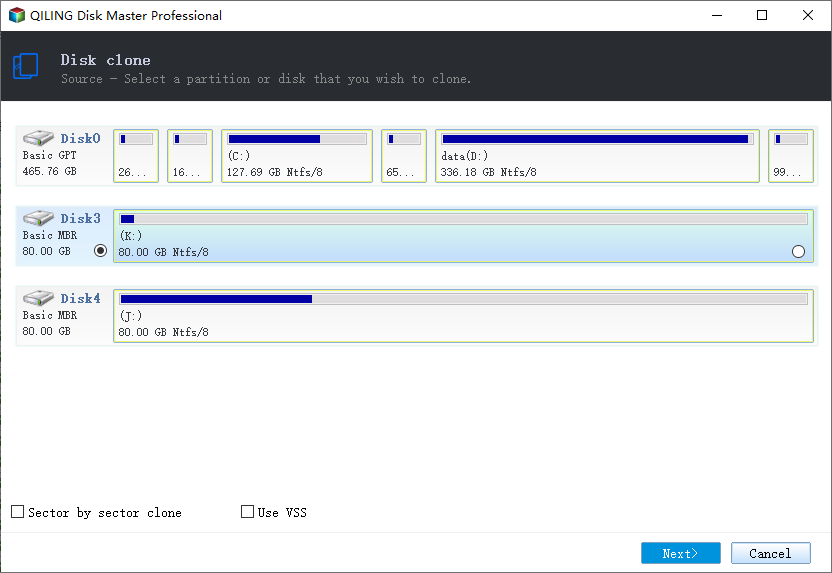
Step 2. Select the source disk that reports the read-sector error. Confirm it by disk size, model, and partition layout. If the old disk has bad sectors, reduce other writes and clone to a healthy disk as soon as possible.
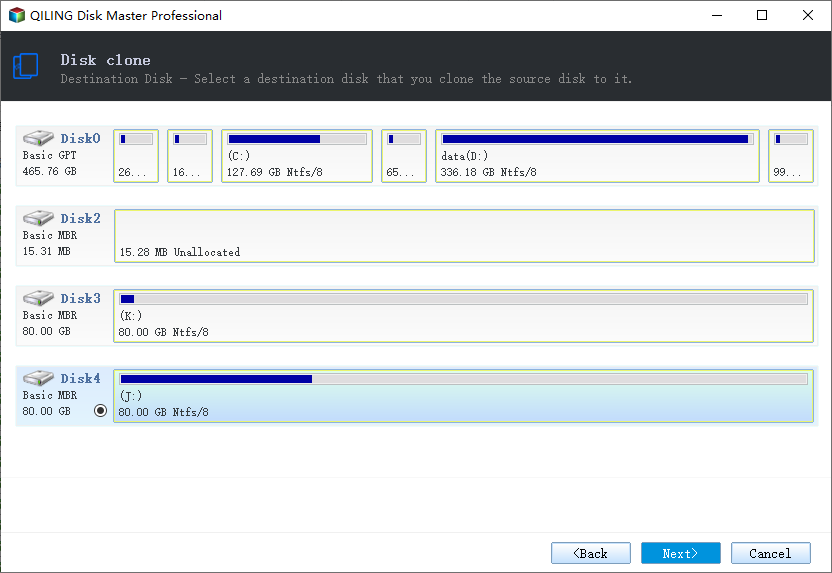
Step 3. Select the destination disk. Make sure it is the new healthy drive, because the clone process will overwrite the selected destination.
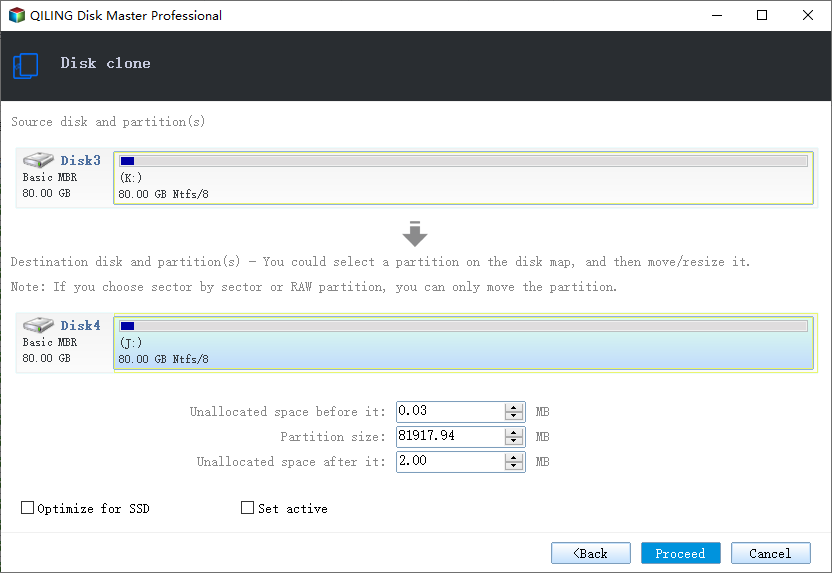
Step 4. Preview the clone layout, adjust partition size if needed, and click Proceed. Keep the computer powered on until the clone finishes.
Conclusion
Handle the visible symptom first, then protect data before any delete, format, resize, or clone action. If the disk layout is confusing, use a visual tool and confirm the target before you click Proceed.
Related Articles
Products
Articles & Tutorials
- Data Recovery
- Data Backup
- File Recovery
- File Backup
- System Backup and Restore
- Disk and Partition Clone
- Technical articles
- Mobile articles
- Disk Master Help
- Windows Data Recovery Tutorials
- Windows Secure Delete Tutorials
- Windows Partition Management Tutorials
- Windows File Backup and Restore Tutorials
- Windows System Backup and Restore Tutorials
- Windows Disk Backup and Restore Tutorials
- Windows Clone Tutorials