Format External Hard Drive to NTFS in Windows
Format an external hard drive to NTFS for Windows storage. Compare File Explorer, Disk Management, command line, and Qiling formatting steps.
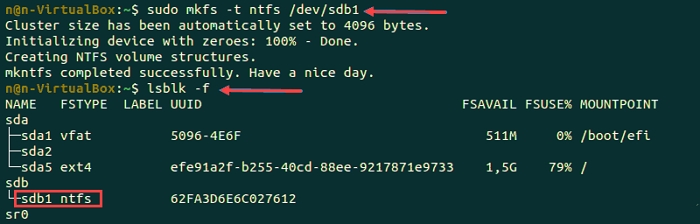
What This Problem Usually Means
NTFS supports large files, permissions, compression, and reliable Windows storage. Use it for backup drives, work files, and Windows-only external disks. Choose exFAT instead if the same drive must be used on macOS, cameras, or game consoles.
What to Check First
- Use File Explorer for a quick format when the drive is healthy.
- Use Disk Management when you need to delete and recreate a volume.
- Use DiskPart only when you are certain of the disk number.
- Copy important files elsewhere before formatting.
Format or Repair the Drive with Qiling Disk Master
Use this method when Windows can see the device but File Explorer, Disk Management, or a command line format does not finish correctly. If the drive contains useful files, copy them out first or recover them before formatting.
Step 1. Connect the external drive, USB drive, or SD card to the PC. Open Qiling Disk Master and identify the device by capacity, drive letter, and partition layout. Do not choose an internal Windows disk by mistake.
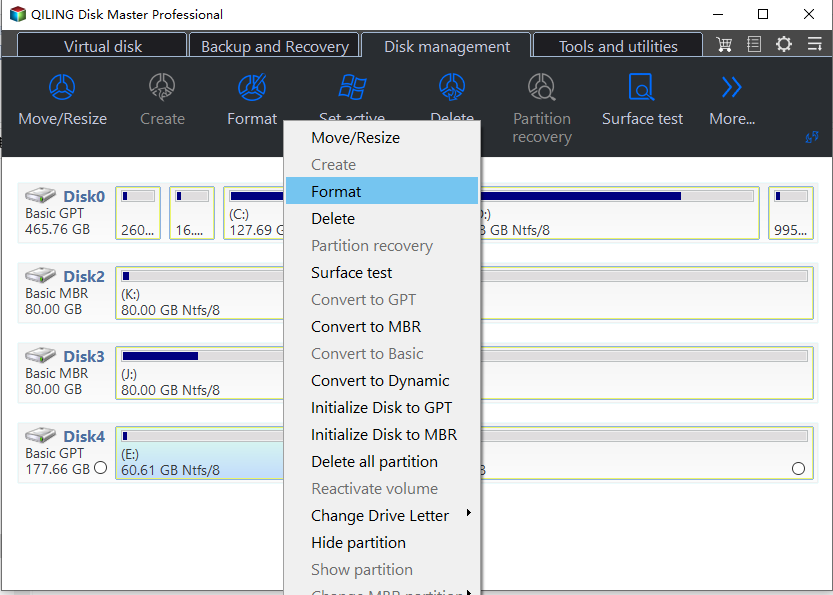
Step 2. Right-click the target partition and choose Format. If the device shows as RAW or has no usable partition, create a new partition first, then format it.
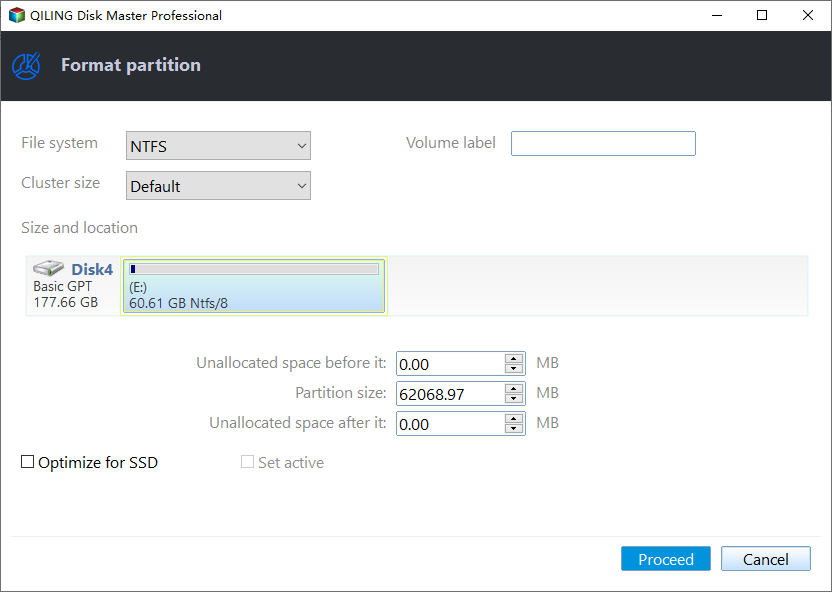
Step 3. Set a clear partition label, choose NTFS for Windows storage, and keep the default cluster size unless a special device requires another value.
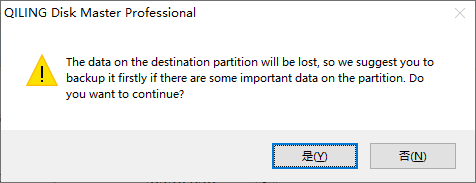
Step 4. Read the warning carefully. Formatting removes the visible file table, so stop here if you still need files from the drive.
Step 5. Preview the pending operation. If the correct device is selected, click Proceed and wait until the task finishes. Reconnect the drive and test copying a small file to confirm it works.
FAQ
Should I repair Windows before backing up? If the disk is readable, back up first. Repair commands, formatting, resizing, and reset options can change data or boot records.
Can Windows built-in tools solve the issue? Often yes. Use Settings, Disk Management, Startup Repair, CHKDSK, SFC, or DISM first when the risk is low. Use Qiling tools when you need a clearer disk map, safer preview, or a full backup before changing the drive.
What should I avoid? Do not format a drive that still holds needed files, do not run clean commands on the wrong disk, and do not clone to a target disk that contains the only copy of important data.
Conclusion
NTFS is the right choice for most Windows-only external drives. Before formatting, confirm the drive letter and copy important files elsewhere.
Related Articles
- Windows Partition Management Tutorials
Find practical Windows partition guides for resizing, formatting, checking, converting, and repairing disks without unnecessary risk. - Windows Data Recovery Tutorials
Use these recovery guides when files are lost after formatting, partition errors, Windows repair, or accidental deletion.
Products
Articles & Tutorials
- Data Recovery
- Data Backup
- File Recovery
- File Backup
- System Backup and Restore
- Disk and Partition Clone
- Technical articles
- Mobile articles
- Disk Master Help
- Windows Data Recovery Tutorials
- Windows Secure Delete Tutorials
- Windows Partition Management Tutorials
- Windows File Backup and Restore Tutorials
- Windows System Backup and Restore Tutorials
- Windows Disk Backup and Restore Tutorials
- Windows Clone Tutorials