Is 128GB Too Big for FAT32
A 128GB USB or SD card can use FAT32, but Windows built-in format tools often do not offer FAT32 above 32GB. Choose the file system based on the device you use.
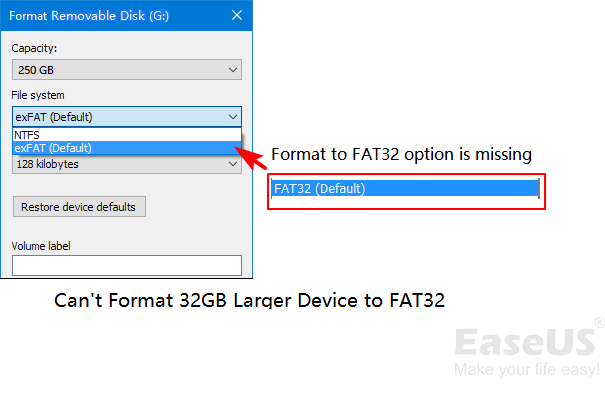
Choose the Right File System
- Use FAT32 for older cameras, game consoles, and devices that require it.
- Use exFAT for large files and cross-platform storage.
- Use NTFS for Windows-only drives, permissions, and large files.
Important FAT32 Limit
FAT32 cannot store a single file larger than 4GB. If you copy Windows ISO files, videos, or large backups, exFAT or NTFS is usually better.
Use Qiling Disk Master to Format a 128GB Drive to FAT32
128GB is not too large for FAT32, but Windows Format and Disk Management may hide the FAT32 option. Use Qiling Disk Master when a device specifically needs a 128GB USB or SD card formatted as FAT32.
Step 1. Confirm the 128GB Device
Connect the USB drive or SD card and open Qiling Disk Master. Select the 128GB device by capacity and drive letter. Remove other removable drives first if the list is confusing.
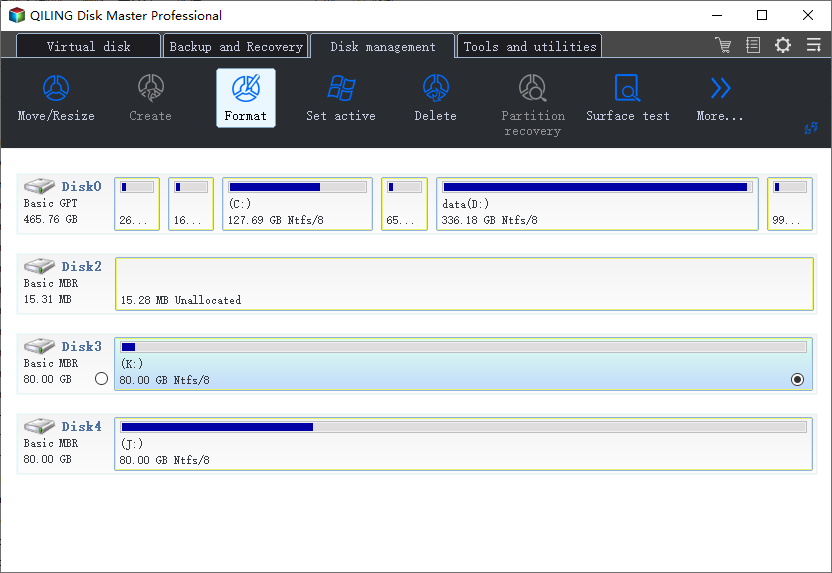
Step 2. Back Up and Choose Format
Copy useful files to another location. Right-click the target partition and choose Format. Formatting will erase the selected partition.
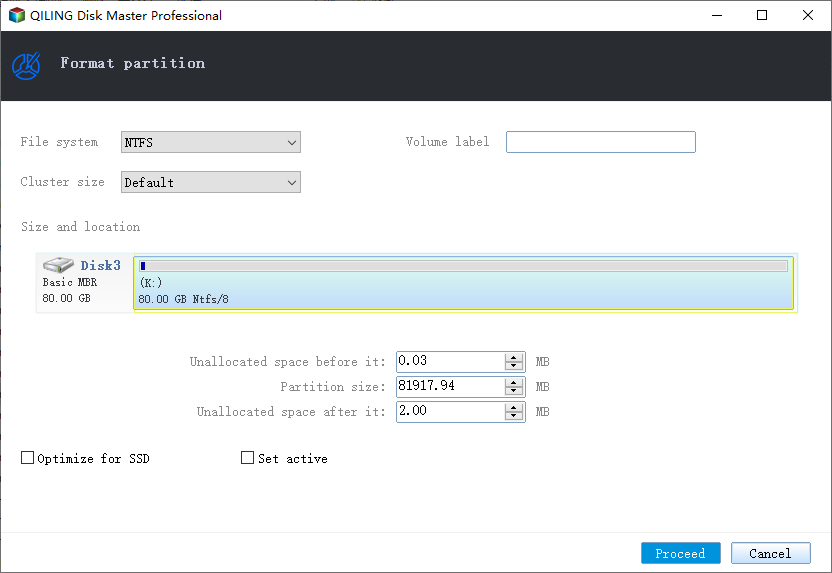
Step 3. Select FAT32
Set the file system to FAT32. Use a clear label such as CAMERA, GAME, or BOOT if the drive is prepared for a specific device. Keep the default cluster size unless the device manual says otherwise.
Step 4. Proceed and Test the Drive
Review the preview, click Proceed, and wait for the operation to finish. After formatting, copy a small file to the drive and test it on the target device.
Conclusion
A 128GB drive can use FAT32, but the 4GB single-file limit still applies. If you need to store large videos, ISO files, or backups, exFAT is usually a better choice.
Related Articles
Products
Articles & Tutorials
- Data Recovery
- Data Backup
- File Recovery
- File Backup
- System Backup and Restore
- Disk and Partition Clone
- Technical articles
- Mobile articles
- Disk Master Help
- Windows Data Recovery Tutorials
- Windows Secure Delete Tutorials
- Windows Partition Management Tutorials
- Windows File Backup and Restore Tutorials
- Windows System Backup and Restore Tutorials
- Windows Disk Backup and Restore Tutorials
- Windows Clone Tutorials