Remove SD Card Partitions in Windows Without Erasing the Wrong Disk
An SD card used as boot media may contain several partitions, leaving only a small visible volume in File Explorer. Removing those partitions can restore a single-volume layout, but it destroys the data and boot files stored in them. First decide whether the card must remain bootable.
Identify the Card and Its Current Layout
Step 1. Insert the SD card in a reliable reader. In Disk Management, locate it by removable-device label, total capacity, and partition map. Record its disk number, but do not use that number alone; disk numbers can change after reconnecting devices.
Step 2. Note whether the card is still needed by a camera, Raspberry Pi, handheld console, or other device. Such systems may depend on partitions Windows does not show in File Explorer.
Step 3. If the card reports 0 bytes, disconnects repeatedly, or is write-protected by hardware, stop. Partition editing will not repair a failed controller.
Preserve Files Before Restructuring
Copy every readable file to another physical drive and open samples. If important files are missing but Windows detects the card, scan before making partition changes.
Step 1. Install Qiling Deep Data Recovery on the PC, not on the SD card. Choose USB/SD Scan and set the file types you need.
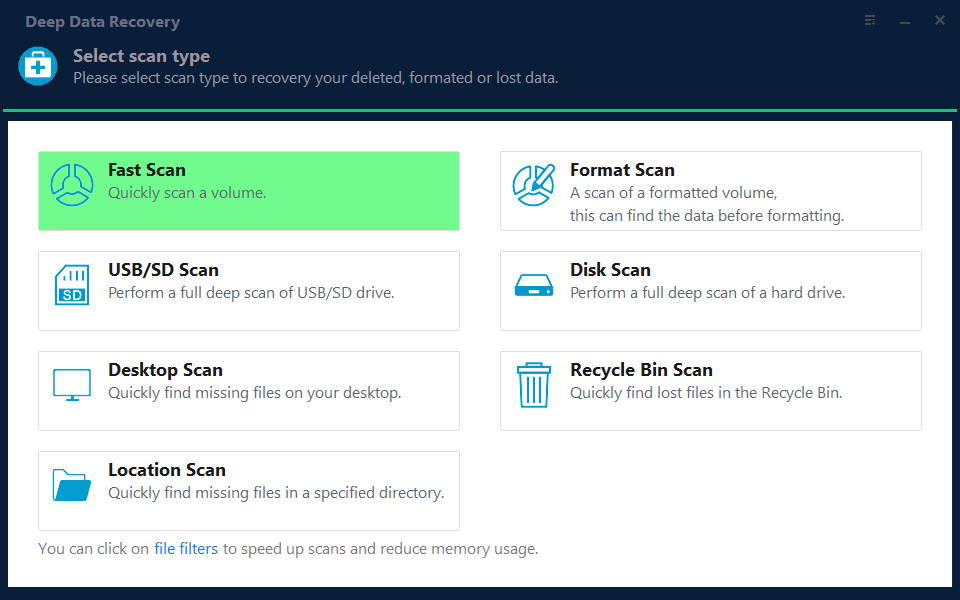
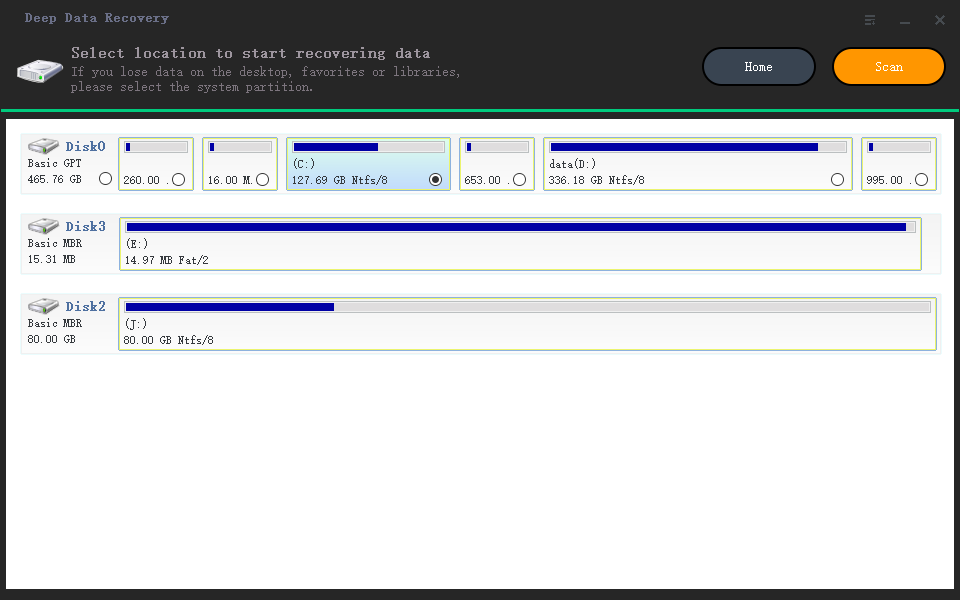
Step 2. Select the SD card by capacity and letter, check that it is not the backup destination, then start the scan.
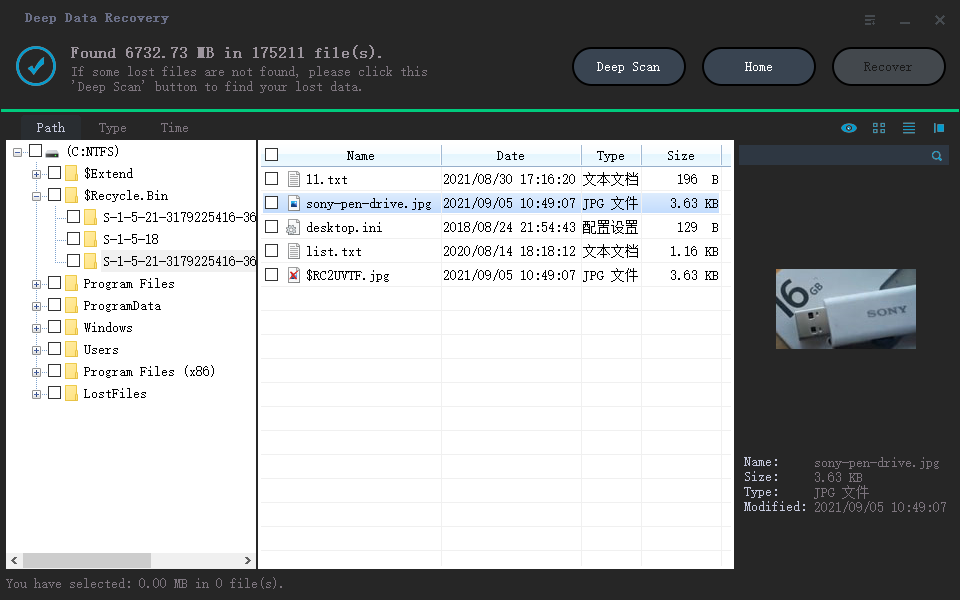
Step 3. Wait for results and preview several important files. If the card disconnects during the scan, stop and address the reader or media problem.
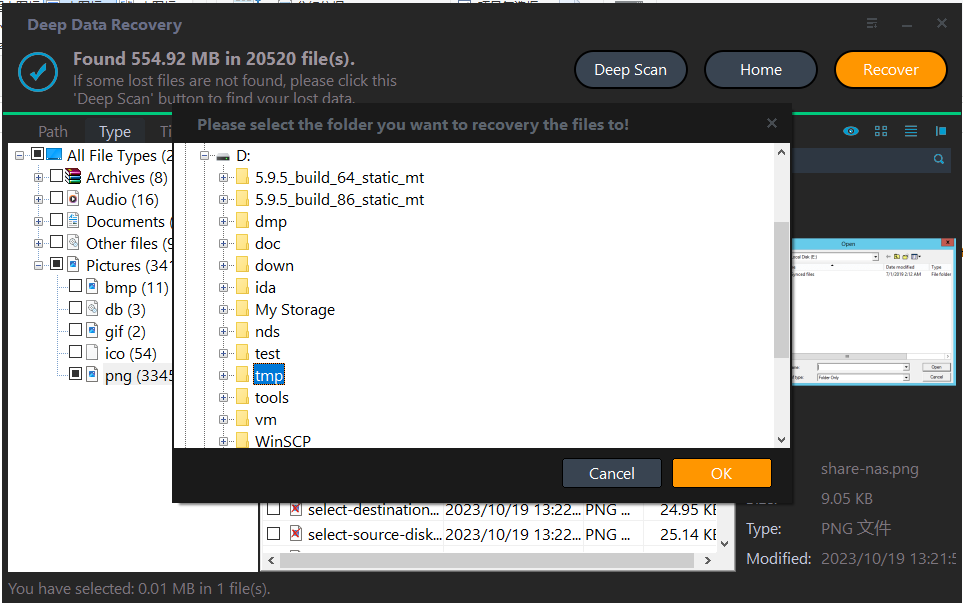
Step 4. Click Recover and save selected files to a separate disk, never back onto the card. Open several recovered copies and keep that backup disconnected before any reformatting plan.
Choose the Intended Final Format
For camera or device use, follow that device's official capacity and file-system requirements. Windows may not offer FAT32 formatting for larger cards through its standard dialog; exFAT is common for large removable storage but may not work in older devices. A partition tool cannot make an unsupported device accept a file system.
If the card will be used as boot media again, obtain the original image from the device vendor and recreate it using the supported imaging process. A single exFAT volume may restore visible capacity for file storage but will not boot a device that expects a specific partition table and boot files.
Before Deleting Any Partition
Confirm the exact removable disk, the backup, and whether boot files may be discarded. Deleting every partition will remove all card data and its bootability. Do not use an example disk number or a command copied from another PC.
After an approved rebuild, verify the card's reported capacity, copy a test file, safely eject it, and reopen that file. A card that returns to read-only mode or loses the test file should be replaced rather than reformatted repeatedly.
Related Articles
- System Backup and Restore
Create and verify a Windows backup before major repairs. - Check Disk Health
Recognize storage warnings before changing a drive.
Products
Articles & Tutorials
- Data Recovery
- Data Backup
- File Recovery
- File Backup
- System Backup and Restore
- Disk and Partition Clone
- Technical articles
- Mobile articles
- Disk Master Help
- Windows Data Recovery Tutorials
- Windows Secure Delete Tutorials
- Windows Partition Management Tutorials
- Windows File Backup and Restore Tutorials
- Windows System Backup and Restore Tutorials
- Windows Disk Backup and Restore Tutorials
- Windows Clone Tutorials