Fix USB Device Not Recognized in Windows 10
USB Device Not Recognized in Windows 10, Help!
When trying to access a USB external hard drive on Windows 7/8/10, users often encounter the frustrating "USB Device not recognized" error. This issue can arise due to various reasons, such as faulty USB ports, corrupted drivers, or issues with the external hard drive itself. Here are some real-life examples of this error.
Case 1. USB Device Not Recognized While Connecting to Windows 10
"Help! Does anyoneTo resolve the "USB drive not recognized" error on a Windows PC, try restarting the PC, checking the USB drive for physical damage, and ensuring it's properly inserted. If the issue persists, try using a different USB port or a USB hub.
When trying to transfer a document from a USB drive to a Windows 10 PC, the PC would pop up a window asking to format the USB drive instead of recognizing it as a storage device. This is unexpected and makes it difficult to transfer the document. The issue is not related to the USB drive's functionality, as it works fine with other devices. up a warning message, telling me that the USB device not recognized. What can I do to fix this issue?"
Case 2. USB Drive Won't Open with USB Device Not Recognized Windows 10
"Your USB drive was working fine earlier, but now it's not opening in your Windows PC. Is that correct? If so, try checking if the drive is properly connected, restarting your computer, or using a different USB port.fine yesterday. But this morning when tried to open it onYour computer is showing a warning message that a USB device is not recognized, and it's not opening due to this issue. Can I help you with troubleshooting or resolving this problem?
How to make the USB drive work again?"
If your USB drive is not recognized by your Windows PC, it's likely due to an improper connection, bad sectors, outdated drivers, or other reasons. To fix the "USB device not recognized Windows 10" error and get your drive working again, you can try the following methods and solutions. Just relax and follow the steps to solve this issue in Windows 10, 8, or 7.
- 1. Fix USB Root Hub to Fix USB Device Not Recognized
- 2. Update or Reinstall USB Drivers to Fix USB Device Not Recognized
- 3. Change Power Supply to Make USB Drive Recognizable
Quick Fixes to USB Device Not Recognized in Windows 10/8/7
If your USB drive is not recognized by your Windows PC, try these quick fixes. You can start by checking the USB port and cable for any issues, then try plugging it into a different USB port or computer to see if it's just a software problem. If that doesn't work, try updating the USB drive or running a disk check on the drive to see if there are any issues with the drive itself.
- 1. If you're experiencing issues with your USB device not being recognized, try restarting your Windows PC to see if it resolves the problem. Simply shut down your computer, wait for a few seconds, and then power it back on.
- 2. If the USB drive is not recognized on the original USB port, try switching to a different USB port on the computer to see if it works on a different port. This can help determine if the issue is with the port or the drive itself.
- 3. Connect the USB drive to another healthy computer or laptop.
If the three quick fixes don't work, as there are three additional methods that can solve the "USB device not recognized" error.
Method 1. Fix USB Root Hub to Fix USB Device Not Recognized
Step 1.To access the Device Manager, go to the Start menu, type "Device Manager" and select it. Then, navigate to the "Universal Serial Bus controllers" section and expand it to view the list of connected USB devices.
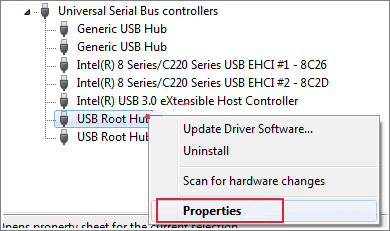
Step 2.Find and right-click on "USB Root Hub" > Select "Properties".
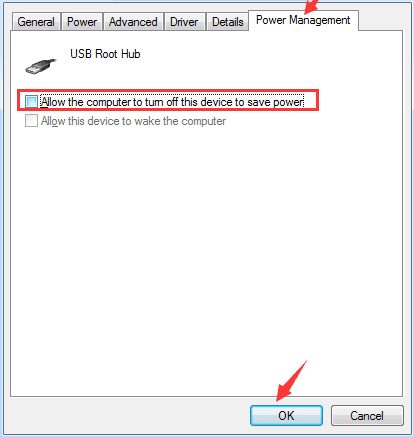
Step 3.To disable the power management feature, go to "Power Management" and uncheck the option "All the computer to turn off the device to save power" and click "OK".
Step 4. To troubleshoot USB Root Hub issues, go to Device Manager, find USB Root Hub, right-click it, and select "Properties". If the issue is with the USB Root Hub, you'll see an error message.
Step 5.Reboot the PC and reconnect the USB device to see if Windows 10 can read the USB drive.
If not, check the computer to turn off this device to save power back on. If the device is not in use, you can turn it off to save power.
Method 2. Update & Reinstall USB Drivers to Fix USB Device Not Recognized
When your USB drive isn't working properly, try updating the USB drivers and fixing any bad sectors on the drive. This might get it up and running again!
1 - Update and Reinstall USB Drivers
Step 1.Open "Device Manager" > Expand "Universal Serial USB controllers".
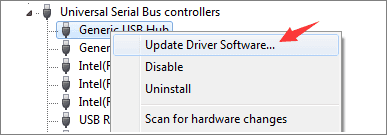
Step 2.Right-click on the right USB Hub of your USB drive, select "Update Driver Software" from the context menu.
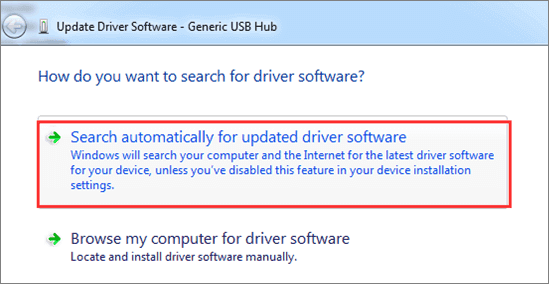
Step 3.Select Search automatically for updated driver software and Windows will help you to update the latest drivers automatically.
Step 4.Reboot the PC to see if USB can be read or not;
If not, right-click USB Hub of your USB drive and select "Uninstall".
Step 5. Restart the computer once again and there your USB device driver will be reinstalled to make the USB drive recognizable again.
2 - Fix Bad Sectors on a USB Drive
To fix bad sectors on a USB drive, we suggest trying Qiling Partition Master Free, which allows for a straightforward 3-step repair process.
Step 1. Click the target partition that has a problem.
Step 2. Choose "Advanced" > "Check File System".
Step 3. In the Check File System window, select the option to fix the error on the disk.
Step 4. Click "Proceed" to check errors on your partition.
Method 3. Change Power Supply to Make USB Drive Recognizable Windows 10
Step 1.Open "Control Panel > Hardware and Sound > Power Options".
Step 2.To change the power button settings, click on "Choose what the power button does" and then select "Change the settings that are currently unavailable".
Step 3.Uncheck Turn on fast startup > Save changes.
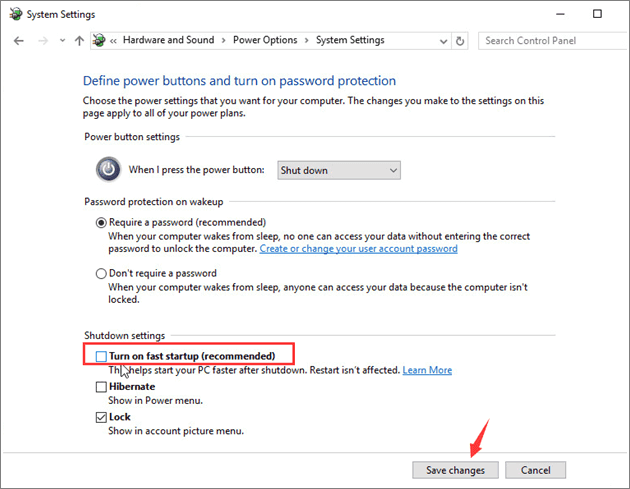
Step 4.To troubleshoot the issue, simply restart your PC and then plug in the USB device to see if it functions properly. This step can often resolve connectivity problems.
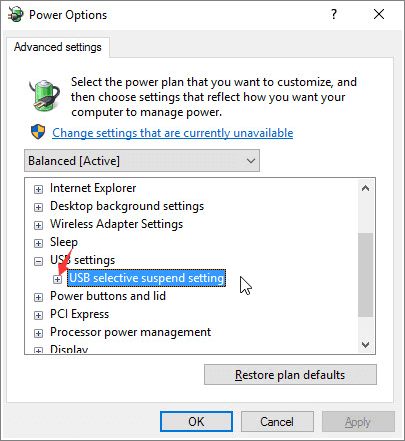
If it still not works, try to change the USB Selective Suspend Settings:
- 1. Go to the "Control Panel" and then click on "Power Options". From there, click on "Change plan settings".
- 2. To access the USB selective suspend settings, click on "Change advanced power settings" in the Power Options window, then find and expand the "USB settings" section. Finally, expand the "USB selective suspend settings" subsection.
- 3. Disable both On battery and Plugged in settings > Apply > OK.
Related Articles
- How Do You Create Partitions in Windows with Infographics 2022
- Top 3 Easy Disk Drive Repair Software for Windows 10/8.1/8/7
- 8 Fixes for There Is Not Enough Memory Or Disk Space to Run Word Error
- [2022 Update]How to Resize EXT4 Partition in Windows 11/10
- Shrink Volume with Disk Management in Windows 11, 10, 8, 7
Many people may want to know how to use Disk Management to shrink volume. This article explains how to do it and provide other solutions. - How to Wipe Partition and Erase Data Completely?
Wanna wipe partition to erase all data from a partition completely? The 'Wipe Partition' feature in Qiling Disk Master will help you. - Fix BUGCODE_USB_DRIVER BSOD (0x000000FE) in Windows 11
Products
Articles & Tutorials
- Data Recovery
- Data Backup
- File Recovery
- File Backup
- System Backup and Restore
- Disk and Partition Clone
- Technical articles
- Mobile articles
- Disk Master Help
- Windows Data Recovery Tutorials
- Windows Secure Delete Tutorials
- Windows Partition Management Tutorials
- Windows File Backup and Restore Tutorials
- Windows System Backup and Restore Tutorials
- Windows Disk Backup and Restore Tutorials
- Windows Clone Tutorials