Windows 10 Won鈥檛 Boot with Second Hard Drive Connected
Fix Windows 10 not booting after adding a second hard drive. Check boot order, active partitions, disk style, and protect data before repair.
What This Problem Usually Means
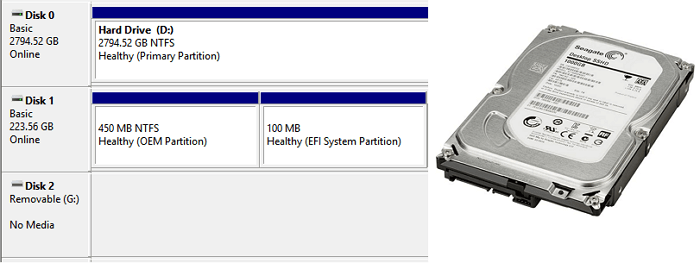
Adding a second hard drive can change boot order or confuse firmware if the new disk contains an active partition, old boot files, or another Windows installation. The original system may still be fine.
What to Check First
- Disconnect the second drive and confirm Windows boots.
- Reconnect it and enter BIOS/UEFI.
- Set Windows Boot Manager or the original system disk first.
- Remove old active boot flags only after backing up files.
- Check disk health if the new drive causes freezes or detection delays.
Repair Boot Problems with Qiling Disk Master
Use this method when Windows cannot start, shows a boot error, or loops into repair. Do not format the disk first. Confirm the disk is detected, then choose the boot repair method that matches the disk style.
Before You Choose a Repair Method
Step 1. Create or open bootable media, start the problem PC from it, and load Qiling Disk Master in the recovery environment.
Step 2. Select the Windows disk. Check whether it is GPT or MBR and whether the PC uses UEFI or Legacy BIOS.
Method 1: Fix Boot for Startup File Errors
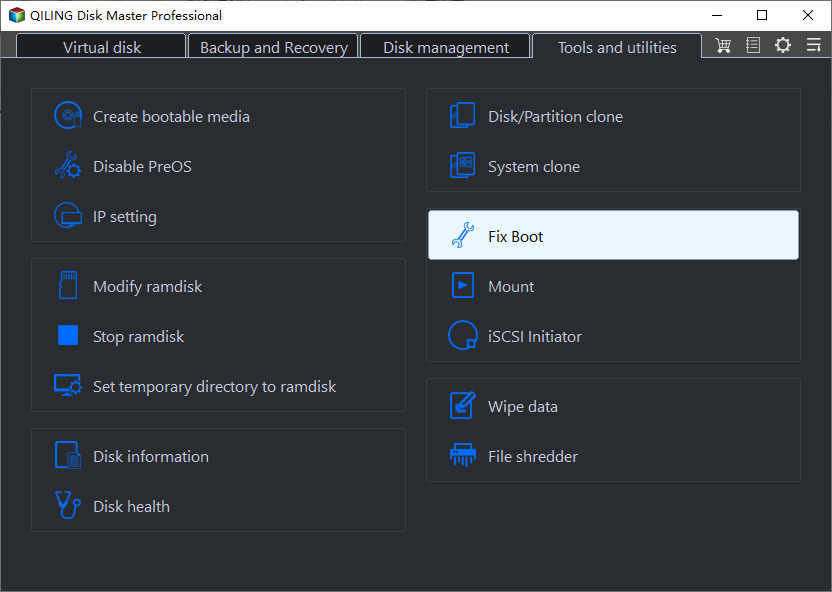
Step 1. Choose Fix Boot when Windows is still on the disk but Windows Boot Manager, BCD, or startup files may be damaged.
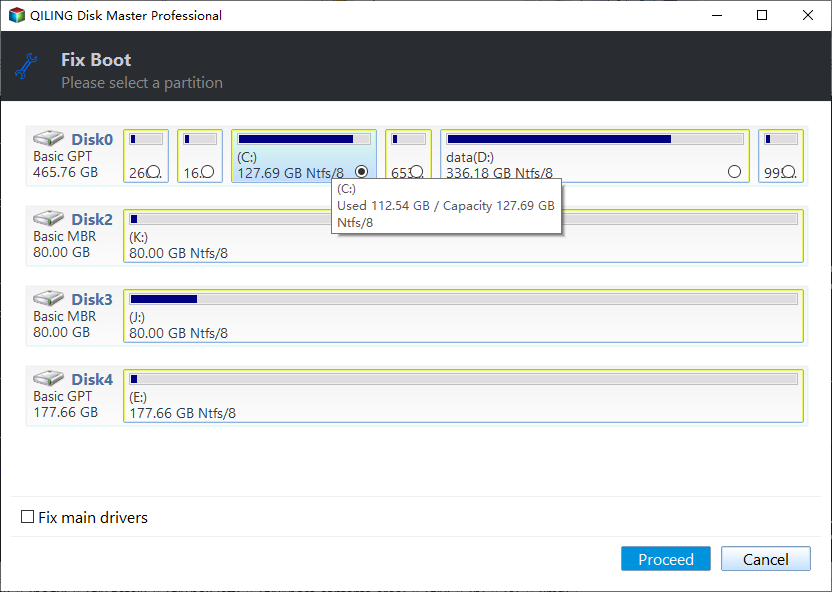
Step 2. Confirm the selected Windows disk, click Proceed, restart the PC, and set Windows Boot Manager as the first boot option for UEFI systems.
Method 2: Rebuild MBR for Legacy BIOS/MBR Errors
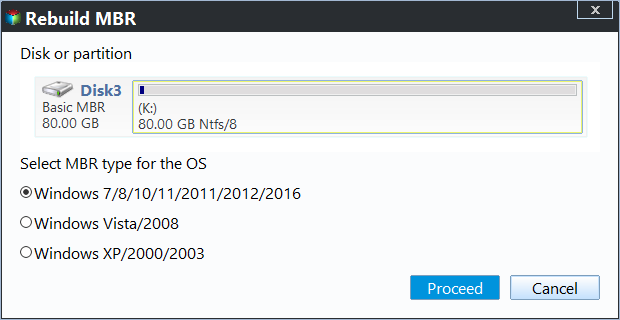
Step 1. Choose Rebuild MBR only when the disk is MBR and the PC starts in Legacy BIOS mode. It is not the first repair for GPT/UEFI Windows installations.
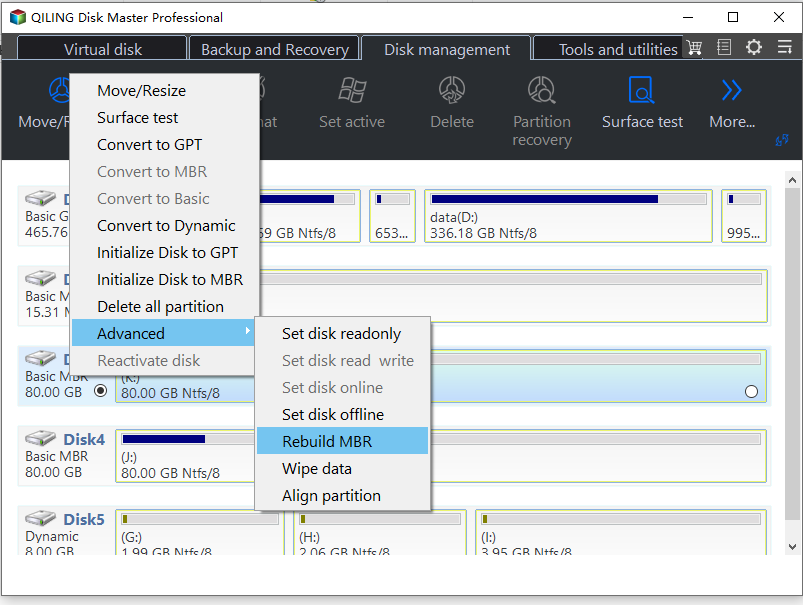
Step 2. Select the proper MBR type, preview the operation, and click Proceed. If the problem remains, check disk health, boot order, BCD entries, and storage drivers.
FAQ
Should I make changes before backing up? If the disk is readable and the files matter, back up first. Repairs, formatting, conversion, and cloning can change boot records or partition data.
When should I use Windows built-in tools? Use Settings, Disk Management, Startup Repair, CHKDSK, SFC, DISM, or account recovery first when the issue is simple and the risk is low.
When does Qiling help? Use Qiling tools when you need a clearer disk map, a bootable recovery environment, backup before repair, partition preview, disk cloning, or controlled password recovery on an authorized PC.
Conclusion
When Windows fails only after a second drive is connected, start with boot order and old boot records. Do not wipe the drive until you know which disk contains data.
Related Articles
- Windows Partition Management Tutorials
Find practical Windows partition guides for resizing, formatting, checking, converting, and repairing disks without unnecessary risk. - Windows System Backup and Restore Tutorials
Browse Windows backup and restore guides for system images, recovery drives, restore points, and safe repair preparation.
Products
Articles & Tutorials
- Data Recovery
- Data Backup
- File Recovery
- File Backup
- System Backup and Restore
- Disk and Partition Clone
- Technical articles
- Mobile articles
- Disk Master Help
- Windows Data Recovery Tutorials
- Windows Secure Delete Tutorials
- Windows Partition Management Tutorials
- Windows File Backup and Restore Tutorials
- Windows System Backup and Restore Tutorials
- Windows Disk Backup and Restore Tutorials
- Windows Clone Tutorials