Recover Data from a Failing SanDisk Extreme Portable SSD
A SanDisk Extreme portable SSD that disconnects or loses files may have a logical fault or hardware/firmware failure. Recovery software can scan a stable, readable device; it cannot revive one the computer never detects.
Stabilize and Identify the Drive
Step 1. Stop editing files on the SSD. Try a known-good USB cable and direct port without a hub. Record model and capacity; do not update firmware before preserving data.
Step 2. Open Disk Management. If the SSD appears at the expected size, note its disk number and partition status. Do not choose Initialize or Format if prompted.
Step 3. If files still open, copy the most valuable ones to another physical drive. If the device repeatedly disconnects or freezes the PC, stop repeated scans and consider professional recovery.
Do not run CHKDSK, a format, or a capacity test on the only copy of important data before recovery. Those operations can write to the file system or keep a failing SSD under sustained load. A successful USB connection test does not rule out a firmware or internal-media fault.
Scan a Stable SSD with Qiling
Install Qiling Deep Data Recovery on the PC's internal disk and prepare a different drive for recovered files.
Step 1. Choose Disk Scan for missing files on a readable SSD, or Format Scan if a partition was formatted.
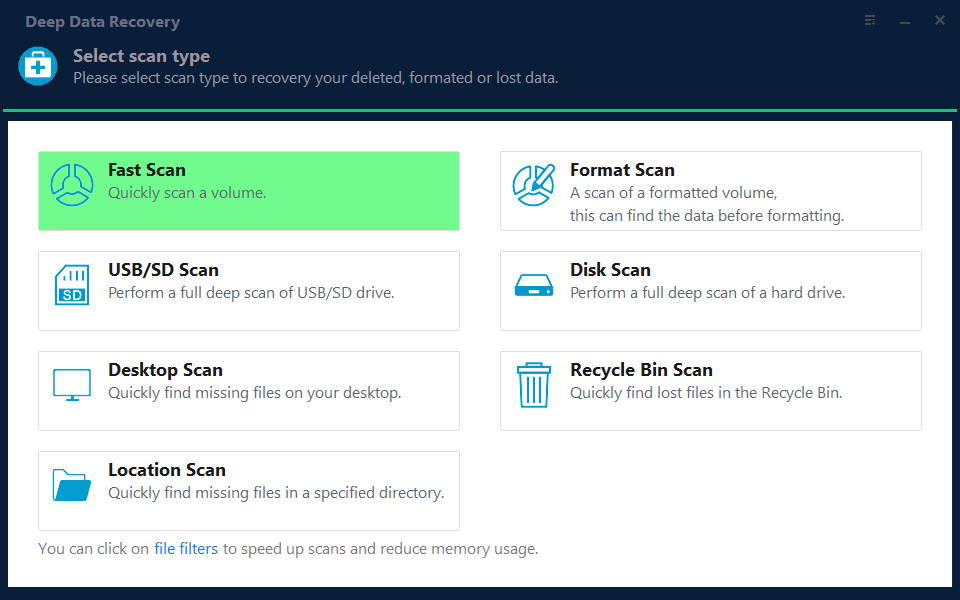
Step 2. Select needed file types, then the SanDisk source by capacity and letter. Verify it is not the recovery destination and start scanning.

Step 3. Let the scan finish while the connection is stable. Filter results and preview key files. Stop if the SSD disconnects.

Step 4. Click Recover and save files to a different physical disk. Open samples before changing the SanDisk SSD.
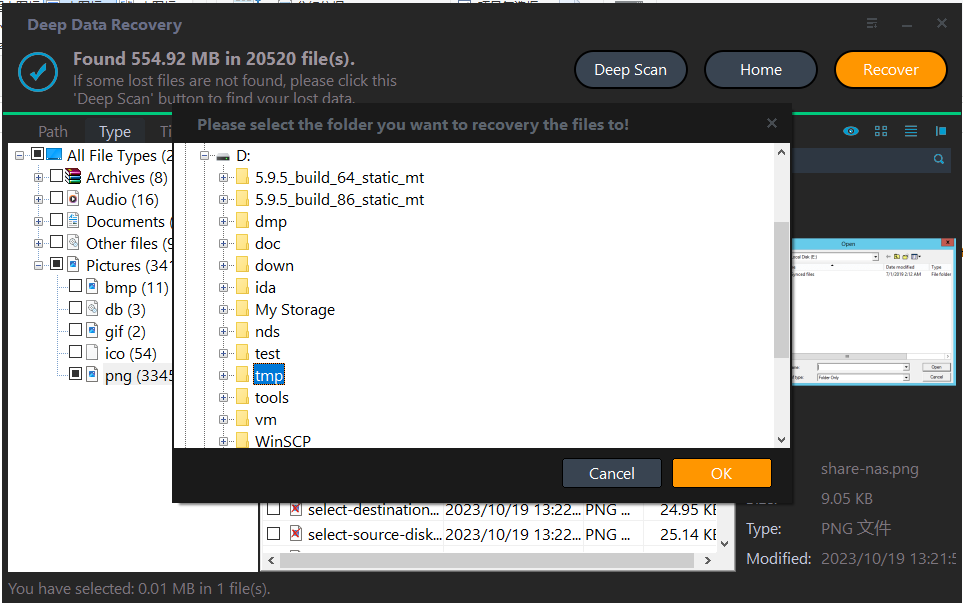
Prioritize unique documents and photos rather than scanning the entire drive again for every file type. Preview support varies by format, and an item appearing in a results list is not proof that its content is intact. Check several complete files after recovery.
If It Is Not Detected
Try one more cable and PC. If the SSD never appears in Device Manager or Disk Management, software has no source to scan. Contact SanDisk for device support and a specialist for valuable data; warranty replacement is not data recovery.
If the device appears only intermittently, note its exact model and symptoms when contacting support. Avoid repeatedly unplugging it while Windows is writing. If the data is valuable enough for professional recovery, stop experimenting with firmware and partition tools so the specialist can evaluate the original state.
Prevent Another Loss
Keep an independent backup and test restores. Formatting does not establish that the original disconnection problem is fixed.
Related Articles
- System Backup and Restore
Create and verify a Windows backup before major repairs. - Check Disk Health
Recognize storage warnings before changing a drive.
Products
Articles & Tutorials
- Data Recovery
- Data Backup
- File Recovery
- File Backup
- System Backup and Restore
- Disk and Partition Clone
- Technical articles
- Mobile articles
- Disk Master Help
- Windows Data Recovery Tutorials
- Windows Secure Delete Tutorials
- Windows Partition Management Tutorials
- Windows File Backup and Restore Tutorials
- Windows System Backup and Restore Tutorials
- Windows Disk Backup and Restore Tutorials
- Windows Clone Tutorials