How to Find Chrome Account and Password
| Workable Solutions | Step-by-step Troubleshooting |
|---|---|
| Option 1: Password Finder | Step 1. Go to passwords.google.com...Full steps |
| Option 2: View Passwords by Chrome | Step 1. Launch the Chrome browser...Full steps |
| Option 3: Qiling Key Finder | Step 1. Click "Internet & Network"....Full steps |
| To find your account and password on an Android or iOS device, follow these steps: | Step 1. Open the Chrome app....Full steps |
Your Chrome account and password serve as gateways to various stored details, including login credentials for websites like email and shopping sites. These account details are easily accessible from your Chrome account, which essentially acts as a repository for your visited account credentials. Since your Chrome account is linked to your primary Google account, finding your Chrome account and password is a straightforward process.
To find a Chrome account and password, first ensure you're logged into your Chrome account. If you've forgotten your password, follow Google's password recovery options. You'll need a working Google account to try the methods suggested in this article.
Option 1: Find Chrome Account and Password via Password Finder
A password finder is like a password vault that stores account credentials, including the account username and its password. Let's check how to check passwords with a password finder.
Step 1. To use Google's password manager, go to passwords.google.com, where you can securely store and manage your passwords from any device, even if you're not logged in to a Google account.
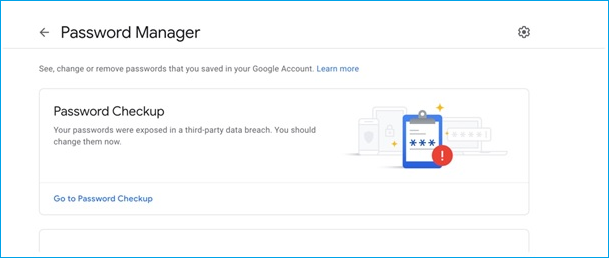
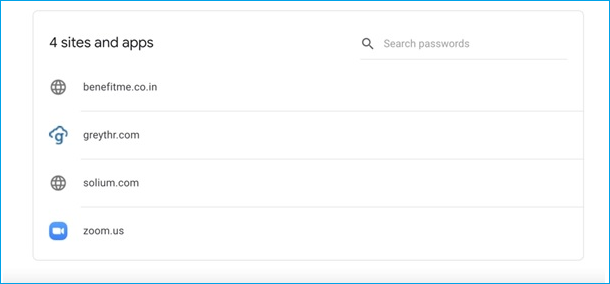
Step 2. Once you are logged into your password manager, you will see a list of all the sites and apps that you have previously saved passwords for.
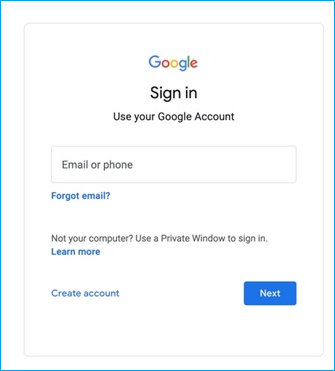
Step 3. The account details will be shown after logging in with your Google account, and if someone else's account is accessed, logging out and re-logging in with your own account details will display your account information, including login credentials.
Step 4. To find the password for a specific account, select the account from the list or type its name in the "Search Password" option.
Step 5. Once you select the account for which you need to discover the password, Google will redirect you to an authentication screen to ensure enhanced protection for your password manager.
Step 6. Once the account is authenticated successfully, the user is redirected back to the password manager, where they can access and copy their password to paste on the login screen.
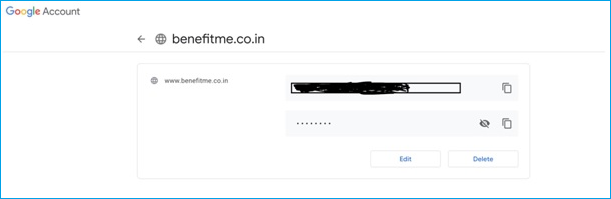
The password manager captures password change history for Chrome accounts, listing all previous passwords for a particular account, with the most recent one at the end.
The password manager allows users to delete, edit, and save their account details, making it easy to manage and update their information.
Option 2: View and Export Saved Passwords by Chrome
If you want to access the password manager, it will authenticate every time before showing the password, which can be annoying even when you're logged in to your account. However, this ensures that your passwords are secured. If you don't want to go through this every time, you can export the passwords and save them in your system, although this won't save the latest passwords. To do this, follow the steps below.
Step 1. Launch the Chrome browser.
Step 2. Click on profile, and then click on password.
Step 3. You can directly go to the password manager and click on Settings.
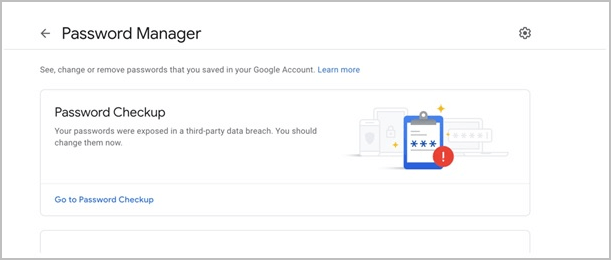
Step 4. To export your passwords, click on the "export" option that will be shown to you. This will allow you to save your passwords to a file.
Step 5. A security warning pop-up will appear on the screen.
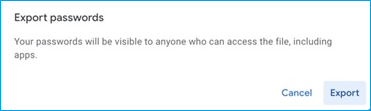
Step 6. The file name GooglePasswords.CSV will be generated and saved into your local drive.
To view the exported password, open the exported file from your local drive.
Option 3: Find Chrome Password with Qiling Key Finder
The Qiling Key Finder is a recent tool that has been introduced, offering additional features that may not be available in legacy tools. Its basic features include:
- store the product keys
- scan external hard drives
- track the wi-fi passwords
Qiling Key Finder is the best product key finder, which identifies duplicates and removes them, and allows exporting the list in various formats, including PDF and clipboard, and also has a search function for specific serial numbers.
Qiling Key Finder can help you track and use product keys for installation on a different computer. Often, product keys are lost after years of usage, making it difficult to install on a new PC. This tool can be a lifesaver, allowing you to easily locate and utilize your product keys. Steps to use Qiling Key Finder are available, but the main idea is to use it to find and utilize your product keys for smooth installations.
Step 1. Click "Internet & Network" under Password.
Step 2. You can check the browser accounts and passwords of Chrome, Edge, Firefox, and IE by accessing their respective settings or preferences pages. For Chrome, go to Settings > Advanced > Passwords, for Edge, go to Settings > Passwords, for Firefox, go to Options > Security > Saved Logins, and for IE, go to Settings > Internet Options > Content > AutoComplete.
"Copy" - Click it, then directly paste.
"Save" - Save as a PDF file.
"Print" - Connect Printer to print.
Qiling Key Finder offers free email support to customers, allowing them to contact customer support in case of any issues with the software or technical problems. The software also comes with 6 months of free updates, ensuring customers have access to the latest versions. This approach prioritizes customer satisfaction, encouraging users to try the product before committing to it.
More Info: Find Account and Password on Android and iOS Device
We can also find the accounts and passwords associated with them on our Android and Apple devices.
For Android & iOS Users:
Step 1. Open the Chrome app installed on the Android/Apple phone.
Step 2. To access the "More" menu, tap on the three dots located on the left side of the address bar. This will expand the menu, allowing you to access various settings and options.
Step 3. From the drop-down menu, click on Settings.
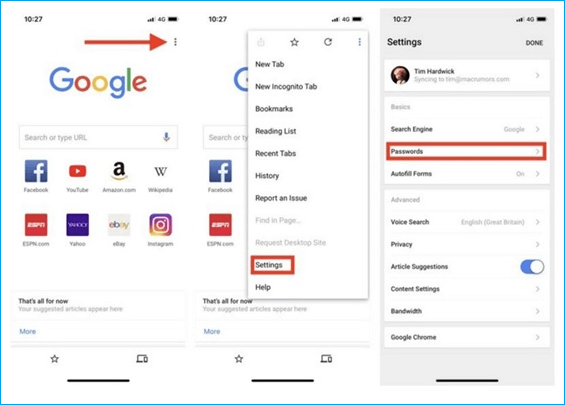
Step 4. On the password screen, you can view, edit, delete and export saved passwords.
Step 5. Tap on export passwords, and export the passwords in CSV format to your Google Drive or iCloud, or even save it to a local folder on the phone.
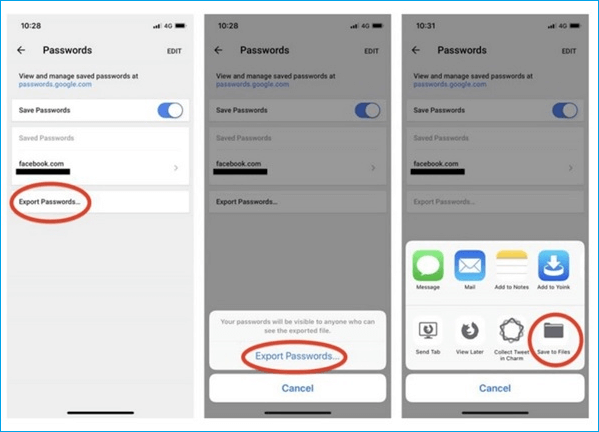
The steps here can be followed for both Android & iOS devices.
Final Thoughts
Chrome offers multiple options to view and export passwords, but it's generally safer to access them through the password manager. Exporting passwords provides more flexibility, but it's less secure since anyone with access to the system can access the file. We recommend using a password recovery tool like Qiling Key Finder, which is easy to use and can save you time.
Related Articles
- Windows 10 Password Recovery Tool [Free & Paid]
- 3 Quick Solutions to Find Product Key of Zoom Meeting App
- How to Find CCleaner Product Key on Windows 11 (2 Easy Ways)
- New 16TB External Hard Drive Released: Perfect for Storing Large Data Files
A 16 TB External Hard Drive can hold a huge amount of documents, various forms of media, software, and applications. This article will introduce the 5 best 16 TB External Hard Drive and talk about the perks of each one. - How to Reset PS5 Without Losing Data [2 Tested Methods]
Reset PS5 without losing data by choosing the right reset option, backing up game saves, and protecting PlayStation 5 data. - Resolve Outlook Cannot Connect to Server
There are several reasons why Outlook cannot connect to the server. This article explains the causes and shows how to fix the Outlook connection error.
Products
Articles & Tutorials
- Data Recovery
- Data Backup
- File Recovery
- File Backup
- System Backup and Restore
- Disk and Partition Clone
- Technical articles
- Mobile articles
- Disk Master Help
- Windows Data Recovery Tutorials
- Windows Secure Delete Tutorials
- Windows Partition Management Tutorials
- Windows File Backup and Restore Tutorials
- Windows System Backup and Restore Tutorials
- Windows Disk Backup and Restore Tutorials
- Windows Clone Tutorials