How to Backup Specific Folders Windows 10 (Quick & Easy)
If you want to protect your personal files stored in folders on your Windows PC, backing up these folders regularly is a good idea. Fortunately, there are simple and fast methods to backup specific folders in Windows 10, and this article will guide you through the process with step-by-step instructions.
PAGE CONTENT:
Why You Need to Backup Specific Folders
As a Windows user, you likely rely on your computer for work, study, or entertainment purposes, and have stored numerous personal files on it, which hold significant importance to you.
Your personal files, including photos, videos, and important documents, are at risk of being lost due to computer crashes or virus attacks, which could cause you to lose precious memories and important information.
To protect your personal files and avoid data loss, back up specific folders regularly. This will ensure that your important files are safe and can be easily restored in case of a problem.
Here are some advantages of backing up folders
- You can recover deleted files from a backup.
- You can access backed-up files from other devices.
- Backups protect your files from malware or virus attacks.
- Backing up folders is a more manageable and less time-consuming task compared to backing up an entire system.
2 Quick and Easy Ways to Backup Specific Folders in Windows 10
In Windows 10, you can back up specific folders using various methods, such as File History, Backup and Restore (which is actually a Windows 7 feature), OneDrive, or a third-party utility. However, we'll focus on two quick and easy ways to back up folders in Windows 10, skipping the details of other backup methods.
| Workable Solutions | Step-by-step Troubleshooting |
|---|---|
| Method 1. Use Qiling Backup | To initiate a backup, click the Select backup contents option....Full steps |
| Method 2. Use File History | Press the "Windows logo + I" Keys together on your keyboard...Full steps |
You may also be interested:
Method 1. Use Qiling Backup to Back Up Specific Folders
Qiling Backup is a free backup and restore program that can create backups for files, folders, partitions, and even your entire system.
Qiling Backup is a top-notch backup software for Windows 11/10/8/7, offering various backup types, including scheduled, full, incremental, and differential backups, with the ability to back up specific folders to local or external hard drives, NAS, or Cloud.
Qiling Backup is very easy to use. To back up specific folders in Windows 10, you can simply follow the steps below:
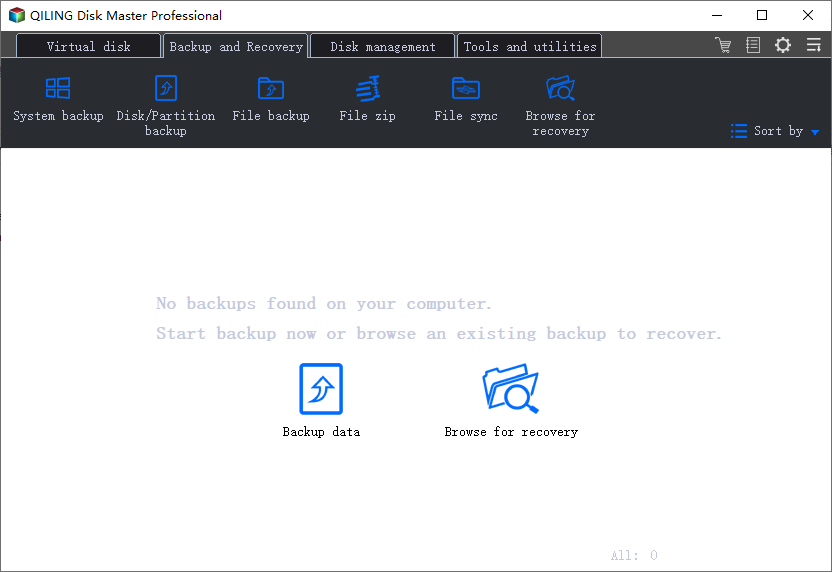
Step 1. To initiate a backup, click the File backup button on the Backup and recovery page.
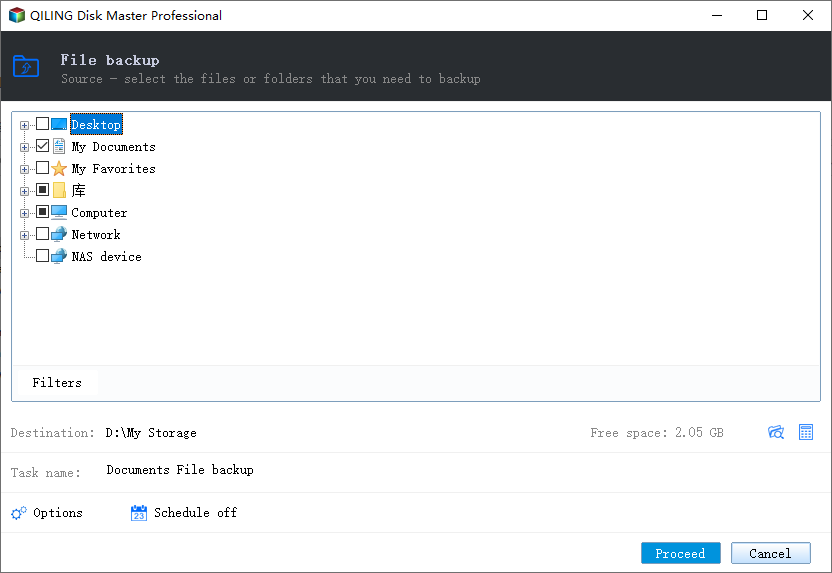
Step 2. On the left, both local and network files will be shown, allowing you to browse and select the desired backup files from a directory that can be expanded for easier navigation.
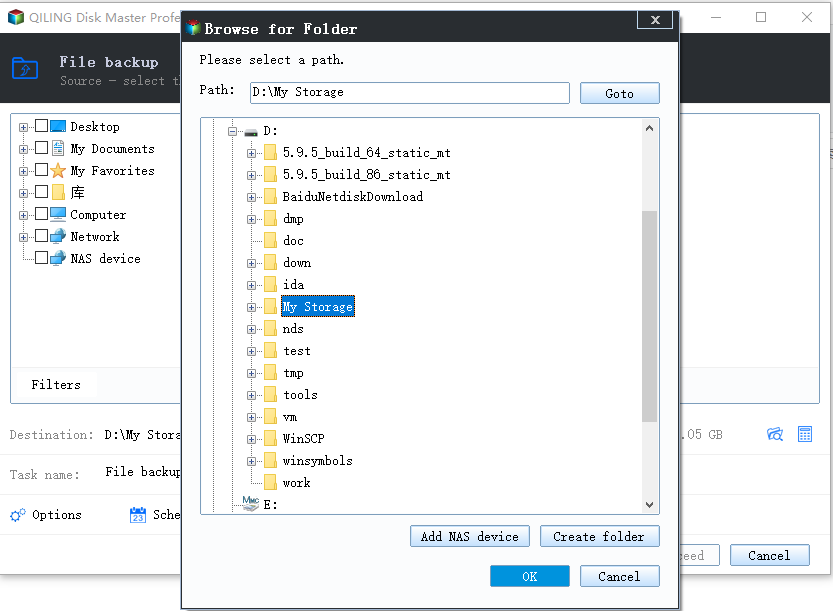
Step 3. Save the backup to a secure location, such as an external hard drive or cloud storage, to ensure it's protected and easily accessible.
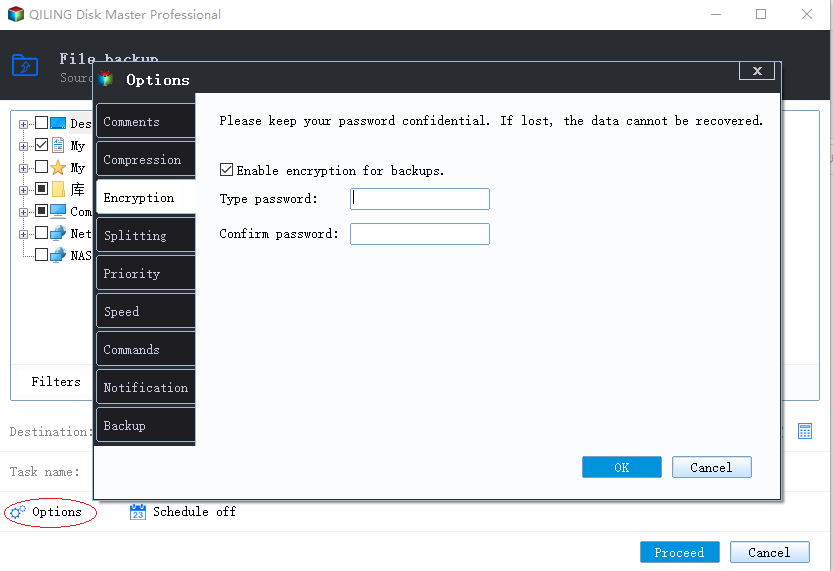
Step 4. Click Options to encrypt the backup with a password in Backup Options, where you can also make other choices to customize the backup process to your needs.
To specify the backup schedule, click on the "Backup Scheme" option. This will allow you to set the frequency and timing of the backups, and also choose the events that will trigger the backups to start.
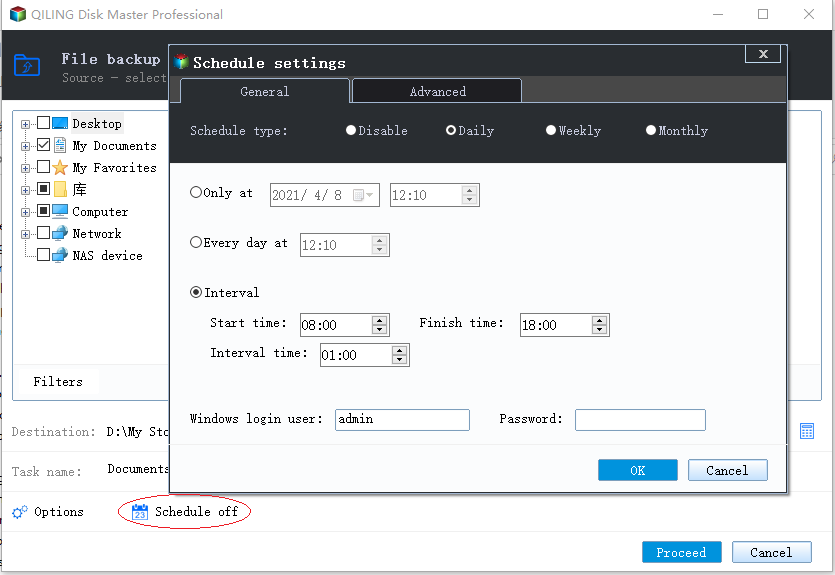
Step 5. The backup may be stored on a local disk, Qiling's online service, or a network-attached storage (NAS) device.
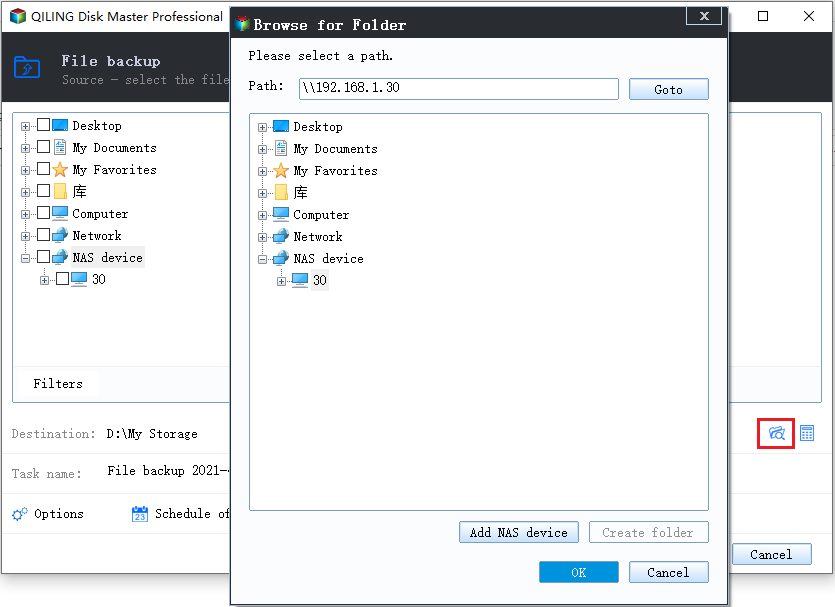
Step 6. Qiling Backup allows users to back up their data to both their own cloud drive and a third-party cloud drive.
To back up data to a cloud drive provided by a third party, select Local Drive, scroll down to add Cloud Device, and then add and log in to your account.
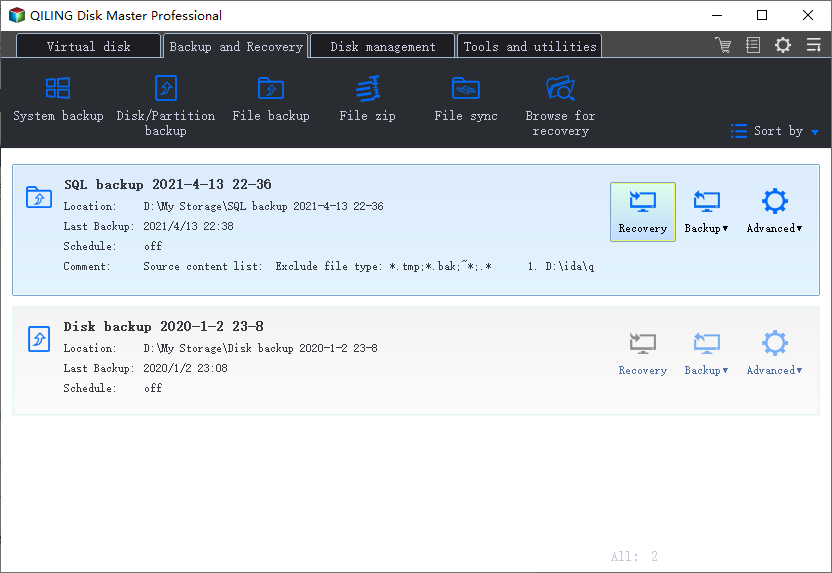
Step 7. Click Proceed to start the backup process. Once finished, the backup job will appear as a card on the left side of the panel, allowing you to manage it further.
Method 2. Use File History to Back Up Specific Folders
File History Windows Backup is a free Windows built-in backup utility that allows users to backup files stored on their desktop, documents, pictures, and more, coming pre-installed with Windows 8, 10, and 11.
You can use File History to back up specific folders to an external hard drive, USB flash drive, or NAS device.
Here's how to backup specific folders with File History in Windows 10: To backup specific folders with File History in Windows 10, go to Settings > Update & Security > Backup, and select the "Add a drive" option. Then, choose the folder you want to backup and select the drive you want to use for backup.
- Notice:
- Before starting to create a backup, ensure you have an external backup drive connected to your computer.
Step 1. Press the "Windows logo + I" Keys together on your keyboard to open the Settings app.
Step 2. To set up a backup, go to Storage > View backup option > Add a drive, and choose an external hard drive or network location as your backup destination.
Step 3. To include additional folders, click More options and toggle the switch next to each folder you want to back up.
Step 4. Click "Back up now" to start backing up your selected folders.
Conclusion
In Windows 10, you can use two quick methods to backup specific folders, but File History has some limitations. It only supports backup to an external hard drive or network location, and some users may encounter issues such as automatic backup failures or missing files. Additionally, restoring backups from File History is required if you need to use them.
Qiling Backup The software allows for backups to be made to a variety of locations, including local or external hard drives, NAS, and cloud services such as Ease Cloud, giving users more flexibility and options compared to traditional backup solutions.
The software offers a higher success rate and more backup features than File History, and allows direct use of backups stored in the cloud without needing to restore them.
We recommend using Qiling Backup to back up your individual folder, as it is a tool you should never miss.
FAQ about Backup Specific Folders in Windows 10
1. How do I automatically back up a folder?
To create an automatic backup using Qiling Backup, click on Options > Backup Scheme and select the desired backup frequency. This allows you to automate the backup process based on your specific needs.
2. How often should I back up my folders?
If you create or modify files frequently, you may want to back up your folders more often, such as daily or weekly.
3. Can I back up specific folders to OneDrive?
You can backup specific folders to OneDrive by following these steps:
- Open Settings and click Update & Security > Backup.
- To set up automatic backups to OneDrive, click on the "Add a drive" option, and then choose OneDrive as the destination for your backups.
- To include additional folders in your backup, click on the "More options" button and toggle the switch next to each folder you'd like to include in the backup.
- Click Back up now to start backing up your selected folders to OneDrive.
4. How do I add a folder to File History backup?
To backup specific folders with File History in Windows 10, follow these steps: 1) Open the File History settings by searching for "File History" in the Start menu. 2) Click on "Add a drive" and select the drive you want to use for backups.
- Press the "Windows logo key + I" keys together on your keyboard to open the Settings application.
- Click Update & Security > Backup.
- To include additional folders, click More options and toggle the switch next to each folder you want to back up.
- Click Back up now to start backing up your selected folders.
5. Where are my backup files stored?
The backup files created by File History are stored in a subfolder under the path 'C:\Users\username\Videos\Windows File Recovery' or 'C:\Users\username\Videos\Windows File Recovery - YYYY-MM-DD', where 'username' is the name of the current user and 'YYYY-MM-DD' is the date of the backup.
C:\Users\(user name)\AppData\Local\Microsoft\Windows\FileHistory\(destination name).
The backup files are stored in C:\Users\username\AppData\Local\Microsoft\Windows\FileHistory\drive letter. For example, if your username is John and you back up to an external hard drive with the drive letter E, the backup files are stored in C:\Users\John\AppData\Local\Microsoft\Windows\FileHistory\E.
Related Articles
- Automatically Backup a Folder to A Network Drive
- Free Download Qiling Backup Full Crack + Serial/Keygen
- 2022 Top Paid/Free Disk Cloning Software to Clone Disk
- How to Fix Macrium Reflect Clone Failed
- Difference Among Full, Incremental and Differential Backup
Understand the key differences among full, incremental, and differential backup methods. Learn how each backup type works, their pros and cons, and which one is best for your data protection strategy. - Dell Backup and Recovery Windows 10 & Its Alternative
Dell Backup and Recovery helps protect Windows 10 Dell PCs with system and data backups. This guide explains how it works and introduces Qiling Backup as a flexible alternative.
Products
Articles & Tutorials
- Data Recovery
- Data Backup
- File Recovery
- File Backup
- System Backup and Restore
- Disk and Partition Clone
- Technical articles
- Mobile articles
- Disk Master Help
- Windows Data Recovery Tutorials
- Windows Secure Delete Tutorials
- Windows Partition Management Tutorials
- Windows File Backup and Restore Tutorials
- Windows System Backup and Restore Tutorials
- Windows Disk Backup and Restore Tutorials
- Windows Clone Tutorials