Can You Copy an Entire C: Drive to Another Computer?
You can copy readable personal files from one computer's C: drive to another, but that is not the same as transferring Windows, applications, boot partitions, licenses, and hardware drivers. A new PC normally needs its own supported Windows installation.
What a file copy can and cannot do
Documents, pictures, videos, and project files can be copied and verified. Application settings may be stored under AppData, ProgramData, or separate locations and require export tools. Installed applications generally need reinstalling and reactivation; copying Program Files rarely produces a working app.
The EFI or System Reserved partition is often outside C:. Even a full disk clone may not boot on a different motherboard due to firmware mode, storage drivers, encryption, and activation. A clone is a conditional advanced migration, not a guaranteed PC-to-PC transfer.
Prepare both computers
Back up the old PC's files to independent media and record the BitLocker key. Check the new PC's Windows edition and available storage. A major hardware change can require Windows reactivation; see Microsoft's activation guidance.
List installed programs and their licenses, browser profiles, email archives, and local saves. Keep account sign-in and two-factor recovery methods available before retiring the old computer.
Restore and verify on the new PC
Set up a fresh supported Windows installation on the new machine, install its drivers and apps, and restore personal data from the backup. Place files into the appropriate user folders and test representative documents and projects.
Check app-specific imports and activation. Keep the old PC or its disk unchanged until the new setup is complete. If you plan to reuse the old SSD, do not erase it until both data and license checks pass.
Back Up C: User Files with Qiling Disk Master
Use this file-first workflow for a move to different hardware. It protects data without claiming that the old Windows installation will boot on the new PC.
Step 1. Connect separate backup storage. Open Backup and Recovery > File backup in Qiling Disk Master. Attach a separate drive readable by both computers.
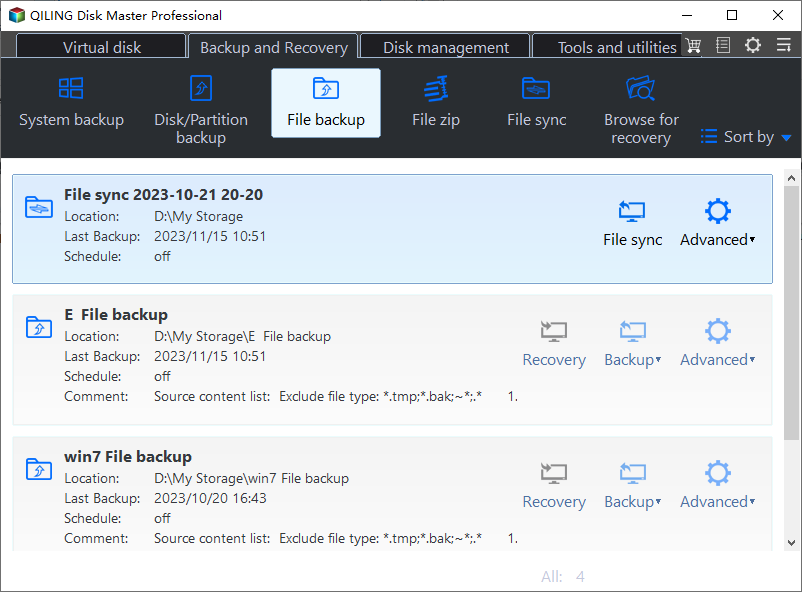
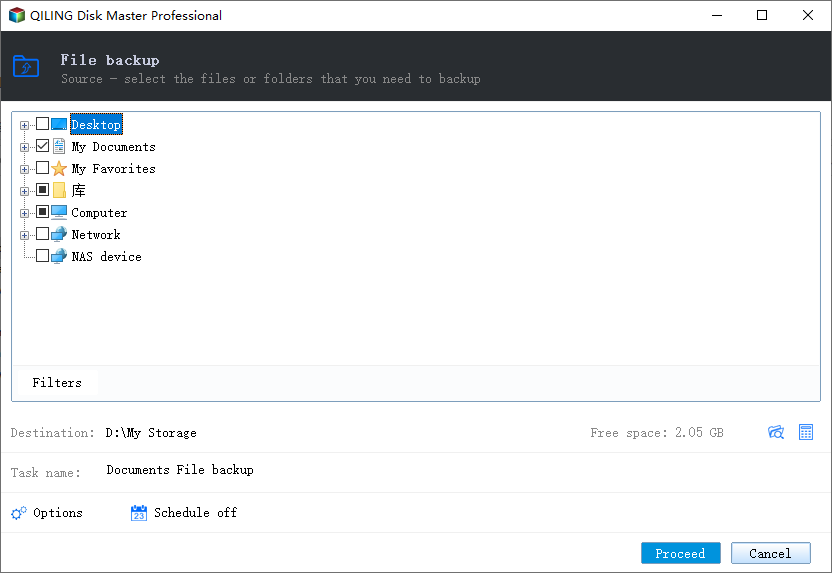
Step 2. Select the necessary folders in the source tree. Select Documents, Desktop, Pictures, project folders, exports, and relevant application data.
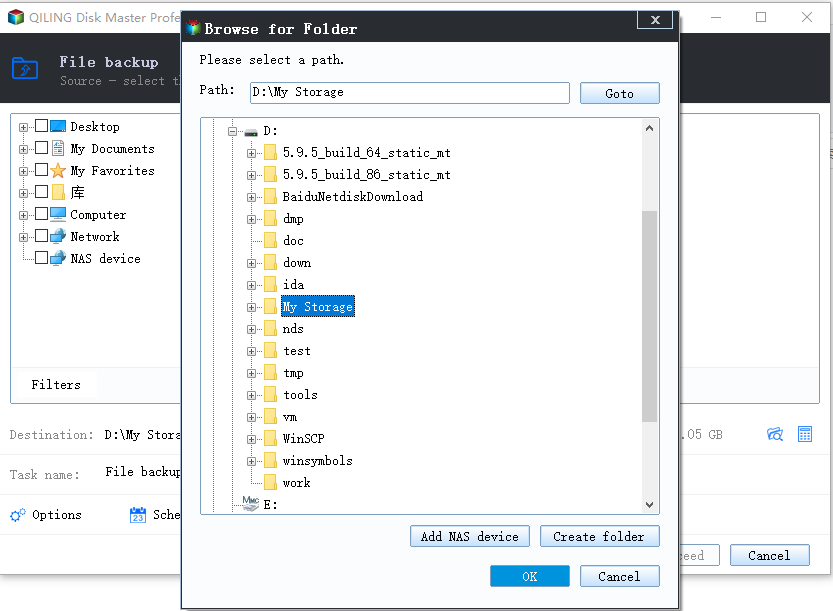
Step 3. Browse to a destination folder on the independent drive and confirm space. Store the backup on the independent drive, not only on the old C: disk.
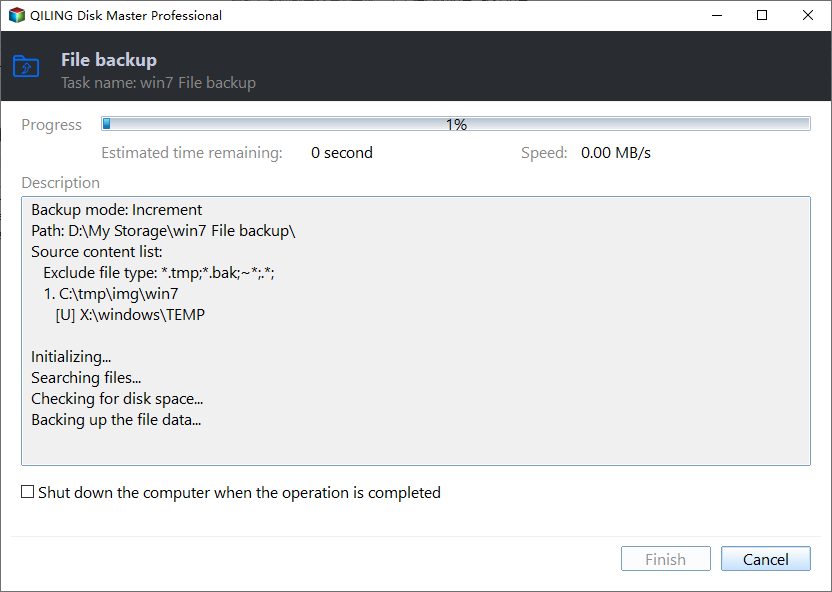
Step 4. Review source and destination, click Proceed, and wait for completion. Confirm the selected folders include local saves and archives.
Step 5. Restore a sample to a different folder and open it. Restore onto the new PC after apps are installed, and open a sample from each category.
Frequently Asked Questions
Can I paste C: into the new computer and start Windows?
No. That omits boot partitions and hardware-specific setup.
Will Windows activation move with files?
Not automatically. Activation depends on the license and hardware-change rules.
Conclusion
Move personal data with a verified backup and rebuild apps on the new PC; treat whole-system cross-hardware transfer as a separate, riskier project.
Related Articles
- Transfer an SSD to a New PC
Understand driver and activation limits. - Windows File Backup
Plan a verified file migration.
Products
Articles & Tutorials
- Data Recovery
- Data Backup
- File Recovery
- File Backup
- System Backup and Restore
- Disk and Partition Clone
- Technical articles
- Mobile articles
- Disk Master Help
- Windows Data Recovery Tutorials
- Windows Secure Delete Tutorials
- Windows Partition Management Tutorials
- Windows File Backup and Restore Tutorials
- Windows System Backup and Restore Tutorials
- Windows Disk Backup and Restore Tutorials
- Windows Clone Tutorials