[Fixed] CHKDSK Stuck at 10%, 11%, 12%, 100% in Windows 10/8/7
If your Windows 10/8/7 computer's chkdsk process gets stuck at 10%, 11%, 12%, or 100%, don't worry - there are practical solutions to help you resolve the issue. You can try running the chkdsk process in safe mode, checking for disk errors, disabling any third-party disk cleanup tools, or even booting in safe mode and running the chkdsk process from there. These steps can help you successfully complete the chkdsk process and get your computer back up and running smoothly.
| Workable Solutions | Step-by-step Troubleshooting |
|---|---|
| Fix 1. Defragment Hard Drive | Defragmenting hard drive can fix chkdsk frozen problem when it is caused by too many fragment files...Full steps |
| Fix 2. Use SFC and DISM Scan | When chkdsk scanning and repairing fail to work, you can try the SFC or DISM scan to repair system file...Full steps |
| Fix 3. Use a Disk Repair Tool | Use a third-party disk repair tool as CHKDSK alternative to scan and repair corrupted files on partition...Full steps |
| Fix 4. Check Bad Sectors, Clone Disk | Use the Surface Test of Qiling partition manager to check bad sectors on the hard drive, then clone...Full steps |
CHKDSK Stuck at 10% in Windows 10, How Long Does CHKDSK Take
ChkDsk is a built-in Windows utility that scans and repairs disk errors. The scanning process can take a significant amount of time, especially if the disk is large or contains many files. The time it takes to complete ChkDsk can vary greatly, but it's not uncommon for it to run for several hours or even overnight. If ChkDsk appears to be stuck or frozen, you can try running it in a different mode, such as /f or /r, to see if it completes more quickly. If the issue persists, it may be worth running a third-party disk check tool or seeking further assistance from a Windows support specialist. However, if you're concerned about the safety of your data, you can try shutting down your PC and restarting it to see if that resolves the issue.
Overview of CHKDSK Stuck or Frozen Issue
CHKDSK, a Windows built-When your PC is running slowly, running ChkDsk can help check and repair disk errors or corruption, potentially improving performance.
ChkDsk can sometimes fail due to getting stuck at specific percentages or stages, such as 10%, 11%, 12%, 100%, or hanging at a particular stage, including stages 1, 2, 3, 4, or 5, which are different stages of the ChkDsk process.
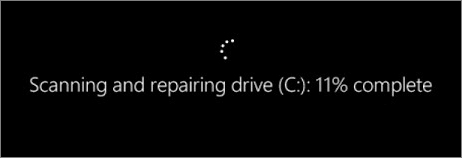
Chkdsk stuck, or chkdsk frozen issue might happen when:
- The hard disk file system is corrupted/damaged, or there is an error with the file system.
- There are too many disk fragmented files.
- The disk itself has bad sectors that cause check stuck.
If you're experiencing a stuck chkdsk issue in Windows 10/8/7, there are several methods to try to resolve the problem and complete the disk scanning and repairing process successfully. You can try running the chkdsk command in an elevated command prompt, checking for disk errors, running the built-in System File Checker (SFC) tool, running the DISM tool, and checking for corrupted system files. You can also try restarting your computer in Safe Mode, running the chkdsk command in Safe Mode, and checking for malware or viruses that may be causing the issue.
4 Effective Fixes for CHKDSK Stuck on Windows 10/8/7
If the chkdsk scanning and repairing process stalls, you can either wait for a while or try alternative methods. Waiting for a few hours may resolve the issue, but if you're short on time, you can try other solutions to get the process moving again.
1. Defragment Hard Drive
Defragmentation is a process that eliminates file fragmentation, which causes files to be spread across the disk, and can help resolve issues like chkdsk getting stuck due to too many fragment files.
Step 1. Select the partition drive that has the checking matter.
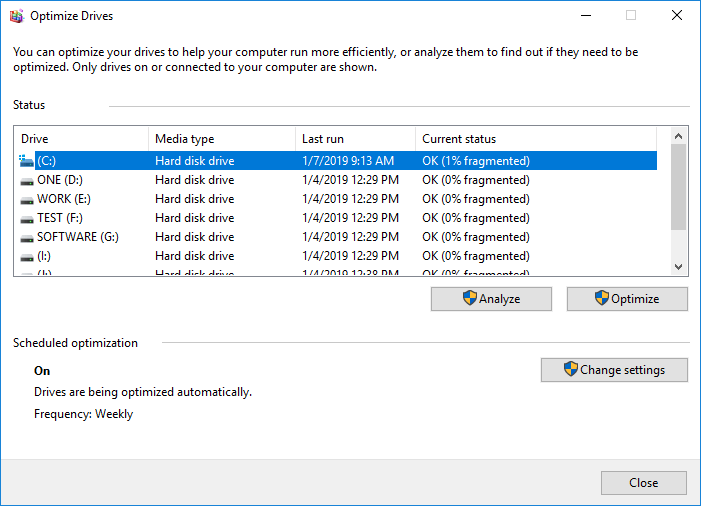
Step 2. Right-click the partition, click "Property" > "Tools" > "Optimize".
Step 3. Select the partition you want to defragment, click Optimize, and the defragmenting process will start.
2. Use SFC and DISM Scan to Repair System File
When chkdskis stuckor frozen:
Step 1.Restart your computer by pressing the power button.
Step 2.To avoid running ChkDsk at the next boot, press the Esc or Enter key during the process to stop it from running. This will prevent the disk check from running and allow your system to boot normally.
Step 3.Run Disk Cleanup utility to clear your junk files.
Step 4.Open an elevated CMD type sfc /scannowand hit Enter to run the System File Checker. Once the scan is completed, restart your computer. Remember to exit chkdsk during boot.
Step 5.To repair the Windows image, open the Command Prompt as an administrator, type "Dism /Online /Cleanup-Image /RestoreHealth", and press Enter. This command will restore the Windows image to a healthy state.
Step 6.Run chkdsk again and check if it can complete the scan.
3. Use a Third-Party Disk Repair Tool as CHKDSK Alternative
If you're experiencing a frozen or stuck chkdsk issue in Windows 10/8/7, the above steps can help resolve the problem. However, if these steps fail, you may want to try using Qiling Partition Master, a reputable Windows partition manager that can take over the disk scanning and repairing job.
Qiling Partition Master offers a one-stop solution for partition and disk management, providing various features beyond disk optimization, such as partition management, disk cleanup, and other tools to help manage your Windows computer's storage.
- The software allows for various partition management tasks, including resizing and moving partitions, creating, formatting, deleting, and merging partitions. The Pro version also enables users to drag and move space from one drive to another, such as from the D drive to the C drive.
- You can use the `dd` command to clone an entire disk to another, even if the target partition is smaller than the source. The command is as follows:
- Converting a partition type involves changing its properties to match a different type of disk. This can include converting a logical partition to a primary partition or vice versa, changing a partition from FAT to NTFS, or switching a disk from Master Boot Record (MBR) to GUID Partition Table (GPT) or vice versa.
- Completely erase all data on the hard drive to prevent any information from being leaked or recovered, effectively rendering it unusable.
- Upgrading your Windows computer's hard disk drive (HDD) to a solid-state drive (SSD) can significantly improve its performance. To do this, you'll need to back up your data, purchase an SSD of sufficient capacity, and then replace the HDD with the SSD.
Now, download and use this disk management software to check the file system, fix corrupted files, and repair the hard disk.
4. Check Bad Sectors and Clone Hard Disk
If the above solutions don't work, check your disk for physical bad sectors using the Surface Test of Qiling partition manager.
Step 1. Click the disk that you want to check and then click "Surface test".
Step 2The operation will be immediately performed. Bad sectors will be marked as red.
Clone a hard disk to HDD or SSD
If your disk has many bad sectors, you'll need to copy or clone the data to a new disk and replace the damaged disk. Fortunately, Qiling's partition management tool offers robust disk cloning functions to transfer and back up your data. This makes it easy to clone your hard drive to a new HDD or SSD.
Step 1. Select the source disk.
Right-Click on the disk you want to copy or clone, then select "Clone".
Step 2. Select the target disk.
Select the desired hard drive or solid-state drive as the target location and click "Next" to proceed.
Step 3. View the disk layout and edit the target disk partition size.
To proceed with the installation, click "Continue" when the program warns that it will erase all data on the target disk. If you have important data on the target disk, back it up beforehand to avoid losing it.
You can choose to automatically adjust the disk size, clone the disk as the source, or customize the disk layout. If you want to leave more space for the C drive, select the last option.
Step 4. Click "Proceed" to start the disk cloning process.
To Sum UP
CHKDSK stuck issues often occur when the hard drive's file system becomes corrupted or when there are bad sectors and fragmented files on the disk. To resolve this problem, you can try defragmenting the partition, running an SFC scan, applying the Qiling check file system utility, checking for bad sectors, or cloning the damaged disk to another HDD or SSD.
FAQs About CHKDSK Stuck in Windows 10
Here are the top four frequently asked questions related to chkdsk stuck at 10% or other stages in Windows 10. If you also have any of these problems, you can find the methods here.
How long does chkdsk repair take?
The chkdsk check can take a couple of hours, depending on the drive size and corrupted files, and may take around 5 hours for a 1TB drive, potentially longer if there are bad sectors.
How do I stop chkdsk in progress?
To stop a chkdsk scan in Windows 10, you can try to skip it by pressing any key during the initial boot process. However, once it starts, the scan cannot be stopped until it completes, and attempting to stop the computer during the check may lead to file system corruption. If you need to stop the scan, it's best to let it run its course, but if you're in a hurry, you can try to skip it during the initial boot process.
Why is chkdsk taking so long?
The time it takes for chkdsk to run depends on the size of the selected partition, with larger capacities taking longer. Additionally, if there are many sectors and corrupted files that need to be fixed, the process can take even longer.
Can chkdsk stop Stage 4?
In the fourth stage of chkdsk, the tool only reads data from the disk, writing to it only when a bad sector is found. It's generally safe to stop the process at this stage, as the likelihood of a bad block being repaired when stopped is extremely low.
Related Articles
- How to Fix IRQL_NOT_LESS_OR_EQUAL Error in Windows 10/8/7
- How to Recover Deleted Chrome Bookmarks on Mac
- Fixes for Windows 10 Corrupt/Crash in Boot
- Fix NTFS_FILE_SYSTEM BSOD Error in Windows
- How to Download and Use Acer Erecovery Management Software
Acer eRecovery Management is a software designed by Acer for their laptops to create a backup of the system and restore it in case of any issues. However, users often find it inconvenient and look for alternative solutions. - How to Create Acer eRecovery Management USB or Similar Disk
This article shows you how to create Acer eRecovery Management USB or similar disk in simple steps.
Products
Articles & Tutorials
- Data Recovery
- Data Backup
- File Recovery
- File Backup
- System Backup and Restore
- Disk and Partition Clone
- Technical articles
- Mobile articles
- Disk Master Help
- Windows Data Recovery Tutorials
- Windows Secure Delete Tutorials
- Windows Partition Management Tutorials
- Windows File Backup and Restore Tutorials
- Windows System Backup and Restore Tutorials
- Windows Disk Backup and Restore Tutorials
- Windows Clone Tutorials