How to Fix IRQL_NOT_LESS_OR_EQUAL Error in Windows 10/8/7
IRQL_NOT_LESS_OR_EQUAL The BSOD error is a common issue that occurs in systems, particularly when users attempt to update their Windows to a new version.
Here are the methods to fix the "irql_not_less_or_equal" error:
Causes for IRQL_NOT_LESS_OR_EQUAL
Knowing the reasons behind the "irql_not_less_or_equal" error is crucial in preventing and finding solutions for this problem. Some major reasons for this error include (insert reasons here, e.g.
- Incompatible device drivers
- Poor device driver installation
- Faulty hardware
- Disk fragmentation
- Registry issues
- Viruses and malware attack
The IRQL_NOT_LESS_OR_EQUAL error can cause system crashes, failures, and potentially even data loss. To avoid this problem, it's essential to address the underlying cause, which could be a faulty driver, a hardware issue, or a software problem. Solutions may involve updating drivers, disabling unnecessary drivers, checking for malware, and running a System File Checker to ensure the integrity of system files. Regularly updating your operating system and software can also help prevent such errors. If the issue persists, seeking professional help from a computer technician may be necessary.
Tip: Backup system and data regularly to avoid irql_not_less_or_equal error
To prevent unexpected system failure, crashes, or data loss, it's highly recommended to create a system backup image and backup important Windows data before an irql_not_less_or_equal error occurs. This proactive measure can help minimize the impact of the error and ensure your system and data are safe.
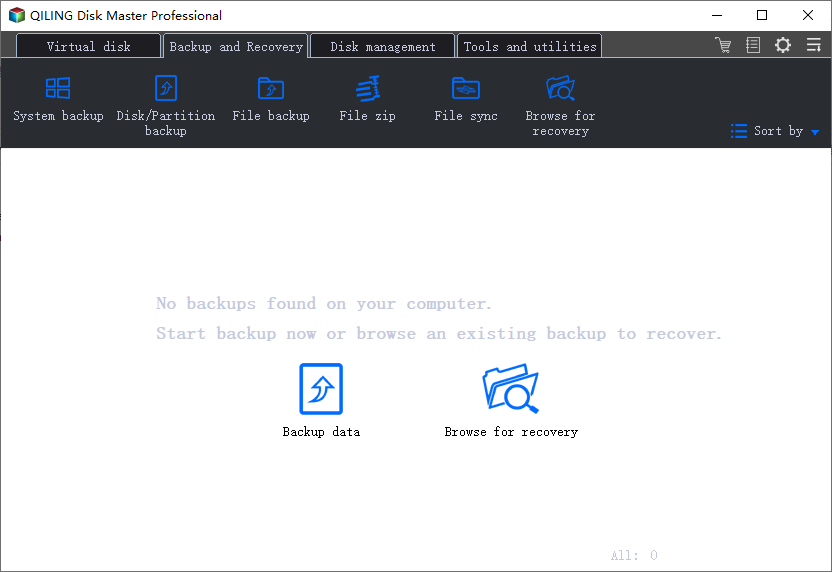
If you need to create a WinPE bootable disk or perform other tasks, we recommend using the Qiling Backup software, which allows you to easily back up and restore your system, data, and hard drive partitions within 30 days. You can download it for free and start backing up your Windows data and system now.
Solutions to fix irql_not_less_or_equal error in Windows 10/8/7
If you're experiencing frequent "irql_not_less_or_equal" errors on your Windows 10 or 8 system, don't worry - there are ways to fix this problem and prevent BSODs. To resolve this issue, try the following methods: update your drivers, disable any recently installed software, run a full system scan with an antivirus software, check for BIOS updates, and consider running a System File Checker (SFC) scan to identify and replace corrupted system files.
Method 1. Repair Registry and Fragmented Disk
1. Press "F8" to enter the Safe Mode and select "Repair My Computer" > Enter Command Prompt in "Advanced Options" under "Troubleshoot".
2. Select "Command Prompt" and type below commands to find the root directory:
dir C:\Win* and hit Enter.
dir D:\Win* and hit Enter.
dir E:\Win* and hit Enter.
3. Type:
cd /d C:\windows\System32\config + hit Enter.
xcopy *.* C:\RegBack\ + hit Enter.
cd RegBack + hit Enter.
dir + hit Enter;
4. Type below commands:
copy /y software ..
copy /y system ..
copy /y sam ..
To fix the registry manually, click on the Start menu, type "cmd" in the search bar, and press Enter. Then, type "sfc /scannow" and press Enter. After that, type "dism /online /cleanup-image /restorehealth" and press Enter.
Method 2. Roll Back Drivers
1. To access the System Properties, go to the Control Panel, double-click on the system icon, and then locate the "System Properties" within it.
2. To resolve the issue, click on the "Hardware" tab and then click on "Device Manager". From there, locate the device you recently installed and double-click on it.
3. Click the driver tab and the rollback driver button.
Method 3. Run Hardware Diagnostic
1. Type: Memory Diagnostic in the search and enter this tool.
2. To troubleshoot memory problems, click on "Diagnostic" which will prompt you to either restart your PC immediately or schedule the check for the next restart.
3. The scan on the memory will display a list of detected errors, including any problematic ones.
4. Run a full system scan to identify and replace any faulty hardware detected, then reboot the PC to ensure a stable and secure system.
Method 4. Disable Memory Caching
To disable the "Memory caching feature" in the BIOS, press the "F2" key or other designated key to enter the BIOS settings, then navigate to the relevant section and toggle the switch or select the option to disable the "Memory caching feature".
Method 5. Scan and remove Malware in PC
To fix the irql_not_less_or_equal problem, use anti-virus software to scan and remove all malware, then reboot the computer. This should resolve the issue.
If the blue screen names ndis.sys, use the NDIS network-driver troubleshooting guide to check adapters, VPN filters, and recent driver changes.
Related Articles
- Fix WD External Hard Drive Not Working/Recognized/Showing Up Error
- How to Repair Damaged SD Card in Android
- [Fix] A required device isn't connected or can't be accessed with error
- [Solved] Windows 7 Fail to Boot with 0x0000007B BSOD Error
- Windows 10 Backup Keeps Failing? Solutions to Fix It Quickly
If you're using Windows Backup and Restore to back up files and system, but it keeps failing, you're not alone. Here we shows you why it occurs, and some solutions to fix Windows 10 backup keeps failing issue quickly. - Windows 11 Virus & Threat Protection Not Working (2024 Fixes)
Many users have reported Windows 11 virus and threat protection not working. We have wrapped up a few solutions here in this blog for our readers to let them get rid of this issue.
Products
Articles & Tutorials
- Data Recovery
- Data Backup
- File Recovery
- File Backup
- System Backup and Restore
- Disk and Partition Clone
- Technical articles
- Mobile articles
- Disk Master Help
- Windows Data Recovery Tutorials
- Windows Secure Delete Tutorials
- Windows Partition Management Tutorials
- Windows File Backup and Restore Tutorials
- Windows System Backup and Restore Tutorials
- Windows Disk Backup and Restore Tutorials
- Windows Clone Tutorials