File Backup Fails on a FAT32 External Drive
A FAT32 volume can have plenty of free space yet reject an individual file near 4 GB. If a backup image or archive reaches that limit, the job may stop with a file-too-large or write error. Do not assume the source files are damaged, and do not format the backup drive before copying its existing data elsewhere.
Verify the destination, not just its free space
Step 1. In File Explorer, right-click the external drive, choose Properties, and read File system and available space. Confirm the drive model and letter in Disk Management so you do not inspect an unrelated removable disk.
Step 2. Compare the largest backup output file with the FAT32 per-file limit. A message about the destination being full can also come from real capacity, permissions, a loose cable, or a quota; investigate the actual error before changing file systems.
Choose a safe destination
NTFS is a practical Windows-only target for large backup images; exFAT can be useful when the drive must also work with other systems. Changing a drive's format by reformatting erases its contents. If you have no verified copy of the current data, use a different already-formatted drive rather than reformatting this one.
Create a test Qiling file backup
Step 1. Open Backup and Recovery > File backup and select a small representative folder in the source tree. Check Filters so the intended files are included.
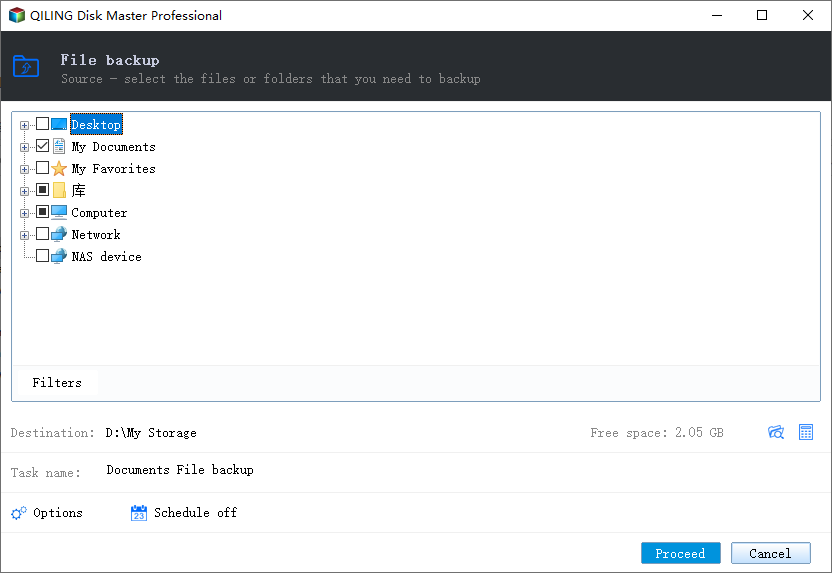
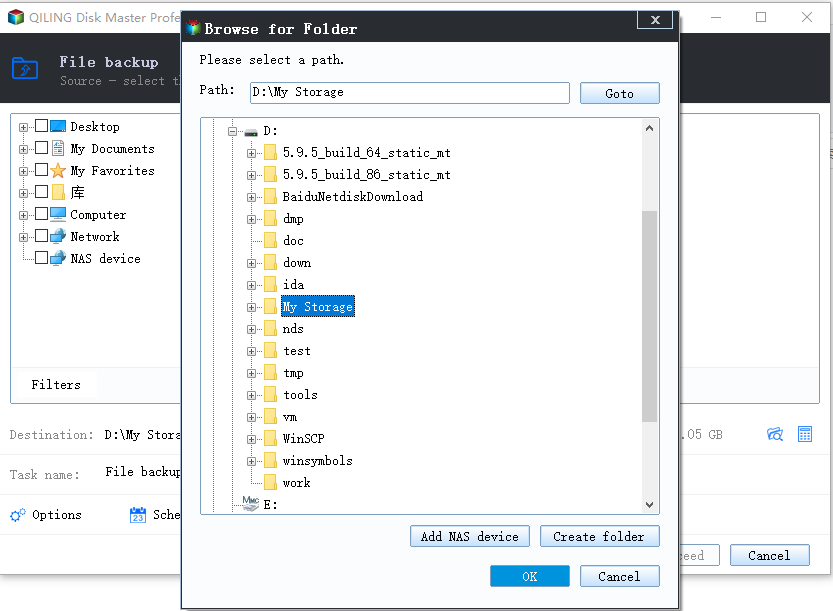
Step 2. Click the destination browser, select the separate NTFS or exFAT drive, and confirm the path and available space. Give the test task a clear name.
Step 3. Click Proceed. When it finishes, locate the new backup and restore a test file to another folder. Only then schedule a full backup of the required folders.
If the same job fails well below the FAT32 limit, inspect the new task result and the drive's connection or health; the file system may not be the cause.
Related Articles
- FAT32, exFAT, or NTFS
Compare file-system choices for an external backup drive. - NTFS vs exFAT vs FAT32
Understand capacity and compatibility differences.
Products
Articles & Tutorials
- Data Recovery
- Data Backup
- File Recovery
- File Backup
- System Backup and Restore
- Disk and Partition Clone
- Technical articles
- Mobile articles
- Disk Master Help
- Windows Data Recovery Tutorials
- Windows Secure Delete Tutorials
- Windows Partition Management Tutorials
- Windows File Backup and Restore Tutorials
- Windows System Backup and Restore Tutorials
- Windows Disk Backup and Restore Tutorials
- Windows Clone Tutorials