File History Not Backing Up Downloads in Windows 11
File History is useful for restoring previous versions, but seeing Downloads in File Explorer does not prove that the folder is protected. Windows normally focuses on libraries and common personal folders. Downloads may be outside those locations, excluded, or stored under a different account than the one you checked.
Find the folder and the latest backup
Step 1. Open File Explorer, right-click Downloads, and choose Properties. Check its Location tab or address bar to find the real path. A relocated folder, OneDrive folder, or browser-specific download path may differ from C:\Users\your-name\Downloads.
Step 2. Open Control Panel > System and Security > File History. Confirm that File History is on, the destination is connected, and the last backup time is recent.
Step 3. Open the destination or File History restore view and look for a recent test file from Downloads. Do not judge coverage only by the green status shown for other folders.
Include Downloads in File History
If your Windows build offers it, right-click the actual Downloads folder, choose Show more options, then Include in library. Choose an appropriate library or create one, return to File History, and run a new backup. Microsoft's File History instructions describe this library method. If the command is unavailable, use a separate folder backup rather than changing permissions or moving Downloads blindly.
Open Restore personal files and verify the test file appears in a new version. File History cannot back up a file that has already been deleted before a protected version was created. Check Exclude folders and the free space on the destination if the test still does not appear.
Back up the exact folder with Qiling Disk Master Pro
Qiling's File backup lets you select the Downloads path directly, so library membership is not required. Back up only files worth keeping; installers and temporary browser downloads can make a backup large without adding value.
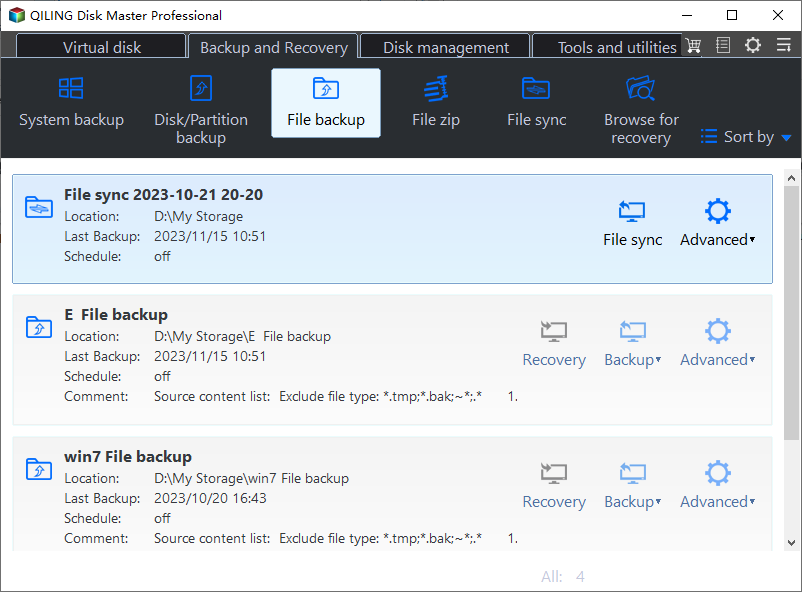
Step 1. Connect an external drive with sufficient free space, open Qiling Disk Master Pro, and select Backup and Recovery > File backup.
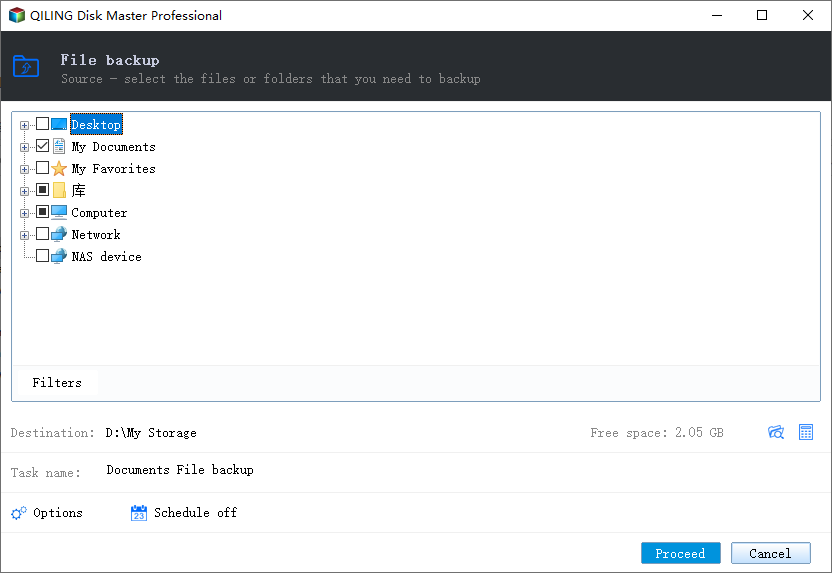
Step 2. Expand Computer in the source tree, browse to your actual Downloads folder, and select it. Review any Filters so needed file types are not excluded.
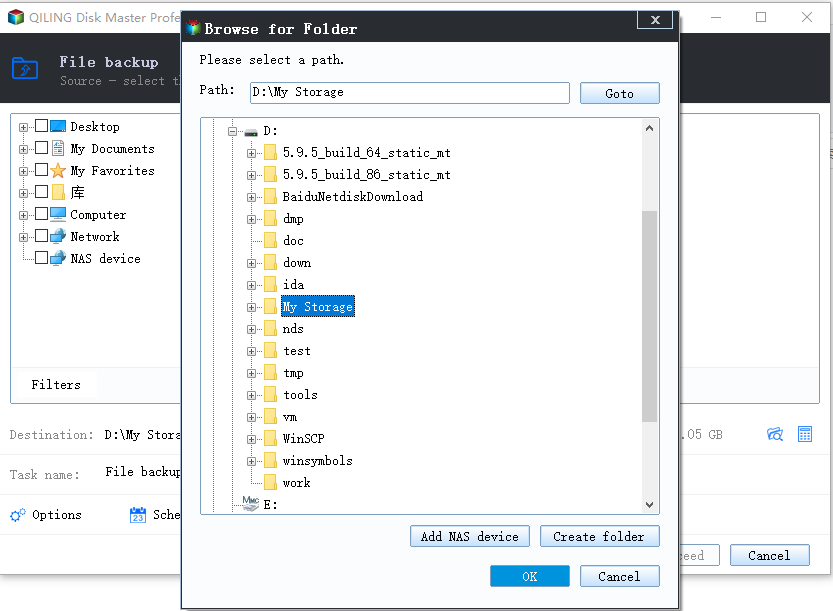
Step 3. Set Destination to the external drive, name the task, and click Proceed. Wait for completion, then use the task's Recovery view to confirm a recent file can be found.
Keep future downloads protected
Review the browser's configured download location after account migrations. Keep at least one independent copy of important files, and periodically restore a sample to a different folder. A connected backup drive is not the only copy you should rely on.
Related Articles
- File History Not Working
Check drive and service problems before rebuilding backups. - What File History Covers
Understand its folder and version limits.
Products
Articles & Tutorials
- Data Recovery
- Data Backup
- File Recovery
- File Backup
- System Backup and Restore
- Disk and Partition Clone
- Technical articles
- Mobile articles
- Disk Master Help
- Windows Data Recovery Tutorials
- Windows Secure Delete Tutorials
- Windows Partition Management Tutorials
- Windows File Backup and Restore Tutorials
- Windows System Backup and Restore Tutorials
- Windows Disk Backup and Restore Tutorials
- Windows Clone Tutorials