Create Windows 10 Backup System Image
Windows 10's File History utility is still available, but it's not the most effective way to create a system image backup. Instead, users can utilize third-party backup software, such as Qiling backup, to create a comprehensive system image backup, offering more flexibility and features than File History.
Why you need to keep at least one system backup at hand
Dealing with Windows 10 issues can be frustrating, especially when the operating system fails. Re-installing the OS is often the solution, but this process can be time-consuming and labor-intensive. For those without technical expertise, the task can be daunting, leading to the need for professional help from a computer repair company, which can be costly.
Creating a Windows 10 backup system image can greatly simplify the process of recovering from system problems. With a backup image, you can restore your Windows 10 system to its previous state with just a few clicks, saving you time and hassle. This convenient solution can be especially helpful in situations where you need to quickly recover from a system issue.
We got you the best Windows 10 backup image software
Creating a Windows 10 backup system image may seem daunting, but Qiling Backup makes it surprisingly easy. This fast and user-friendly software is compatible with all Windows versions and allows you to back up your entire system, hard drive, partition, personal data, and installed applications with just a few simple steps.
How to create a system image for Windows 10
To create a full system backup image on your currently running Windows 10 via the "System Backup" feature in Qiling Backup, it only takes a few a few clicks.
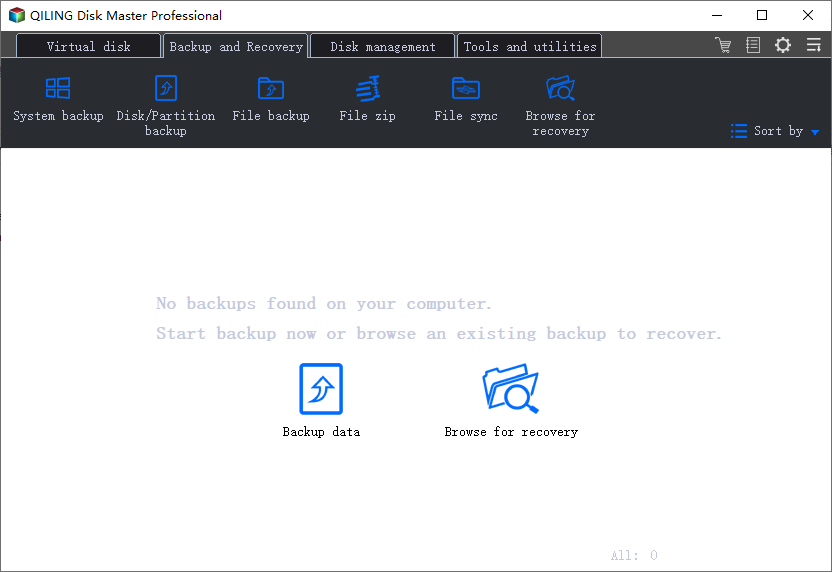
Step 1. Launch Qiling Backup, click "System backup" on the home screen, to create a full Windows 10 system image.
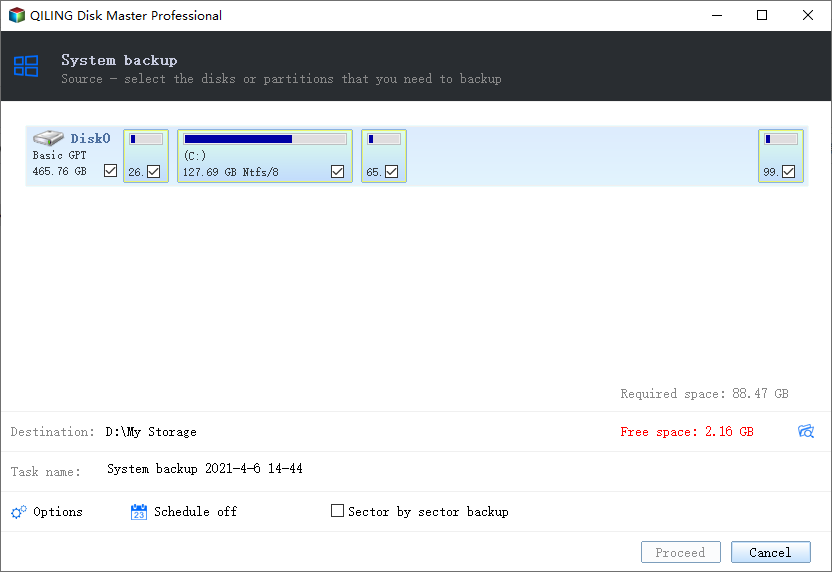
Step 2. The software automatically detects your current operating system, ensuring all critical Windows 10 system files are selected. Your task is then to choose a backup location that is available.
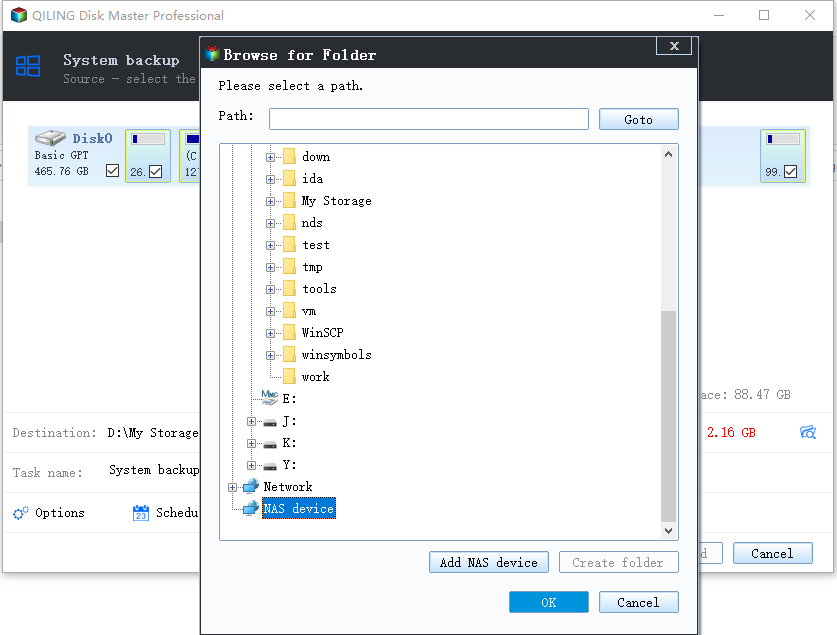
To backup Windows 10, first connect an external storage device to your computer, then click the browse icon button in the "Destination" area and select the connected hard disk or other supported paths such as OneDrive, GoogleDrive, DropBox, or Network/NAS devices.
Step 3. Once the backup location is confirmed, you can set an automatic backup schedule by turning on "Schedule" and encrypt your backup by clicking the "Backup options".
To start immediately imaging your entire Windows 10 operating system with Qiling Backup, click "Proceed".
Related Articles
- How to Migrate or Copy User Profile in Windows 10 to Another Computer
- How to Move Windows 8/8.1 to SSD Without Reinstalling Windows and Applications
- HP Backup and Recovery Manager Free Alternative
- How to Install Software on Multiple Computers at the Same Time
- Can I Use My Laptop Windows on My Desktop
Want to avoid setting up your computer again? With a small USB stick, you can take your Windows system anywhere and use it on your desktop, eliminating the need for repeated setup. - How to Change Webex Meeting Location
To change your Webex meeting location, start by logging in to your Webex account and navigating to the meeting you want to modify. Click on the “Edit” button next to the meeting title, then select the “Location” tab and enter the new meeting location.
Products
Articles & Tutorials
- Data Recovery
- Data Backup
- File Recovery
- File Backup
- System Backup and Restore
- Disk and Partition Clone
- Technical articles
- Mobile articles
- Disk Master Help
- Windows Data Recovery Tutorials
- Windows Secure Delete Tutorials
- Windows Partition Management Tutorials
- Windows File Backup and Restore Tutorials
- Windows System Backup and Restore Tutorials
- Windows Disk Backup and Restore Tutorials
- Windows Clone Tutorials