Copy Windows 10 Files to Another User Profile Safely
A Windows user profile is more than a folder. Copying the entire old profile, including registry hives and hidden application data, can reproduce sign-in errors. Create a clean account and move personal files deliberately.
Prepare the Accounts
Sign in with an administrator account that is not the profile you are replacing. Open Settings > Accounts > Family & other users and add the new user, following the prompts for a Microsoft or local account. Sign in to the new account once, then sign out so Windows creates its profile folders.
Before changing permissions or deleting anything, note the old username and back up its important files to a separate drive. If the old account is inaccessible because of disk errors, protect the disk first; profile copying is not a substitute for data recovery.
Move Personal Data with Windows
From the administrator account, open C:\Users\OldName and the new account's folder. Copy Documents, Desktop, Pictures, Downloads, Music, Videos, and project folders as needed. Use Copy and Paste, not Cut, so the old profile remains intact. If Windows requests administrator permission, confirm you selected the correct user folder.
Do not copy NTUSER.DAT, the entire AppData tree, or program files into the new profile. Browser bookmarks, mail archives, and game saves may require an app-specific export or sign-in. Some files are stored under OneDrive or other cloud folders; verify their sync status separately.
Back Up the Old Profile Files with Qiling
A Qiling file backup gives you a rollback copy before the manual move. Select only folders you need, not the whole Windows installation.
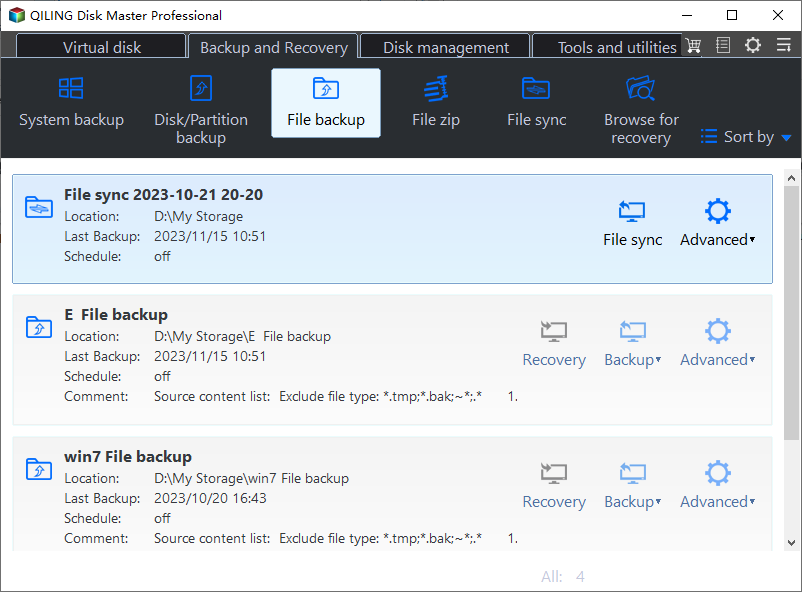
Step 1. Attach a separate drive and open Backup and Recovery > File backup in Qiling Disk Master.
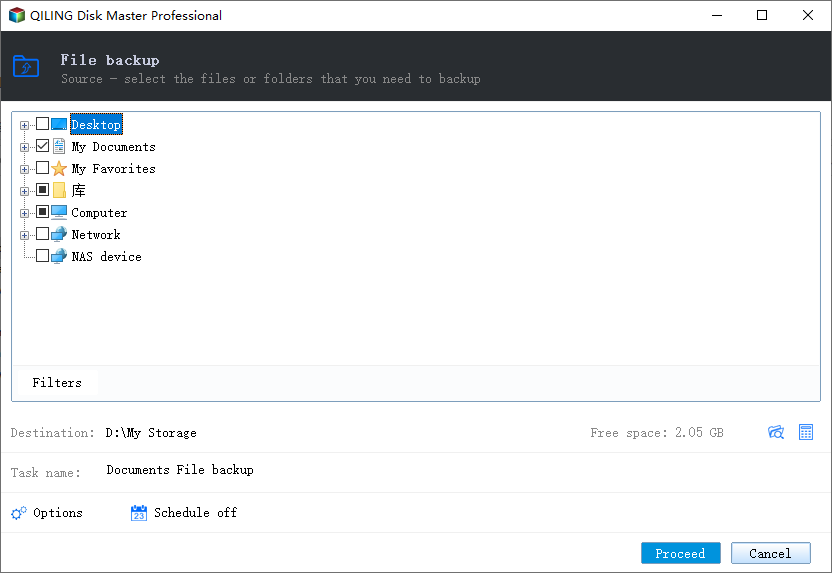
Step 2. Browse the source tree and select the old user's personal folders. Include any project or local-save folders outside the default profile.
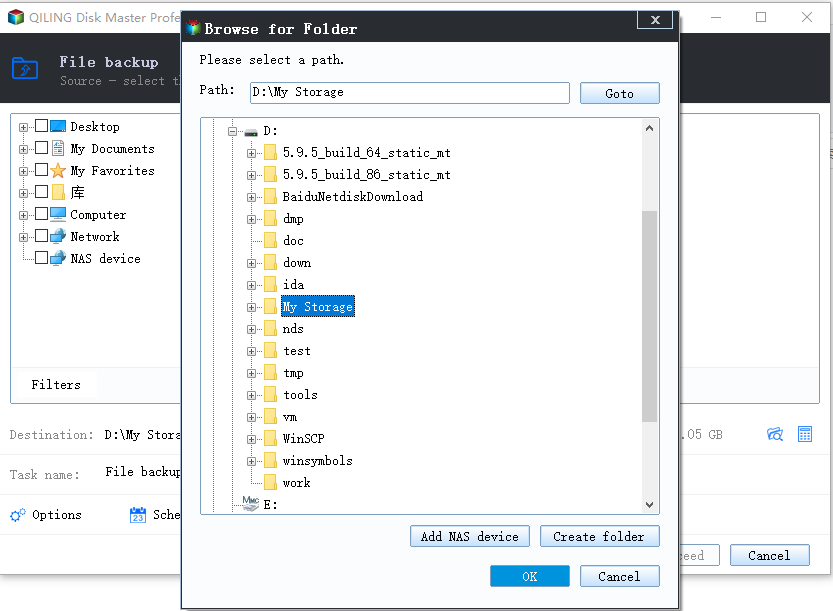
Step 3. Choose the separate drive as destination, check available capacity, and do not place the backup inside the old profile.
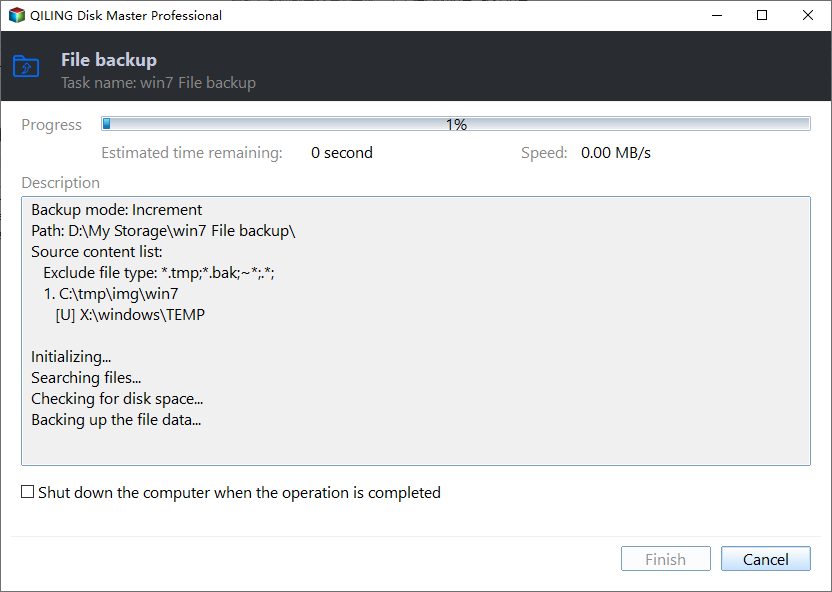
Step 4. Review the folder list, click Proceed, and wait until the task completes.
Step 5. Restore a sample to a temporary folder and open it. Then copy the needed files into the new user's folders.
Verify the New Account
Sign in as the new user and check documents, shortcuts, app sign-ins, browser data, and file access. Open representative files rather than checking folder names alone. Keep the old account and backup until the new profile works through several sign-ins, then remove the old account only when its data is no longer needed.
Frequently Asked Questions
Can I copy all of C:\Users\OldName?
Avoid that approach; it can import damaged settings and account-specific registry data.
Will installed apps appear for the new user?
Some device-wide apps will, but per-user apps and settings may need reinstalling or separate sign-in.
Conclusion
Create a clean user account, back up first, copy only the personal data you need, and validate it before deleting the old profile.
Related Articles
- Windows File Backup and Restore Tutorials
Review Windows file backup choices. - Transfer Files from an Old PC to a New PC
Move personal files to a different computer.
Products
Articles & Tutorials
- Data Recovery
- Data Backup
- File Recovery
- File Backup
- System Backup and Restore
- Disk and Partition Clone
- Technical articles
- Mobile articles
- Disk Master Help
- Windows Data Recovery Tutorials
- Windows Secure Delete Tutorials
- Windows Partition Management Tutorials
- Windows File Backup and Restore Tutorials
- Windows System Backup and Restore Tutorials
- Windows Disk Backup and Restore Tutorials
- Windows Clone Tutorials